
Gutter Drainage & Downspout Extensions: Prevent Foundation Water Damage
Your roof collects hundreds of gallons of water during every rainstorm—an average 1,500 square foot roof sheds approximately 935 gallons during a single 1-inch rainfall. Without proper gutter drainage and downspout extensions, this massive water volume dumps directly against your foundation, creating the exact conditions that cause basement flooding, foundation cracks, and structural damage costing $2,000-$25,000 to repair.
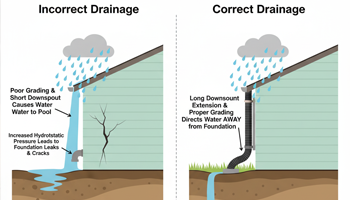
The problem hiding in plain sight: approximately 80% of homes have gutters and downspouts configured incorrectly. Standard downspout installations terminate 2-3 feet from the foundation—a distance that provides zero meaningful water management. Water dumped this close simply soaks into soil immediately adjacent to basement walls, creating hydrostatic pressure, saturating foundation perimeters, and overwhelming any interior waterproofing systems you may have installed.
Here’s the brutal mathematics: multiply that 935 gallons per inch of rain by your region’s annual rainfall (40-50 inches typical for Midwest and East Coast properties), and you’re directing tens of thousands of gallons annually directly against your foundation. This concentrated water infiltration causes billions in foundation damage nationwide every year—damage that’s completely preventable with proper downspout extensions costing $250-$2,000 to implement.
This guide reveals the minimum 10-foot extension rule most contractors don’t emphasize, explains why underground PVC systems dramatically outperform cheap above-ground alternatives, and demonstrates how proper gutter drainage reduces interior drainage system workload by 40-60%—potentially eliminating the need for expensive basement waterproofing altogether.
How Gutter Drainage & Downspout Extensions Protect Your Foundation
Role of gutters in water management:
Gutters represent the first line of defense in residential water management, intercepting roof runoff before it cascades off eaves and saturates soil around your foundation perimeter. Without functional gutters, rainwater sheets off roof edges, creating concentrated waterfall effects that erode soil, oversaturate foundation zones, and eventually infiltrate basements.
The complete gutter system includes three integrated components:
Gutters: Horizontal channels mounted along roof edges collecting water flowing down shingles. Properly sized gutters (5-inch or 6-inch K-style for residential applications) handle typical rainfall without overflowing.
Downspouts: Vertical pipes connecting gutters to ground level, channeling collected water downward. Standard homes require one downspout per 30-40 feet of gutter length for adequate drainage.
Downspout extensions: The critical component most homes lack—systems directing water away from foundation to safe discharge points. Without extensions, the entire gutter system becomes nearly worthless for foundation protection.
Think of gutters as highway systems collecting traffic (water), downspouts as exit ramps delivering that traffic to ground level, and extensions as arterial roads moving traffic (water) away from your property (foundation). A highway system that dumps all traffic in your front yard proves useless—yet that’s exactly what happens when downspouts terminate without proper extensions.
Connection between downspouts and foundation damage:
Downspouts concentrate roof runoff into high-volume discharge points. A single downspout during moderate rainfall may discharge 5-10 gallons per minute—overwhelming soil absorption capacity within feet of the discharge point.
The saturation cascade:
- Immediate saturation: Water discharged near foundation instantly saturates soil within 2-4 feet of the termination point
- Hydrostatic pressure buildup: Saturated soil creates pressure against foundation walls, forcing water through concrete pores, cracks, and joints
- Soil erosion: Concentrated water flow erodes soil at discharge points, creating depressions that collect and hold water against foundation
- Foundation infiltration: Water migrates through foundation walls via capillary action, cracks, and porous concrete
- Basement moisture/flooding: Water that enters foundation walls eventually reaches basement interiors
Each downspout improperly terminated creates a localized flooding zone targeting your foundation—multiply this by 4-8 downspouts on a typical home, and you understand why foundation water problems are so prevalent.
Average roof runoff volumes (hundreds of gallons per storm):
The water volumes involved surprise most homeowners who visualize rain as minor moisture rather than the flood-level quantities actually flowing through gutter systems.
Calculation method: Roof area (sq ft) × Rainfall (inches) × 0.623 = Gallons collected
Real-world examples:
1,000 sq ft roof:
- 1-inch rainfall: 623 gallons
- 2-inch rainfall: 1,246 gallons
- Average annual rainfall (40 inches): 24,920 gallons
1,500 sq ft roof:
- 1-inch rainfall: 935 gallons
- 2-inch rainfall: 1,870 gallons
- Average annual rainfall (40 inches): 37,380 gallons
2,000 sq ft roof:
- 1-inch rainfall: 1,246 gallons
- 2-inch rainfall: 2,492 gallons
- Average annual rainfall (40 inches): 49,840 gallons
2,500 sq ft roof:
- 1-inch rainfall: 1,558 gallons
- 2-inch rainfall: 3,116 gallons
- Average annual rainfall (40 inches): 62,300 gallons
These volumes represent water that must go somewhere—either managed away from your foundation through proper extensions, or dumped against basement walls creating the exact problems you’re trying to prevent. The choice determines whether you invest hundreds in prevention or thousands in foundation repairs.
Understanding Foundation Water Damage from Poor Drainage
Inadequate downspout drainage creates a cascade of foundation problems, each progressively more expensive to address than the simple extension systems that would have prevented them.
Soil Erosion Around Foundation
Concentrated water discharge from downspouts creates erosive forces that reshape soil around your foundation:
Erosion process:
- High-velocity water exit from downspout impacts soil with force
- Soil particles dislodge and wash away, creating depressions
- Repeated rainfall deepens erosion channels
- Depressions collect and hold standing water against foundation
- Erosion undermines foundation footings in severe cases
Visual indicators:
- Visible channels or grooves in soil below downspout terminations
- Depressions or bowls forming around foundation perimeter
- Exposed foundation walls showing more concrete than neighboring areas
- Soil staining on foundation indicating water contact
- Plants or grass dying in saturated zones
Secondary consequences: Eroded soil creates pathways directing additional surface water toward foundation. What begins as localized erosion from one downspout eventually channels water from entire yard sections toward the compromised area.
Hydrostatic Pressure Buildup
Water saturating soil around foundations creates pressure forcing moisture through foundation walls—a phenomenon called hydrostatic pressure.
Pressure mechanics:
- Water fills soil pores around foundation
- Saturated soil exerts pressure against foundation walls
- Pressure increases with soil depth (higher at foundation bottom)
- Water forced through concrete pores, cracks, and construction joints
- Pressure persists until soil dries or water finds entry point
Pressure magnitude: For every foot of saturated soil depth, hydrostatic pressure increases by approximately 0.43 PSI. A basement wall 8 feet tall surrounded by saturated soil experiences roughly 3.4 PSI at the foundation bottom—enough pressure to force water through even small foundation imperfections.
Chronic exposure effects: Repeated hydrostatic pressure cycles weaken foundation walls over time. Concrete expands and contracts as water penetrates pores, creating micro-cracks that progressively enlarge with each saturation cycle. What starts as minor seepage eventually becomes significant water infiltration requiring expensive repairs.
Basement Flooding Pathways
Water discharged near foundations follows predictable paths into basement interiors:
Primary entry routes:
Floor-wall joint: The junction where basement floor meets foundation walls represents an intentionally weak point in construction. This joint allows foundation movement without cracking floors or walls but also creates the most common water entry pathway.
Foundation cracks: Settling foundations, temperature fluctuations, and hydrostatic pressure create cracks in concrete walls and floors. Water follows these cracks, often appearing far from the actual crack location as water travels between concrete and interior finishes.
Construction joints: Where separate concrete pours meet (common in foundation construction), joints create potential water entry points. Even properly constructed joints can fail over time as sealants degrade.
Porous concrete: Concrete is naturally porous—moisture migrates through the material via capillary action even without visible cracks. Sustained hydrostatic pressure from saturated soil eventually forces moisture through intact concrete.
Window wells: Basement windows below grade create depressions where water collects if not properly drained. Window well water seeps through window frames or over window tops directly into basements.
Foundation Cracks from Water Intrusion
Water infiltration doesn’t just create moisture problems—it causes structural foundation damage requiring expensive repairs.
Freeze-thaw damage: Water penetrating foundation cracks freezes during winter, expanding and widening cracks. Repeated freeze-thaw cycles progressively enlarge hairline cracks into significant structural compromises. This damage proves particularly severe in cold climates where multiple freeze-thaw cycles occur annually.
Soil expansion: Clay soils absorb water and expand dramatically—some clay types swell 10-15% when saturated. This expansion creates immense pressure against foundation walls, causing:
- Horizontal cracks from lateral pressure
- Inward bowing as walls deflect under pressure
- Vertical cracks from differential foundation movement
- Step cracks in block foundations following mortar joints
Foundation settlement: Water infiltration and soil erosion undermine foundation footings, causing differential settlement where parts of the foundation sink more than others. This settling creates:
- Diagonal cracks running from corners of windows and doors
- Separating walls at corners
- Doors and windows becoming difficult to open
- Sloped or uneven floors
Cost of Foundation Repairs ($2,000-$25,000)
Foundation repairs represent some of the most expensive home maintenance costs—expenses completely avoidable with proper downspout management:
Minor repairs ($2,000-$5,000):
- Crack injection (epoxy or polyurethane)
- Minor grading corrections
- Localized waterproofing patches
- Small-scale exterior excavation and repair
Moderate repairs ($5,000-$12,000):
- Carbon fiber reinforcement for bowing walls
- Partial foundation waterproofing
- Multiple crack repairs
- Moderate excavation for exterior access
Major repairs ($12,000-$25,000+):
- Wall anchors or helical tiebacks for severe bowing
- Foundation underpinning or mudjacking
- Complete perimeter excavation and waterproofing
- Wall replacement for severely compromised sections
Extreme damage ($25,000-$75,000+):
- Complete foundation rebuild
- House lifting for foundation replacement
- Extensive structural repairs throughout home
The perspective shift: spending $500-$2,000 on proper downspout extensions prevents $10,000-$20,000 foundation repairs. The investment represents the most cost-effective foundation protection available—yet most homeowners overlook it until expensive damage forces attention.
Why Standard Downspouts Aren’t Enough
Standard builder-grade downspout installations create a dangerous illusion of proper water management while actually providing minimal foundation protection.
Water dumps within 2-3 feet of foundation:
Default downspout installations consist of vertical pipe from gutters terminating in an elbow joint directing water away from the house. This elbow typically extends 6-18 inches from the foundation, with water discharge occurring 2-3 feet from basement walls—completely inadequate for meaningful water management.
The discharge zone problem: Water exiting downspouts 2-3 feet from foundation immediately saturates soil in that zone. During typical rainfall, soil cannot absorb water fast enough, causing pooling and surface water flow back toward foundation (gravity pulls water to the lowest point—often against foundation walls).
Visual comparison: Imagine dumping 5-10 gallons per minute continuously onto soil 2-3 feet from your foundation for 30-60 minutes during a storm. The saturation and runoff back toward foundation becomes obvious when visualized this way—yet this describes exactly what standard downspouts do.
Soil saturation near foundation walls:
Soil has finite absorption capacity measured in inches per hour. Sandy soils may absorb 2-6 inches per hour, while clay soils absorb only 0.1-0.5 inches per hour. A downspout during moderate rainfall discharges water at rates far exceeding soil absorption—even in sandy, well-draining soil.
Saturation consequences:
Immediate effects:
- Standing water pooling around downspout terminations
- Visible soil erosion and channeling
- Water flowing back toward foundation along slopes or depressions
Delayed effects:
- Hydrostatic pressure building as water percolates downward
- Foundation wall moisture infiltration within 12-48 hours
- Basement humidity increases following rain events
- Mold and mildew growth from persistent moisture
Inadequate distance for water dispersal:
The distance required for safe water dispersal depends on multiple factors:
Soil type:
- Sandy soil: 6-8 feet minimum for adequate dispersal
- Loam soil: 8-10 feet minimum
- Clay soil: 10-15 feet minimum (poor drainage extends required distance)
Grading:
- Proper slope (away from foundation): Reduces required distance slightly
- Flat or reverse slope: Dramatically increases required distance as water flows back toward foundation
Rainfall intensity:
- Light rain: Shorter distances may suffice
- Moderate-to-heavy rain: Maximum distances necessary as soil absorption overwhelmed
10-foot minimum distance rule:
The professional standard: downspouts should discharge water minimum 10 feet from foundation, with 15-20 feet ideal for clay soils or properties with drainage challenges.
Why 10 feet:
Soil moisture gradient: Soil moisture dissipates with distance from discharge point. By 10 feet, water volume per cubic foot of soil drops to levels that don’t create hydrostatic pressure against foundations.
Surface runoff prevention: Even with poor soil absorption, 10+ feet provides distance where surface water doesn’t flow back to foundation during typical rainfall.
Safety margin: The 10-foot rule provides margin accounting for variables like soil compaction, seasonal water table fluctuations, and above-average rainfall events.
Exceptions: Properties with exceptional drainage (sandy soil, significant slope away from foundation) may function adequately with 6-8 feet. However, the modest cost difference between 6-foot and 10-foot extensions makes the conservative 10-foot approach prudent for most homes.
Types of Downspout Extensions
Multiple extension options exist, ranging from temporary $10 solutions to permanent $2,000 underground systems. Understanding advantages and limitations guides appropriate selection.
Above-Ground Flexible Extensions ($10-$30)
Description: Corrugated plastic or vinyl tubing connecting to downspout elbows and extending across ground surface to discharge point.
Advantages:
- Extremely affordable ($10-$30 per downspout)
- DIY installation in minutes—no tools required
- Flexible design navigates obstacles
- Can be disconnected and stored during winter
- Immediate functionality without excavation
Disadvantages:
- Highly visible—aesthetically unappealing
- Trip hazards across walkways and yard areas
- Blow away during storms or flip over from water pressure
- Crush under foot traffic or lawn equipment
- Require repositioning after each disturbance
- Disconnect from downspouts easily
Best applications:
- Temporary solution while budgeting for permanent installation
- Rental properties where landlord approval needed for excavation
- Seasonal use (attach during wet season, remove in dry weather)
- Budget-constrained situations requiring immediate protection
Professional perspective: Flexible extensions function adequately IF properly secured (stakes or weights) and extended 10+ feet. The $20 investment provides legitimate foundation protection despite aesthetic drawbacks. Recommend as interim solution rather than permanent approach.
Rigid Plastic/Vinyl Extensions ($15-$50)
Description: Hard plastic or vinyl sections (typically 3-4 feet lengths) that connect to downspouts and extend across ground surface.
Advantages:
- More durable than flexible alternatives
- Won’t flip or blow away like flexible versions
- Cleaner appearance than corrugated extensions
- Can be partially buried for lower profile
- Modular sections allow custom lengths
- Some decorative options available
Disadvantages:
- Still visible and potential trip hazards
- Crack in freezing weather if not winterized
- Vulnerable to lawn equipment damage
- May detach from downspouts during storms
- Difficult to navigate around landscape features
Cost: $15-$50 per downspout depending on length and quality.
Best applications:
- Step up from flexible extensions when aesthetics matter
- Properties without significant lawn equipment traffic
- Shorter extension runs (4-8 feet) where underground systems overkill
- DIY projects by homeowners uncomfortable with excavation
Roll-Out Sleeves (Temporary Solutions)
Description: Fabric sleeves stored coiled under downspout elbows that automatically unroll as water flows through them, then roll back up when dry.
Advantages:
- Hidden when not in use—better aesthetics
- Deploy automatically during rainfall
- No repositioning required
- Inexpensive ($15-$35 per downspout)
- Simple installation
Disadvantages:
- Limited extension distance (typically 4-6 feet maximum)
- Don’t always unroll reliably
- Fabric degrades over 2-3 seasons
- Insufficient for proper foundation protection
- Water may wash over rather than through sleeve during heavy rain
Verdict: Clever concept but insufficient for genuine foundation protection. The 4-6 foot maximum extension doesn’t meet the 10-foot minimum standard. Acceptable only for properties with exceptional natural drainage.
Underground PVC Drainage Systems ($250-$2,000)
Description: The gold standard—buried PVC pipes carrying water underground from downspouts to discharge points 10-20+ feet from foundation.
Advantages:
- Completely hidden—zero aesthetic impact
- No trip hazards or lawn maintenance complications
- Permanent solution lasting 30+ years
- Handles highest water volumes without erosion
- Integrates with whole-property drainage systems
- Increases home value
- Requires zero repositioning or seasonal adjustment
Disadvantages:
- Higher upfront cost ($250-$2,000 depending on length and complexity)
- Requires excavation—labor-intensive DIY or professional installation
- Can clog if debris enters system (prevented with proper filters)
- Difficult to access for maintenance without excavation
- May require permits in some jurisdictions
Cost breakdown (DIY installation, two downspouts, 15 feet each):
- 4-inch PVC pipe (30 feet): $40-$60
- Fittings, elbows, connectors: $30-$50
- Pop-up emitters (2): $30-$50
- Debris filters (2): $20-$30
- Gravel for pipe bed: $40-$60
- Equipment rental (trencher): $100-$150
- Total: $260-$400
Professional installation: $1,500-$5,000 depending on number of downspouts, extension distances, and site complexity.
Best applications:
- Permanent solution for any property
- New construction (install during grading phase)
- Major landscaping projects (coordinate excavation)
- Properties with finished landscaping where above-ground extensions unacceptable
- Clay soil or poor drainage requiring maximum water removal distance
Professional recommendation: Every home should have underground downspout drainage. The investment represents the single most cost-effective foundation protection measure—preventing thousands in future repairs while remaining completely invisible.
Decorative Extension Options
Description: Extensions designed to minimize visual impact through decorative integration with landscaping.
Options:
Rock or gravel-filled channels: Above-ground extensions covered with decorative rock creating dry creek bed appearance. Water flows through rock-filled channel away from foundation.
Architectural downspout extensions: Decorative metal or copper extensions that complement home exterior. More aesthetically pleasing than plastic but still visible.
Concealed extensions: Shallow-buried extensions with decorative elements (stepping stones, plantings) marking the path. Combines underground benefits with surface aesthetics.
Rain chains: Decorative chains replacing downspouts, directing water to ground-level extensions. Aesthetic choice that still requires proper extension system.
Cost: $50-$300 per downspout depending on materials and complexity.
Limitation: Decorative options address aesthetics but must still achieve 10+ foot water removal distance to provide foundation protection. Attractive 4-foot extensions that dump water near foundation look nice while failing their primary purpose.
Underground Downspout Extension Installation
Underground systems deliver superior performance but require proper planning and installation for long-term reliability.
Planning and Measuring (6-10 Feet Minimum)
Site assessment:
Before excavation, evaluate:
Discharge location: Where can water safely terminate 10-15 feet from foundation?
- Slope or swale carrying water away from property
- Street drainage or storm sewer (verify local code allows connection)
- Rain garden or permeable area absorbing water
- Existing drainage systems accepting additional flow
Obstacles: Identify and plan around:
- Sidewalks, driveways, patios requiring tunneling underneath
- Underground utilities (call 811 for free utility marking)
- Tree roots and large plantings
- Irrigation systems
- Buried cables or pipes
Measurement:
- Mark downspout location
- Identify discharge point 10-15 feet away (minimum)
- Measure total run length including any turns
- Add 10% to length for fittings and grade variations
- Sketch installation plan showing obstacles and route
Minimum distances by soil type:
- Sandy soil: 10 feet acceptable
- Loam soil: 12 feet recommended
- Clay soil: 15 feet minimum
Trenching Requirements and Slope (1/4 Inch Per Foot)
Trench specifications:
Depth:
- Minimum 6 inches below ground surface
- 8-12 inches depth ideal for frost protection and lawn equipment clearance
- Deeper near downspout, shallower at discharge (creating slope)
Width:
- 8-12 inches wide providing working space around 4-inch pipe
- Wider for gravel bedding if desired
Slope:
- Minimum 1/4 inch drop per foot of horizontal run
- 1/2 inch per foot acceptable and provides better flow
- Steeper slopes work but consume depth quickly
Slope calculation example:
- 15-foot run at 1/4 inch per foot = 3.75 inches total drop
- Start trench at 8 inches deep near downspout
- End trench at 4.25 inches deep at discharge (maintaining 1/4 inch per foot slope)
Critical: Maintaining consistent slope throughout the run is essential. Low spots where pipe sags collect debris and cause clogs. Use string line and level during installation to verify proper slope.
Excavation methods:
Hand digging:
- Feasible for short runs (under 20 feet) in soft soil
- Labor-intensive but precise
- Cost: $0 (your labor) plus tool wear
Trenching machine rental:
- Cuts narrow trenches quickly in most soils
- Rental cost: $100-$150 per day
- Requires operator experience for straight, consistent-depth trenches
- Well worth cost for multiple downspouts or long runs
Contractor excavation:
- Professional efficiency and precision
- Cost typically included in installation pricing
- Appropriate for challenging soil or complex routing
PVC Pipe Specifications (4-Inch Diameter)
Pipe selection:
4-inch diameter: Standard for residential downspout drainage. Handles flow from typical downspout sizes (3×4 inch rectangular) with margin for heavy rainfall.
PVC Schedule 40: Sufficient strength for residential burial applications. Thicker Schedule 80 unnecessary unless traffic loading concerns exist.
Solid vs perforated: Use solid wall pipe—no perforations. The goal is transporting water to discharge point, not dispersing along the route (which defeats the purpose).
Fittings and connections:
90-degree elbows: Connect downspout (vertical) to horizontal underground run. Use long-sweep elbows where possible—smoother transitions reduce clog potential.
45-degree elbows: Navigate obstacles or change direction. Less restriction than 90-degree bends.
Couplings: Join pipe sections. Glue with PVC cement for permanent, leak-proof connections.
Wye fittings: Combine multiple downspouts into single discharge line if beneficial.
Debris filter/basket: Install at downspout connection preventing leaves and debris from entering system. $10-$15 investment preventing costly clogs.
Installation process:
- Cut PVC sections to required lengths
- Dry-fit entire system verifying proper slope and alignment
- Apply PVC cement to joints and assemble permanently
- Install debris filter at downspout connection
- Connect system to downspout using flexible coupling or adapter
- Place assembled pipe in trench on gravel bed (optional but beneficial)
- Verify slope one final time before backfilling
- Backfill trench with excavated soil, compacting in layers
- Restore surface (sod, seed, or mulch)
Pop-Up Emitters and Bubbler Systems
Pop-up emitter function:
Pop-up emitters install at underground drain termination points, remaining flush with ground when dry and «popping up» under water pressure to discharge water during rainfall.
Advantages:
- Nearly invisible when dry—blend with lawn
- Prevent debris and animals entering drain line
- Distribute water across ground surface rather than concentrated flow
- Easy to locate for maintenance
- Professional appearance
Installation:
- Install emitter in low-profile basin or directly in ground
- Ensure emitter top remains above grade preventing flooding
- Surround with gravel for drainage and support
- Position in area where water discharge acceptable (not neighbor’s yard)
Cost: $15-$25 per emitter.
Bubbler systems:
Alternatives to pop-up emitters, bubblers release water through fixed openings without moving parts.
Types:
- Simple pipe termination: Open pipe end in gravel-filled basin—cheapest but least attractive
- Decorative bubbler grates: Ornamental grating over termination point—better aesthetics
- Underground dispersion: Perforated end section dispersing water underground—works in permeable soils
Selection guidance: Pop-up emitters provide best combination of function, aesthetics, and reliability for most installations. Bubblers appropriate when emitter budget exceeds available funds or very permeable soil allows underground dispersion.
Connection to Existing Drainage
Underground downspout systems can integrate with existing drainage infrastructure:
Storm sewer connection:
- Local codes may allow downspout connection to storm sewers
- Reduces runoff across property
- Verify legality before connecting (some municipalities prohibit)
- Professional plumber recommended for proper connection
French drain integration:
- Downspout drains can discharge into existing French drains
- Adds significant water volume—verify French drain capacity adequate
- Reduces need for separate discharge points
- May overwhelm undersized French drains during heavy rain
Sump pump discharge:
- Some installations route downspouts to sump basin
- Increases sump pump cycling during rain
- Creates dependency on pump operation and power
- Generally not recommended—separate systems preferred
Dry well connection:
- Downspout water discharged into gravel-filled dry well
- Water percolates into surrounding soil
- Only viable in permeable soils (sandy or gravelly)
- Clay soils make dry wells ineffective
Splash Blocks vs Extension Systems
Splash blocks represent the simplest downspout discharge solution—but limitations make them inadequate for most properties.
Limitations of splash blocks (2-3 feet range):
Splash blocks sit under downspout elbows, directing water away from foundation along sloped plastic or concrete channels.
Typical performance:
- Water travels 2-4 feet from foundation before leaving splash block
- Effective range barely exceeds standard downspout elbow
- Water immediately infiltrates soil near foundation
- Wind blows lightweight plastic blocks out of position
- Heavy water flow overpowers small splash blocks, water sheets over sides
Mathematical reality: A splash block moving water 3 feet from foundation provides negligible improvement over elbow-only configuration dumping water 2 feet away. Both discharge well within the problematic zone requiring soil saturation and hydrostatic pressure.
When splash blocks are sufficient:
Splash blocks work acceptably in limited scenarios:
Exceptional natural drainage:
- Sandy soil with excellent permeability
- Significant slope away from foundation (5%+ grade)
- Areas where water table never approaches foundation depth
- Homes with shallow foundations (pier foundations, crawl spaces with significant clearance)
Very dry climates:
- Regions with minimal annual rainfall (under 20 inches)
- Long dry periods between rain events allowing complete soil drying
- Areas where foundation water problems are rare
Temporary supplementation:
- Used alongside other waterproofing while budgeting for proper extensions
- Better than dumping water directly against foundation
Realistic assessment: Splash blocks prove adequate for perhaps 5-10% of homes—those with ideal drainage conditions in dry climates. For typical properties, splash blocks create false sense of protection while providing minimal foundation defense.
Combination approaches:
Some installations combine splash blocks with other strategies:
Splash block + above-ground extension: Splash block at downspout connection, flexible extension added for additional 8-10 feet distance. Provides adequate protection at minimal cost.
Splash block + swale: Splash block directs water into swale (shallow depression) carrying water away from foundation via surface drainage. Works if swale properly designed with adequate slope.
Splash block temporarily, underground permanently: Use splash blocks immediately after construction or moving in, replace with underground systems during first-year landscaping.
Stone dispersion alternatives:
River rock or gravel dispersal areas provide middle-ground solution:
Concept: Downspout terminates in rock-filled bed 6-10 feet from foundation. Water flows through rock, dispersing and infiltrating gradually rather than concentrated flow.
Installation:
- Excavate shallow depression (12-18 inches deep, 3-4 feet diameter)
- Line with landscape fabric preventing soil infiltration
- Extend downspout into rock bed with elbow or short extension
- Fill with 3-6 inch river rock or washed gravel
- Water enters rock, disperses across area, infiltrates slowly
Effectiveness: Better than splash blocks, worse than underground systems. Moves water 4-6 feet from foundation with better dispersion than concentrated discharge. Acceptable for properties with good soil drainage.
Cost: $100-$200 per downspout including excavation, fabric, rock, and labor.
Proper Grading Around Foundation
Downspout extensions work synergistically with proper grading—both are necessary for optimal foundation protection.
5% grade slope requirement (10 feet from foundation):
Building codes specify minimum 5% slope for 10 feet from foundation—translating to 6 inches of drop over 10 feet horizontal distance.
Why 5% matters: This slope ensures surface water—from rain, snow melt, or irrigation—flows away from rather than toward foundation. Even with perfect downspout extensions, poor grading allows water from other sources to pool against basement walls.
Measuring existing grade:
- Place long board or string line extending 10 feet from foundation at ground level
- Use level to determine if board/string is horizontal
- Measure distance from string/board to ground at foundation
- Measure distance from string/board to ground at 10-foot mark
- Calculate drop: foundation measurement minus 10-foot measurement
Example: String touches ground at 10-foot mark but sits 4 inches above ground at foundation = 4-inch drop over 10 feet = 3.3% grade (below 5% requirement, needs correction).
Filling depressions near downspouts:
Depressions near downspouts collect water, defeating extension systems:
Common problem areas:
- Erosion from previous downspout discharge creating bowls
- Settlement near foundation from soil compaction
- Landscaping changes creating low spots
- Depressions where utilities enter home
Correction process:
- Identify all depressions within 10 feet of foundation
- Fill with quality topsoil or clay-amended soil
- Compact fill material preventing future settlement
- Re-establish 5% slope away from foundation
- Seed or sod filled areas
Materials: Avoid organic-rich topsoil immediate to foundation—use clay-content soil that compacts well and resists erosion. Topsoil acceptable for final 2-3 inches supporting vegetation.
Integration with extension systems:
Grading and extensions work together:
Proper sequence:
- Install downspout extensions moving concentrated water 10+ feet away
- Correct grading ensuring surface water flows away from foundation
- Result: Both concentrated (downspout) and dispersed (surface) water directed away from foundation
Common mistake: Installing extensions without correcting grading. Surface water still flows toward foundation even as downspout water diverted.
Comprehensive solution: Underground downspout extensions + proper grading + surface swales if needed for additional water management = complete water management system protecting foundation from all water sources.
Preventing water pooling:
Water pooling anywhere near foundation creates infiltration risk:
Prevention strategies:
Proper grading: Primary defense—no flat or reverse-sloped areas within 10 feet
Swales: Shallow channels directing water around property perimeter away from foundation
French drains: Underground perforated pipes collecting and removing water from problematic areas
Permeable surfaces: Gravel or permeable pavers in high-traffic areas preventing soil compaction that creates pooling
Gutter capacity: Ensure gutters adequate size preventing overflow that creates surface water near foundation
Maintenance: Regular inspection catching grade changes from settlement or erosion before they create pooling problems
Installation Cost Breakdown
Understanding complete project costs prevents budget surprises and enables informed decisions between DIY and professional installation.
DIY materials: $250-$500 (two downspouts):
Basic installation (two downspouts, 15 feet each, underground PVC):
Materials:
- 4-inch PVC pipe (35 feet): $50-$75
- PVC fittings (elbows, couplings): $30-$50
- Pop-up emitters (2): $30-$50
- Debris filters (2): $20-$30
- PVC cement: $8-$12
- Gravel (optional, 1 cubic yard): $30-$50
Tools (if not owned):
- Trenching spade or drain spade: $40-$60
- Level and string line: $15-$25
- PVC saw or hacksaw: $15-$30
Total DIY cost: $238-$382 excluding labor
Professional installation: $1,500-$5,000:
Professional installation pricing varies significantly based on project scope and regional labor rates.
Factors affecting cost:
Number of downspouts: $150-$400 per downspout professionally installed depending on extension length and complexity.
Extension length:
- 10-15 feet: $150-$250 per downspout
- 15-25 feet: $250-$400 per downspout
- 25+ feet or complex routing: $400-$600+ per downspout
Site conditions:
- Easy access, soft soil: Lower cost range
- Limited access, clay/rocky soil: Higher cost range
- Obstacles requiring tunneling under concrete: $200-$500 additional per obstacle
Regional variations:
- Rural/lower cost-of-living areas: $150-$250 per downspout
- Suburban moderate areas: $200-$350 per downspout
- Urban/high cost areas: $300-$500+ per downspout
Typical project examples:
Standard 4-downspout home:
- Moderate complexity (15-foot runs, minimal obstacles)
- Professional installation: $1,800-$3,200
Complex installation:
- 6 downspouts
- Multiple obstacles requiring concrete tunneling
- Long extension runs (20-30 feet)
- Professional installation: $4,000-$6,000
Equipment rental costs (trenching machine: $100/day):
DIY projects benefit from equipment rental for efficient excavation:
Trenching machine: $100-$150 per day
- Cuts narrow, consistent-depth trenches quickly
- Significantly reduces labor compared to hand digging
- Recommended for projects involving 3+ downspouts or total trench length over 50 feet
Sod cutter (if preserving lawn): $75-$100 per day
- Removes sod in sections for replacement after backfilling
- Preserves existing lawn rather than reseeding
- Worthwhile for finished lawns
Concrete core drill (for obstacles): $100-$150 per day
- Creates holes through concrete sidewalks or foundations
- Significantly easier than jackhammering
- Necessary if routing under concrete
Auger attachment for drilling under concrete: $75-$125 per day
- Attaches to power drill
- Tunnels under sidewalks/driveways without breaking concrete
- Professional technique accessible to DIYers
Equipment rental considerations: For typical 2-downspout project, trenching machine rental ($100) reduces labor from 8-12 hours hand digging to 2-3 hours—well worth investment. For larger projects, rental costs easily justified by labor savings.
Regional pricing variations:
Installation costs vary significantly by region:
Lower cost regions ($150-$250 per downspout):
- Rural Midwest
- Southern states (easier excavation, mild climate)
- Areas with many competing contractors
Moderate cost regions ($200-$350 per downspout):
- Suburban areas
- Most mid-size cities
- Average climate and soil conditions
Higher cost regions ($300-$500+ per downspout):
- Northeast urban areas
- California coastal regions
- Major metropolitan areas
- Cold climates requiring deeper burial
- Rocky soil requiring specialized equipment
Cost-benefit perspective: Even at higher-end professional pricing ($3,000 for 4 downspouts), the investment prevents foundation damage costing $10,000-$25,000. The 3:1 to 8:1 return makes downspout drainage one of the highest-value home improvements.
Maintenance Requirements
Underground systems require minimal maintenance—far less than interior drainage systems—but periodic attention ensures continued performance.
Spring and fall inspection schedule:
Spring inspection (post-snowmelt):
- Verify pop-up emitters functioning properly
- Check for winter damage to above-ground components
- Clear any debris accumulated during winter
- Test system during heavy rain observing discharge
Fall inspection (pre-winter):
- Remove leaves and debris from gutters and downspouts
- Verify debris filters at downspout connections clear
- Check pop-up emitters for vegetation overgrowth
- Consider system flushing if needed
Annual tasks:
- Walk entire extension route checking for:
- Surface depressions indicating pipe settlement or collapse
- Erosion at discharge points requiring correction
- Tree root intrusion into pipe runs
- Pop-up emitter functionality
Debris and clog prevention:
Prevention dramatically easier than clearing clogs in buried pipes:
Gutter guards: Install quality gutter guards (LeafFilter, LeafGuard, mesh screens) preventing leaves entering downspouts. This $500-$2,000 investment eliminates most potential clog sources.
Debris filters: Install debris filter baskets at downspout-to-underground-pipe connections. These $10-$15 devices catch leaves before they enter underground system.
Regular gutter cleaning: Even with guards, inspect and clean gutters 2-3 times annually. Debris in gutters eventually reaches downspouts and underground systems.
Proper system design: Using 4-inch pipe rather than 3-inch reduces clog potential. Long-sweep elbows instead of sharp 90-degree bends further reduces debris accumulation.
Clog clearing (if necessary):
- Remove debris filter and flush with garden hose
- Snake drain from downspout connection using plumber’s snake or pressure washer attachment
- If accessible, remove pop-up emitter and flush system backward
- Professional hydro-jetting for severe clogs ($150-$300)
Gutter guard systems (LeafFilter, LeafGuard):
Quality gutter guards prevent 95%+ of debris from entering gutters and downspouts:
Types:
Micro-mesh systems (LeafFilter, Raptor, MasterShield):
- Fine mesh (275+ holes per square inch) blocks even small debris
- Most effective type for debris prevention
- Cost: $15-$30 per linear foot professionally installed
- 20-30 year lifespan
Solid covers (LeafGuard, K-Guard):
- Solid hood with narrow opening leveraging surface tension
- Water flows into gutter, debris washes over
- Cost: $20-$40 per linear foot (often requires LeafGuard gutter replacement)
- Integrated with gutter system
Screen/foam systems:
- Budget options ($3-$10 per foot)
- Less effective—small debris passes through
- Require more frequent cleaning
Value proposition: $2,000-$4,000 gutter guard investment eliminates most gutter cleaning needs while protecting downspout drainage systems from clogs. For underground systems, this protection proves especially valuable since clearing buried clogs is difficult.
Winter freeze concerns and solutions:
Frozen water in downspout extensions can damage systems:
Problems from freezing:
- Ice expansion cracks PVC pipe
- Frozen pop-up emitters won’t open during thaw
- Ice blockage prevents drainage during winter rain/thaw cycles
- Repeated freeze-thaw cycles degrade system components
Prevention strategies:
Proper slope: Minimum 1/4 inch per foot slope ensures complete drainage—no standing water to freeze.
Deep burial: Burying pipes 8-12 inches deep provides insulation reducing freeze potential. Below frost line (24-48 inches in cold climates) eliminates freezing entirely but often impractical.
Disconnect flexible extensions: For above-ground extensions, disconnect and store during winter, reconnect in spring.
Heat tape (extreme climates): Electric heat tape can be installed inside pipes preventing freezing. Expensive to operate but necessary in extreme climates with critical drainage needs.
Design for freezing: PVC tolerates some freeze-thaw cycling. Proper installation with expansion room at joints and flexible couplings accommodates ice expansion without damage.
Winter operation: Even in cold climates, properly installed underground systems function during winter thaws and rain events. Frozen solid during extreme cold, they resume function during warming periods—still providing significant protection compared to systems dumping water against foundation.
Connection to Other Waterproofing Systems
Downspout drainage works synergistically with comprehensive waterproofing strategies, enhancing overall effectiveness.
Integration with French drains:
Exterior French drains and downspout extensions serve complementary functions:
French drain function: Intercepts groundwater before it reaches foundation, collecting water percolating through soil at footing level.
Downspout function: Prevents roof runoff from saturating soil around foundation, reducing overall groundwater volume.
Integration benefits: Proper downspout drainage reduces water volume reaching French drains by 40-60%. This reduction:
- Extends French drain lifespan by reducing sediment load
- Decreases maintenance frequency
- Improves drainage system capacity during extreme rain
- Allows smaller capacity French drains adequate for remaining groundwater
Physical connection: Some installations route downspout drainage to French drain discharge points, consolidating water removal. This works if French drain capacity adequate for additional volume.
Sump pump discharge coordination:
Sump pumps and downspout systems both discharge water from property—coordinating discharge points prevents problems:
Avoid circular routing: Never discharge downspouts near sump pump discharge—creates cycle where water from roof reaches foundation via sump discharge, gets pumped out, and repeats.
Separate discharge zones: Position downspout and sump discharge points in different property areas, both 10+ feet from foundation.
Shared underground routing: Downspout extensions and sump discharge can share underground pipes to common discharge point, reducing visible piping.
Combined system benefits: Coordinated downspout and sump discharge creates comprehensive water management removing both roof runoff (downspouts) and groundwater (sump) from property.
Basement waterproofing complement:
Downspout extensions dramatically reduce interior waterproofing system workload:
Impact on interior systems:
- Properly managed downspouts reduce sump pump runtime by 40-60%
- Less water infiltration means dehumidifiers cycle less frequently
- Interior drainage systems last longer due to reduced load
- Waterproofing coatings remain effective longer without chronic pressure
Installation sequence: Always install or upgrade downspout drainage before investing in interior waterproofing. Many basement moisture problems resolve entirely with proper exterior drainage, eliminating need for interior systems.
Defense in depth strategy: Properties with significant water challenges benefit from multiple protective layers:
- Proper grading: Directs surface water away from foundation
- Downspout extensions: Removes roof runoff 10+ feet from foundation
- Exterior French drain (if needed): Intercepts deep groundwater
- Interior drainage system (if needed): Captures water that defeats exterior systems
- Dehumidification: Manages moisture vapor and maintains comfortable humidity
Each layer reduces water reaching subsequent layers—comprehensive protection even if individual components occasionally overwhelmed.
Whole-house drainage strategy:
Professional waterproofing approaches foundation water management holistically:
Assessment: Identify all water sources—roof runoff, surface water, groundwater, high water table.
Prioritized solutions:
- Downspout extensions ($250-$2,000): Address roof runoff—often 60-70% of foundation water
- Grading correction ($500-$2,000): Manage surface water
- French drains ($3,000-$8,000): Intercept deep groundwater if needed
- Interior systems ($4,000-$8,000): Backup protection if exterior measures insufficient
This prioritized approach addresses highest-impact, lowest-cost solutions first, potentially eliminating need for expensive interior systems.
Professional consultation value: Comprehensive assessment by experienced waterproofing contractor identifies optimal combination of solutions for your specific property. A $200-$500 consultation preventing $10,000+ unnecessary interior installation proves invaluable.
Rain Barrels as Alternative Solution
Rain barrels offer eco-friendly water collection with modest foundation protection benefits.
Eco-friendly water collection:
Rain barrels capture roof runoff for later use:
Typical capacity: 50-80 gallons per barrel
Benefits:
- Free irrigation water for gardens and lawns
- Reduces municipal water usage and bills
- Environmentally friendly water conservation
- Reduces stormwater runoff entering sewers
Limitations for foundation protection:
Inadequate capacity: A 1,500 sq ft roof generates 935 gallons during 1-inch rainfall—far exceeding single barrel capacity. Even multiple barrels overflow during moderate rain.
Overflow management critical: Rain barrels without proper overflow systems still dump water near foundation once full—defeating foundation protection purpose.
Seasonal use: Barrels disconnected during winter (freeze damage prevention) provide no cold-weather protection.
Overflow system requirements:
Rain barrels only protect foundations if overflow systems installed:
Essential overflow components:
- Overflow spout directing water to extension system
- Extension tubing or pipe carrying overflow 10+ feet from foundation
- Debris screen preventing mosquitoes and blockage
Proper configuration: Rain barrel collects initial runoff for irrigation, overflow system activates when barrel full, managing excess water identically to standard downspout extension.
Without overflow extensions: Rain barrels alone provide minimal foundation protection—overflow still dumps water near foundation.
Garden irrigation benefits:
The primary rain barrel value is irrigation rather than foundation protection:
Irrigation advantages:
- Chlorine-free water better for plants than municipal supply
- Ambient temperature (not cold from hose)
- Reduces water bills during growing season
- Provides water during drought restrictions
Calculation: 50-gallon barrel provides water for approximately 250 sq ft of garden (assuming 1/4 inch irrigation depth).
Garden-specific value: For gardeners, rain barrels provide legitimate benefits. However, they should not be considered foundation protection solutions without proper overflow management.
Cost comparison to extensions:
Rain barrel system (with proper overflow):
- Rain barrel: $80-$200
- Overflow system and extensions: $50-$150
- Installation: DIY or $100-$200 professional
- Total: $130-$550
Standard underground extension (no barrel):
- Materials and installation: $150-$400 per downspout DIY, $200-$500 professional
Verdict: Rain barrel systems with proper overflow cost similar to standard extensions while providing irrigation benefits. However, most homeowners using rain barrels neglect overflow extensions, making them foundation protection failures disguised as eco-friendly solutions.
Recommendation: If you’re interested in rain barrels for gardening, install them with proper overflow extensions for dual benefit. If foundation protection is the primary goal, standard underground extensions prove simpler and more reliable.
DIY vs Professional Installation
DIY difficulty assessment:
Underground downspout extension installation falls in moderate DIY difficulty range:
Skills required:
- Basic trenching and excavation
- PVC pipe cutting and cementing
- Grade calculation and maintenance during installation
- Physical stamina for digging/trenching
DIY-friendly aspects:
- No electrical work
- No specialized trade skills (plumbing/HVAC) required
- Mistakes rarely catastrophic (system can be adjusted)
- Step-by-step process with clear checkpoints
Challenging aspects:
- Labor-intensive excavation (especially clay soil)
- Maintaining proper slope throughout installation
- Navigating obstacles (utilities, hardscape, roots)
- Physical demands of sustained digging
Good DIY candidates:
- Homeowners comfortable with physical labor
- Projects with soft soil and minimal obstacles
- Limited scope (2-3 downspouts, short runs)
- Existing experience with similar outdoor projects
Consider professional installation:
- Clay or rocky soil requiring significant excavation effort
- Multiple obstacles requiring specialized techniques (tunneling under concrete)
- Large projects (6+ downspouts, 100+ feet total trench)
- Physical limitations preventing sustained excavation
- Tight project timeline (professionals complete in 1-2 days vs potentially several weekends DIY)
Tools and equipment needed:
Essential tools:
- Trenching spade or drain spade ($40-$60)
- Level and string line for grade verification ($15-$25)
- PVC saw or hacksaw ($15-$30)
- Tape measure (50-100 feet) ($20-$40)
- Wheelbarrow for soil removal ($60-$120)
Helpful equipment:
- Trenching machine rental ($100-$150/day)—dramatically reduces labor
- Sod cutter rental ($75-$100/day)—if preserving lawn
- Power auger or drill with auger bit ($75-$125/day)—for tunneling under obstacles
Safety equipment:
- Work gloves ($10-$20)
- Eye protection ($10-$20)
- Steel-toe boots ($60-$150)
- Knee pads ($20-$40)
Total tool investment (if not owned): $200-$400 for basic tools, plus equipment rentals as needed.
Permit requirements by region:
Permit requirements for downspout drainage vary significantly:
Typically no permit required:
- Standard above-ground extensions
- Underground systems discharging on own property
- Simple installations without utility conflicts
Permit potentially required:
- Underground systems connecting to municipal storm sewers
- Excavation exceeding certain depths (varies by jurisdiction)
- Work affecting public right-of-way (sidewalk, street)
- Commercial properties (stricter regulations)
Verification process:
- Contact local building/planning department
- Describe project scope and discharge method
- Request permit requirements clarification
- Obtain permits if required before starting work
Utility marking (always required):
- Call 811 (national «call before you dig» number)
- Request utility marking minimum 2-3 business days before excavation
- Wait for utility companies to mark underground lines
- Dig carefully near marked utilities
Failure to call 811 before digging can result in:
- Severing utilities (gas, electric, water, communications)
- Significant repair costs
- Safety hazards (gas leaks, electrical shock)
- Legal liability
- Fines ($500-$10,000+ depending on jurisdiction and damage)
Always call 811—it’s free, required by law, and protects you from catastrophic utility strikes.
When to hire professionals:
Professional installation makes sense in specific scenarios:
Physical limitations: Projects requiring days of sustained excavation exceed many homeowners’ physical capabilities. Professional crews complete typical installations in 4-8 hours.
Complex site conditions:
- Rocky or heavily compacted clay soil
- Multiple obstacles requiring tunneling
- Steep slopes making grade maintenance difficult
- Tree roots requiring careful navigation
Time constraints: Weekend DIY projects can extend to multiple weekends if complications arise. Professionals complete work in 1-2 days guaranteed.
Warranty value: Professional installations typically include 1-5 year warranties covering installation defects. DIY repairs carry no warranty.
Property value: If selling home within 1-3 years, professional installation with documentation increases home value and buyer confidence more than DIY work.
Cost-benefit tipping point: For projects under $1,500 professional cost, DIY saves $800-$1,200 (accounting for tool rental and materials). For larger projects exceeding $3,000 professional cost, savings increase but so does labor investment. Individual circumstances determine if savings justify effort.
Hybrid approach: Some homeowners hire professionals for complex portions (tunneling under concrete, difficult excavation) while completing simpler sections DIY. This balances cost savings with expert handling of challenging work.
FAQs
How far should downspouts extend from foundation?
Downspouts should extend minimum 10 feet from your foundation, with 15-20 feet ideal for clay soil or properties with drainage challenges. Standard 2-3 foot terminations common on most homes prove completely inadequate—water discharged this close saturates soil immediately adjacent to foundation walls, creating the exact conditions causing basement flooding and foundation damage. The 10-foot minimum allows adequate distance for soil to absorb water without creating hydrostatic pressure against basement walls.
What is the best way to extend gutter downspouts?
Underground PVC drainage systems represent the gold standard—4-inch PVC pipes buried 6-12 inches deep, sloped at 1/4 inch per foot, extending 10-15 feet from foundation to pop-up emitters or discharge points. This permanent solution costs $250-$500 per downspout DIY ($200-$500 professionally installed), remains completely hidden, requires zero maintenance beyond debris filter cleaning, and lasts 30+ years. For budget-conscious temporary solutions, rigid or flexible above-ground extensions extended 10+ feet provide adequate protection at $15-$30 per downspout.
Do I need underground downspout drainage or are splash blocks enough?
Splash blocks prove adequate for only 5-10% of homes—those with sandy soil, significant slope away from foundation, and minimal annual rainfall. For typical properties with clay or loam soil, underground drainage dramatically outperforms splash blocks by moving water 10+ feet from foundation (versus 2-4 feet for splash blocks), preventing erosion, and remaining functional during heavy rainfall when splash blocks overflow. The $250-$500 investment in underground systems prevents $10,000+ foundation repairs splash blocks cannot prevent.
Can I connect my downspouts to my French drain?
You can connect downspouts to existing French drains, but verify the French drain has adequate capacity for additional water volume. A single downspout during moderate rain discharges 5-10 gallons per minute—potentially overwhelming undersized French drains. Connecting downspouts to French drain discharge points (rather than the drain pipe itself) provides better approach, consolidating water removal while avoiding French drain overload. Ideally, maintain separate downspout and French drain systems for independent operation.
How much does it cost to install underground downspout drainage?
DIY underground downspout drainage costs $250-$500 for two downspouts with 15-foot extensions including all materials (PVC pipe, fittings, pop-up emitters, debris filters). Professional installation ranges $1,500-$5,000 depending on number of downspouts, extension lengths, site complexity, and regional labor rates. Individual downspouts typically cost $150-$400 professionally installed. Equipment rental (trenching machine at $100-$150/day) reduces DIY labor significantly for larger projects while adding modest cost.
Proper gutter drainage and downspout extensions represent the most cost-effective foundation protection measure available—$250-$2,000 invested prevents $10,000-$25,000 foundation repairs. The 10-foot minimum extension rule proves critical—standard 2-3 foot terminations fail to provide meaningful protection regardless of gutter quality. Underground PVC systems deliver superior performance while remaining completely hidden, making them the gold standard for permanent foundation water management. Combined with proper grading and integrated with comprehensive waterproofing strategies, downspout extensions form the essential first line of defense protecting your foundation from water damage.
References
Currently viewing
Gutter Drainage & Downspout Extensions

Urban Flood Mitigation
Urban Flood Mitigation and Foundation Design in Coastal Cities Coastal urban centers face mounting pressure…

Sump Pump Maintenance
Sump Pump Maintenance Guide: Annual Checklist & When to Replace [2025] Sump pump failure rates…
Window Well Drainage Systems
Window Well Drainage Systems: Prevent Basement Window Flooding Window well flooding destroys finished basements through…

Crawl Space Encapsulation Cost
Crawl Space Encapsulation Cost: Vapor Barrier Installation Guide Your roof collects hundreds of gallons of…
Basement Dehumidifier Sizing
Basement Dehumidifier Sizing Guide: Square Footage & Moisture Level Calculator Choosing the wrong dehumidifier size…
Drylok vs Xypex vs Thoroseal
Drylok vs Xypex vs Thoroseal: Which Basement Waterproofing Paint Actually Works? Basement waterproofing paints promise…
Exterior Basement Waterproofing
Exterior Basement Waterproofing: Complete Excavation Cost & Membrane Installation Guide Exterior basement waterproofing represents the…
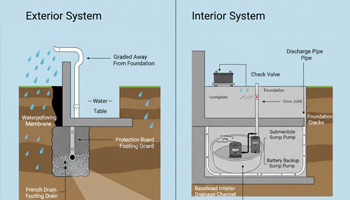
Best Sump Pump Systems with Battery Backup
Best Sump Pump Systems with Battery Backup When your power goes out during a severe…
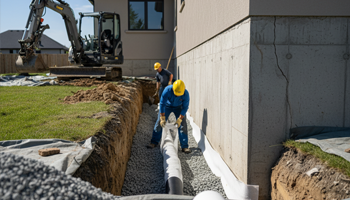
French Drain vs Interior Drainage
French Drain vs Interior Drainage System: Which Protects Your Basement Better? When water threatens your…

Basement Waterproofing Encyclopedia
Basement Waterproofing Encyclopedia: Systems, Methods & Cost Analysis Basement waterproofing isn’t just about keeping your…