Foundation Systems
Foundation Repair Methods & Cost Breakdown
Foundation damage never starts as “catastrophic.” It starts as small cracks, sticking doors, uneven floors, or bowing basement walls. The problem is that choosing the wrong fix — or waiting too long — can turn a cosmetic issue into a structural emergency.
This guide explains the most common foundation problems, how they’re repaired, typical 2025 cost ranges, and when you actually need a structural engineer. We’ll also link to in-depth resources so you can go deeper on each repair method.
Most common foundation problems (and what they mean)
Foundation cracks and wall movement
Hairline vertical cracks can be normal shrinkage. Stair-step cracks in block walls, horizontal cracking, or an inward lean usually signal active movement or stress. Learn what each crack pattern means — and when epoxy or polyurethane injection is actually structural repair versus just sealing a leak — in our full guide to foundation crack repair.
Bowing basement walls
A basement wall that’s curving inward is under lateral soil pressure. This is not cosmetic. Typical repair options include carbon fiber straps or steel I-beams. Compare structural stabilization methods in our article on bowing basement wall repair solutions.
Foundation settlement
Doors that don’t close anymore, gaps at window frames, sloping floors, separation between drywall and trim — these are classic signs of settlement. We explain how to tell settlement from heave (upward movement) in foundation settlement warning signs.
Foundation repair systems (how each fix actually works)
Crack Injection (Epoxy vs Polyurethane)
Injection fills and seals cracks from the inside.
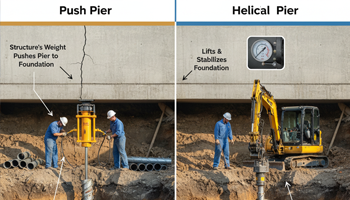
Underpinning: Push Piers vs Helical Piers
When the foundation is sinking, you don’t “patch” it — you transfer the load to stable soil. The two most common systems are:
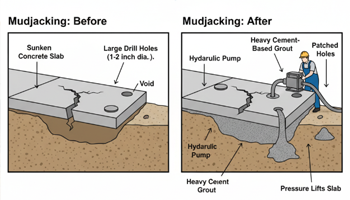
Slab lifting / leveling (Mudjacking vs Foam)
Sunken interior slabs, garage slabs, or driveway slabs can often be lifted without replacing the entire slab. You’ll see terms like “slabjacking,” “mudjacking,” or “polyurethane foam lifting.” We walk through pros, cons, and durability in mudjacking vs polyurethane foam leveling.
Cost: what foundation repair really costs in 2025
Foundation repair pricing depends on:
-
Type of damage (crack vs settlement vs bowing wall)
-
Access and soil conditions
-
Whether engineering approval / permit is required
-
Whether warranty is transferable to next buyer
You can browse realistic ranges — from a few hundred dollars for basic injection to tens of thousands for full underpinning — in our dedicated breakdowns:
Foundation types: slab vs crawl space vs pier & beam
Not every foundation is built the same, and that changes how you repair it.
-
Concrete slab foundations: common in warmer climates; problems show up as floor cracks or slab drop.
-
Pier & beam / crawl space: common in older homes; problems show as floor bounce, moisture, or sagging supports.
Get a full technical comparison here: concrete foundation vs pier and beam.
Before you buy a house: red flags to check
If you’re evaluating a property, walk the perimeter, check downspouts, look for step-cracking in brick veneer, test all doors, and scan the basement for damp staining.
Use our walkthrough here: foundation inspection checklist before buying a home.
That same checklist helps you negotiate pricing before closing.
Do I call a contractor or an engineer?
Here’s the rule of thumb:
We explain how to tell the difference (and how to avoid being oversold work you don’t need) here: foundation settlement warning signs.
Related Resources
FAQ
Is foundation repair worth it before selling a house?
Yes. Verified repair + transferable warranty can prevent buyers from walking and protects appraisal value.
What’s the cheapest real foundation repair?
Epoxy/PU crack injection is usually the lowest cost option — but it only applies to certain crack types.
Which is better: push piers or helical piers?
Depends on soil. Helicals are great for softer soils where you need torque-measured capacity; push piers rely on existing structure weight.