Structural Systems & Basement Solutions
Basement Structural Solutions: Retaining Walls, Framing & Code Compliance
Basements aren’t just about moisture. They’re load paths, wall restraint, safe egress, insulation, and code compliance. If you finish or modify a basement without understanding structure, drainage, and local building code, you’re gambling with resale — and in some cases, with safety.
This page collects our structural resources: retaining walls, basement framing, insulation, concrete slab repair, moisture testing, and when you absolutely need a licensed engineer.
Retaining walls and soil pressure
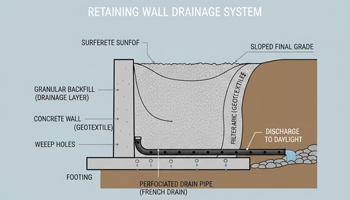
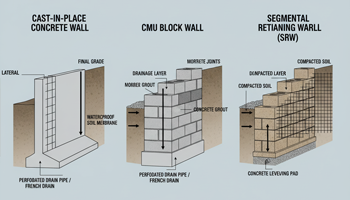
Retaining walls fail for two main reasons: no drainage and no reinforcement. When soil loads push, that wall becomes a structural element, not just landscaping.
Start here:
Those two guides cover geogrid, backfill selection, and proper weep paths so the wall doesn’t rotate or crack.
Basement framing & finishing systems
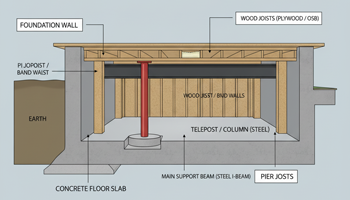
Framing below grade is not the same as framing a normal interior wall. You’re dealing with moisture, thermal bridging, and in many cases, load-bearing beams.
See:
These walk through treated bottom plates, isolation from concrete, and why “just throw up studs and drywall” can trap moisture.
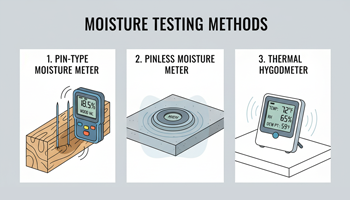
Moisture testing before you finish a basement
You should never close walls (insulation + drywall) until you know how wet the slab and walls really are. Otherwise you trap mold food.
Read this before starting any basement remodel:
That checklist is also something you can show to buyers later to prove you finished the basement responsibly.
Insulation, vapor, and comfort
Basement comfort is insulation + air sealing + moisture control. If you get that wrong, your finished basement will smell musty in 12 months.
Recommended reading:
We explain R-value targets, why fiberglass batts against bare concrete is a bad idea, and how to avoid condensation pockets.
Concrete slab and structural repairs
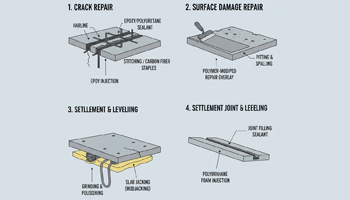
Cracked or spalling slab? That’s not just cosmetic if you have load-bearing posts sitting on it.
See:
This covers when a patch is fine, when you need slab lifting, and when you’re looking at structural concern.
Code requirements: egress, safety, resale
Finishing a basement for living space usually triggers code: ceiling height, emergency egress, insulation, vapor control, electrical, etc.
Key references:
These two are critical if you plan to call it a “bedroom” or list “finished basement” on a real estate listing.
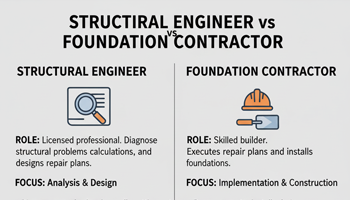
Do you need a structural engineer or can a contractor handle it?
Short version:
-
Cosmetic crack in slab? Contractor.
-
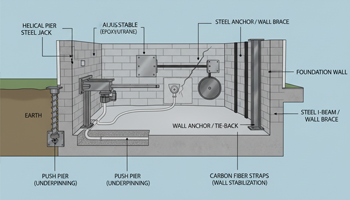
Cutting or moving a load-bearing wall/beam? Engineer.
-
Retaining wall leaning or bowing? Engineer.
-
Adding egress window in a below-grade wall? Often engineer.
Full breakdown here:
Related Resources
FAQ
Can I finish a basement without pulling permits?
If you’re adding bedrooms, cutting egress, touching load-bearing walls, or altering electrical — no. You’re in permit territory.
Why is my retaining wall leaning?
Almost always drainage. Soil pressure + trapped water = rotation.
Is spray foam safe against concrete basement walls?
Spray foam can work, but you need to control moisture first. In some cases rigid foam + sealed framing is safer and code-friendlier.