Basement Finishing Cost:
Framed Drywall vs Modular Panels
Finishing a basement transforms unused square footage into valuable living space, but choosing between traditional framed drywall construction and modern modular panel systems represents one of the most consequential budget decisions in the project. The cost difference between these approaches can easily exceed $20,000 to $30,000 for typical residential basements, while installation timelines, performance characteristics, and long-term value propositions vary dramatically.
The traditional framed drywall approach remains the default choice for most basement finishing projects, offering maximum design flexibility, widespread contractor availability, and the lowest material costs. However, modern modular panel systems—exemplified by Owens Corning Basement Finishing System and Total Basement Finishing—promise faster installation, superior moisture resistance, and simplified future access to utilities hidden behind walls.
Understanding the true cost implications requires looking beyond initial price tags to consider installation timeframes, performance differences, DIY feasibility, warranty coverage, and long-term maintenance requirements. A system that costs 30% more initially but installs in one-quarter the time might prove more economical when factoring in opportunity costs and value of time.
Having worked extensively with both systems across hundreds of basement projects, I’ve observed that the Owens Corning modular approach typically costs 20% to 40% more initially but reduces installation time by 60% to 70%. For homeowners who value their time or need the space operational quickly, that premium makes financial sense. However, for dry basements with available skilled contractors, traditional drywall often delivers better overall value and greater design flexibility.
This comprehensive guide breaks down actual 2025 costs, compares installation requirements, evaluates performance characteristics, and identifies when each system provides optimal value for your specific situation and budget.
Traditional Framed Drywall System Explained
The traditional approach to basement finishing uses wood or metal framing to create wall structures covered with gypsum drywall panels—the same construction method used throughout most residential interiors. This time-tested system offers maximum flexibility and contractor familiarity at the lowest material costs.
Material Components (Studs, Drywall, Insulation)
Traditional basement finishing systems consist of several integrated material layers working together to create finished living spaces. The wall assembly typically begins with wood studs—most commonly 2×4 lumber at 16 inches on center for non-load-bearing partition walls, though 2×6 framing may be specified where additional insulation depth is desired or plumbing must run within wall cavities.
Bottom plates are fastened to the concrete basement floor using powder-actuated fasteners or concrete anchors, establishing the foundation for vertical wall framing. Top plates connect to floor joists above, completing the structural frame. Electrical wiring runs through drilled holes in the studs, with outlet and switch boxes attached to the framing before drywall installation.
Insulation fills the stud cavities, with rigid foam board or fiberglass batts providing thermal resistance. Basement insulation requirements vary by climate zone and local building codes, but typical specifications call for R-11 to R-15 in most regions. Vapor barriers may be required depending on local codes and moisture conditions.
Drywall panels—typically ½-inch thickness for walls and ⅝-inch for ceilings—are fastened to the framing using drywall screws. Standard panels measure 4 feet by 8 feet, though 4 feet by 12 feet sheets are sometimes used for ceilings to reduce seams. Moisture-resistant «green board» or paperless drywall provides enhanced moisture protection in basement applications prone to humidity.
Joint compound fills and smooths the seams between drywall panels and fastener dimples, with multiple coats applied, dried, and sanded to create seamless surfaces ready for paint or other finishes. Corner bead protects and defines outside corners. The finishing process requires skill to achieve professional results but uses inexpensive materials.
Labor Requirements & Skill Level
Traditional drywall finishing demands multiple specialized skills across different trades, with quality outcomes depending heavily on installer expertise and attention to detail. The work typically proceeds through distinct phases, each requiring specific capabilities.
Framing installation requires carpentry skills including accurate measurement and cutting, maintaining plumb and level alignment, proper fastener selection and placement, and coordination with electrical and plumbing rough-in work. Experienced framers work efficiently, but the process remains time-intensive compared to modular alternatives.
Electrical rough-in necessitates licensed electricians who understand code requirements for basement circuits, outlet spacing, lighting provisions, and proper grounding in below-grade environments. Plumbing work may be required for bathrooms, wet bars, or utility connections.
Drywall installation and finishing represents the most skill-intensive phase. Hanging drywall panels requires physical strength to position large, heavy sheets and technique to achieve proper fastener spacing and edge alignment. The finishing process—applying joint compound, taping seams, and sanding to smooth perfection—separates professional results from amateur efforts. Skilled drywall finishers produce seamless walls ready for painting, while inexperienced work shows every imperfection under proper lighting.
Painting provides the final finish, requiring surface preparation, primer application, and multiple finish coats. While painting appears straightforward, achieving uniform coverage and professional results demands more skill than most homeowners recognize.
Timeline for Typical Basement (500-1500 sq ft)
Traditional framed drywall basement finishing projects extend across 4 to 8 weeks for typical residential basements, with the timeline varying based on project scope, contractor availability, and complexity of electrical and plumbing work.
Week 1-2 typically involves framing installation, including layout and bottom plate installation, stud framing for all walls and soffits, door frame installation, and inspection of framing work if required by building codes. Simultaneous or immediately following, electrical and plumbing rough-in occurs with circuits and outlet boxes installed, lighting provisions established, and any necessary plumbing connections completed.
Week 3-4 covers insulation installation in exterior walls and between living spaces and mechanical areas, followed by drywall hanging on walls and ceilings. Building inspection of rough-in work often occurs at this stage before drywall covers the framing.
Week 5-6 involves the time-intensive drywall finishing process with multiple coats of joint compound applied with drying time between coats, sanding to smooth surfaces, and priming all drywall surfaces.
Week 7-8 includes final painting with typically two finish coats, trim installation including baseboards, door casings, and any decorative elements, and final electrical and plumbing fixture installation.
Projects can extend beyond this timeframe when contractor scheduling delays occur, custom features require additional fabrication time, or building inspection corrections are needed. Weather rarely affects timeline since work occurs indoors, though material delivery can be delayed during severe weather.
Modular Panel Systems Overview
Modular basement finishing systems represent a fundamental departure from traditional construction, using pre-manufactured wall panels that install over framing systems specifically engineered for rapid assembly and superior moisture performance.
How Owens Corning Basement Finishing System Works
The Owens Corning Basement Finishing System exemplifies the modular approach, utilizing proprietary components that integrate into a complete wall system. The system begins with metal stud framing designed specifically for the panels, providing structural support while minimizing installation time compared to traditional wood framing.
Wall panels consist of vinyl-finished surfaces bonded to rigid insulation backing, creating integrated structural and finish elements. The panels measure 4 feet wide and install vertically from floor to ceiling in most applications. An interlocking profile along panel edges creates continuous surfaces without visible seams at joints.
The vinyl finish surface comes in various colors and textures, providing completed wall appearance immediately upon installation without requiring painting. The material resists moisture, won’t support mold growth, and can be cleaned with standard household cleaners.
Insulation integral to each panel provides thermal resistance, with typical R-values ranging from R-11 to R-13 depending on panel configuration. This integrated approach eliminates the separate insulation installation step required with traditional drywall systems.
Trim components including baseboards, crown molding, and window/door casings coordinate with the panel system, utilizing matching vinyl finishes that complete the installation without painting or staining. Electrical boxes and HVAC registers install through cutouts in the panels, with trim rings providing finished appearances around penetrations.
The system includes ceiling tiles that coordinate with wall panels, creating unified appearances throughout the finished space. The suspended ceiling grid allows easy access to utilities above while maintaining finished aesthetics.
Total Basement Finishing System Features
Total Basement Finishing offers a competing modular system with similar concepts but different implementation details and material characteristics. Their system emphasizes moisture-resistant performance, promoting the product specifically for basements with historical moisture concerns or in regions with high water tables.
The wall panels use composite construction with moisture-resistant cores and finished surfaces, designed to withstand basement humidity without degrading. Like Owens Corning, the system provides integrated insulation, finished surfaces, and coordinated trim components.
Total Basement Finishing emphasizes the system’s resistance to mold and mildew, positioning it as the solution for basements where traditional drywall has failed due to moisture issues. The company operates through a franchise dealer network, with certified installers trained in their specific methods and materials.
Marketing materials highlight the system’s ability to be removed, dried, and reinstalled if flooding occurs—a significant advantage over traditional drywall that typically requires replacement after water exposure. This removability also provides access to utilities behind walls without permanently destroying finished surfaces.
Other Modular Options (Wahoo Walls, ZenWall)
Several alternative modular basement finishing products compete in the market, each offering distinct features and price points. Wahoo Walls produces engineered composite panels designed specifically for basement applications, with emphasis on moisture resistance and thermal performance. Their panels install over standard wood or metal framing rather than requiring proprietary framing systems.
ZenWall provides another alternative focused on moisture-resistant performance, using inorganic materials that won’t support mold growth even in damp conditions. The product targets basements with chronic moisture issues where organic materials like drywall face elevated failure risk.
These alternative systems generally fall between traditional drywall and premium modular systems in both cost and performance. They offer improved moisture resistance compared to standard drywall while maintaining greater design flexibility and lower costs than comprehensive systems like Owens Corning.
Cost Breakdown: Framed Drywall
Understanding true costs for traditional drywall basement finishing requires accounting for all material, labor, and ancillary expenses that contribute to project totals.
Material Costs per Square Foot
Material costs for traditional framed drywall basement finishing vary with quality levels, regional pricing, and specific product selections, but typical 2025 costs for quality materials fall in predictable ranges.
Framing materials including lumber, plates, and fasteners typically cost $1.50 to $3.00 per square foot of finished space. This includes all studs, top and bottom plates, blocking, and fasteners. Metal stud framing runs slightly higher at $2.00 to $3.50 per square foot but offers advantages in moisture-prone environments.
Insulation costs depend on type and R-value requirements. Fiberglass batt insulation (R-11 to R-15) costs $0.50 to $1.00 per square foot, while rigid foam board insulation runs $1.00 to $2.00 per square foot for higher R-values and superior moisture resistance.
Drywall materials including panels, joint compound, tape, corner bead, and fasteners typically total $1.00 to $2.00 per square foot. Moisture-resistant drywall products add $0.25 to $0.50 per square foot compared to standard panels.
Primer and paint materials cost $0.50 to $1.00 per square foot for quality products with proper coverage. Trim materials including baseboards, door casings, and any decorative elements add $1.00 to $3.00 per linear foot depending on material quality and profile complexity.
Total material costs for traditional drywall basement finishing typically range from $8 to $15 per square foot, representing roughly 20% to 30% of total project costs. The remainder goes to labor, which dominates project economics.
Labor Costs by Region
Labor costs vary substantially by geographic region, local wage rates, contractor availability, and market competition. These 2025 rates reflect typical ranges for quality work by professional contractors.
In major metropolitan areas and high-cost-of-living regions, total installed costs for framed drywall basement finishing typically range from $55 to $75 per square foot. This includes all framing, electrical rough-in, insulation, drywall installation and finishing, painting, and trim work. Some high-cost markets exceed $80 per square foot for premium work.
Mid-sized cities and moderate-cost regions see installed costs of $45 to $60 per square foot for complete professional installation. These areas often balance reasonable contractor rates with adequate competition to prevent price inflation.
Rural areas and lower-cost regions may achieve installed costs of $35 to $50 per square foot, though contractor availability can be limited, potentially extending project timelines. The lower costs reflect regional wage differences rather than reduced quality if reputable contractors are selected.
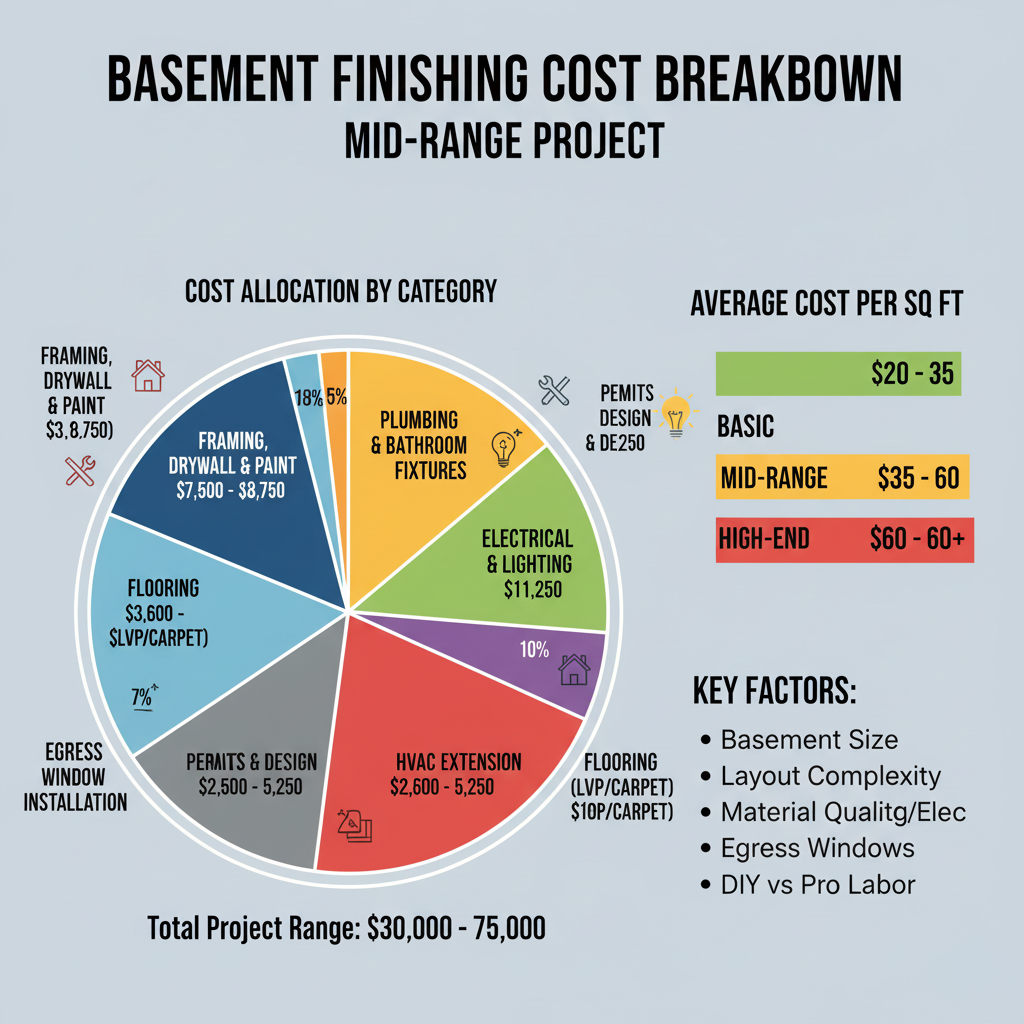
For a typical 1,000 square foot basement in an average-cost market, expect total professional installation costs of $45,000 to $75,000 using traditional framed drywall methods. This encompasses all labor and materials but excludes bathroom fixtures, cabinetry, flooring, and other finishing elements beyond basic wall and ceiling construction.
Hidden Costs (Permits, Electrical, Plumbing)
Several cost elements beyond basic wall construction frequently surprise homeowners who focus only on visible finishing costs. Building permits are required in virtually all jurisdictions for basement finishing that creates habitable space, with fees typically ranging from $300 to $1,500 depending on project scope and local fee structures.
Electrical work beyond basic lighting and outlets adds substantially to costs. Separate circuits for office equipment, home theater systems, or kitchen areas require additional materials and labor. AFCI (arc-fault circuit interrupter) and GFCI (ground-fault circuit interrupter) breakers mandated by modern codes cost $40 to $80 each compared to $5 to $10 for standard breakers. Recessed lighting installation runs $75 to $150 per fixture installed.
Plumbing for bathrooms, wet bars, or utility sinks involves substantial costs. A simple half-bathroom addition (toilet and sink) typically costs $3,000 to $5,000 for rough-in plumbing and fixture installation, while full bathrooms with showers or tubs can exceed $8,000 to $12,000.
HVAC modifications to adequately heat and cool the newly finished space often prove necessary. Extending existing ductwork costs $500 to $2,000 for typical basements, while undersized systems may require equipment upgrades costing $3,000 to $8,000 or more.
Egress windows required for basement bedrooms cost $2,500 to $5,000 installed, including window wells, cutting through foundation walls, and window installation. This mandatory safety feature adds substantially to bedroom conversion projects.
Cost Breakdown: Modular Panel Systems
Modular basement finishing systems command premium pricing compared to traditional drywall but deliver faster installation and superior performance characteristics that justify costs in specific situations.
Owens Corning System Pricing
The Owens Corning Basement Finishing System typically costs $65 to $95 per square foot for professional installation in 2025—representing a 20% to 40% premium over traditional drywall approaches. For a 1,000 square foot basement, expect total project costs of $65,000 to $95,000.
This pricing includes all wall panels with integrated insulation and vinyl finishes, proprietary metal framing systems, coordinated trim components, ceiling tiles and grid systems if included, and professional installation by certified dealers. The cost covers complete wall and ceiling finishing but excludes flooring, bathroom fixtures, cabinetry, and major electrical or plumbing work.
The premium pricing reflects several factors: proprietary materials manufactured specifically for the system, limited competition due to dealer network structure, faster installation that reduces labor hours but commands premium rates, and comprehensive warranties that provide long-term value protection.
Geographic variations affect pricing similarly to traditional systems, with high-cost markets at the upper end of ranges and lower-cost regions toward the bottom. However, modular systems show less geographic price variation than traditional drywall since dealer networks establish more standardized pricing structures.
Installation Labor Rates
Modular system installation requires certified installers trained specifically in each manufacturer’s methods and materials. This specialization, combined with faster installation timelines, results in different labor economics compared to traditional drywall.
Installation labor for Owens Corning and similar systems typically represents 40% to 50% of total project costs—a higher percentage than traditional drywall’s 70% to 80% labor component. However, the absolute labor costs may be similar or even lower due to dramatically reduced installation time.
A typical 1,000 square foot basement that requires 6 to 8 weeks with traditional drywall can be completed in 10 to 14 days with modular panels—a 60% to 70% time reduction. This compressed timeline reduces labor hours substantially, potentially offsetting some of the premium material costs.
The labor savings become more apparent when considering opportunity costs. Homeowners who can use the finished space months earlier derive value from that earlier access, whether for additional living area, rental income from finished bedrooms, or simply ending construction disruption sooner.
Dealer Network vs DIY Options
Modular basement finishing systems are distributed almost exclusively through authorized dealer networks rather than retail channels, fundamentally affecting cost structures and eliminating most DIY opportunities.
Owens Corning Basement Finishing System dealers are certified contractors who have invested in training, equipment, and inventory to offer the system. This dealer model ensures quality installation by trained professionals but eliminates the cost competition that open-market products experience. Dealers typically operate within defined territories with limited direct competition from other Owens Corning installers.
Total Basement Finishing operates similarly through franchise dealers who have exclusive territories. The franchise structure adds business overhead that affects pricing but provides consistent quality standards and comprehensive warranty support.
The dealer-only distribution effectively prevents true DIY installation. While some manufacturers may sell materials to consumers, the proprietary components, specialized tools, and installation techniques required make DIY installation impractical for most homeowners. The systems are engineered for professional installation, and manufacturer warranties typically require certified installer work.
This contrasts sharply with traditional drywall materials available at any home center, with extensive online resources supporting DIY installation. The lack of DIY feasibility represents a significant disadvantage for modular systems when comparing costs for skilled, motivated homeowners willing to invest their own labor.
Installation Time Comparison
Installation timeline differences between traditional and modular systems affect not only project convenience but also true economic value when time carries monetary worth.
Framed System: 4-8 Weeks Typical
Traditional framed drywall basement finishing extends across 4 to 8 weeks for typical residential projects, with the range reflecting project complexity, contractor availability, and scope of electrical and plumbing work. The extended timeline results from sequential construction phases, each requiring completion before subsequent work proceeds.
Drywall finishing proves particularly time-intensive, with joint compound requiring 12 to 24 hours of drying time between coats. Three or more coats are standard for professional results, consuming nearly two weeks just for the finishing process. Sanding generates significant dust that must be contained and cleaned, adding time and complication.
Painting requires multiple coats with drying time between applications, adding several more days to the schedule. While painting proceeds relatively quickly, adequate drying ensures proper adhesion and appearance.
Contractor scheduling affects timelines substantially. Popular contractors may have waiting lists before projects begin, and coordinating multiple trades (framers, electricians, drywall installers, painters) creates scheduling complexities that can extend timelines beyond the actual work duration.
Modular System: 1-2 Weeks Typical
Modular panel systems dramatically compress installation timelines, with typical 1,000 square foot basements completed in 10 to 14 days from start to finish. This represents 60% to 70% time reduction compared to traditional methods—a transformative difference for homeowners eager to use the space or wanting to minimize construction disruption.
The time savings stem from several factors: panels arrive with finished surfaces eliminating separate painting steps, no drying time required between installation phases, integrated insulation eliminates a separate construction step, and proprietary systems streamline installation with engineered components that fit together efficiently.
The compressed timeline creates value beyond mere convenience. Construction disruption affects the entire household—dust, noise, contractor access, and restricted movement throughout the home. Reducing this disruption from two months to two weeks substantially improves the construction experience.
For rental properties or situations where the finished space generates income, earlier completion creates direct financial value. A basement finished six weeks sooner can be rented for those six weeks, generating thousands of dollars that offset some of the system’s premium cost.
Time-Value Consideration
The economic value of time varies dramatically between individuals and situations, making time savings more valuable to some homeowners than others. A homeowner working from home who needs dedicated office space immediately may find two-week installation worth substantial premium over eight-week timeline. The ability to resume normal household routines six weeks sooner carries real value difficult to quantify but deeply appreciated by those experiencing construction.
Conversely, homeowners with flexible timelines and limited budgets rationally prioritize cost savings over speed. If the basement isn’t urgently needed and budget constraints are significant, accepting longer construction timelines to achieve lower costs makes economic sense.
The time-value calculation should also consider opportunity costs of the homeowner’s own involvement. Traditional drywall projects may demand significant homeowner time for decisions, coordinating contractors, and managing the multi-phase process. Modular systems with single contractors completing all work in compressed timelines reduce these demands.
Performance Characteristics
Beyond costs and timelines, the finished systems deliver different performance attributes that affect long-term satisfaction, maintenance requirements, and durability.
Moisture Resistance
Moisture performance represents the most significant functional difference between traditional drywall and modular panel systems, with implications for basement longevity and maintenance in moisture-prone environments.
Traditional drywall uses paper-faced gypsum panels that remain vulnerable to moisture damage despite «moisture-resistant» formulations. Chronic humidity or occasional water exposure can cause paper facing to deteriorate, promote mold growth, and compromise structural integrity. Once drywall suffers water damage, replacement typically becomes necessary—the material cannot be dried and restored effectively.
Modular panel systems use vinyl, composite, or other synthetic materials inherently resistant to moisture. These materials don’t support mold growth, won’t deteriorate when exposed to humidity, and can often be dried and restored after water exposure. For basements with historical moisture issues, this represents decisive advantage.
In basements with chronic moisture problems where traditional drywall has failed multiple times, modular systems provide the solution that addresses root causes. The moisture resistance justifies premium costs when alternative is repeatedly replacing failed drywall.
However, in dry basements with proper drainage and controlled humidity, traditional drywall performs adequately for decades. The moisture resistance advantage provides minimal value when moisture exposure remains unlikely. Modern moisture-resistant drywall products and proper construction techniques mitigate most moisture concerns in well-prepared basements.
Insulation R-Values
Thermal performance affects heating and cooling costs, comfort, and energy efficiency of finished basement spaces. Both systems provide adequate insulation when properly specified, though implementation differs.
Traditional drywall systems allow flexible insulation specification, with R-values adjusted based on climate requirements and budget. Fiberglass batt insulation typically provides R-11 to R-15 in 2×4 wall cavities, while 2×6 framing accommodates R-19 to R-21. Rigid foam board insulation installed against foundation walls before framing provides R-5 to R-10 per inch of thickness, achieving higher R-values in less space.
This flexibility enables optimization based on specific needs—higher R-values in cold climates, minimal insulation in moderate regions. The system accommodates any insulation type and configuration that fits within the wall assembly.
Modular panel systems provide integrated insulation at fixed R-values determined by panel design—typically R-11 to R-13 for standard residential panels. This integrated approach simplifies installation but eliminates flexibility to adjust thermal performance based on specific requirements.
For most residential basements in typical climates, R-11 to R-15 provides adequate thermal performance. The difference between systems proves minimal in practice, with both meeting energy code requirements in most jurisdictions.
Sound Dampening
Acoustic performance affects livability, particularly for basement spaces used as home theaters, music rooms, or bedrooms where sound isolation from other living areas matters.
Traditional drywall systems offer inherent acoustic advantages. Multiple layers of drywall with resilient channels create effective sound barriers. Insulation within wall cavities absorbs sound energy, reducing transmission between spaces. Specialized acoustic drywall products enhance performance further for critical applications.
The mass and flexibility of gypsum drywall naturally dampen sound transmission. Doubling drywall thickness on critical walls—a common technique for home theaters or bedrooms—substantially improves acoustic isolation at modest cost increases.
Modular panel systems provide adequate acoustic performance for typical residential applications but generally don’t match traditional drywall’s sound-dampening capabilities. The panels are thinner and lighter than double-layer drywall assemblies, reducing their sound-blocking effectiveness. Some systems incorporate acoustic enhancement features, but achieving equivalent performance to optimized drywall systems proves challenging.
For basement spaces where acoustic isolation is critical—home theaters demanding minimal sound leakage, drum practice rooms, or bedrooms where privacy matters—traditional drywall systems engineered for acoustic performance deliver superior results.
Durability & Impact Resistance
Long-term durability and resistance to physical damage affect maintenance requirements and lifespan of basement finishes.
Traditional drywall suffers from modest impact resistance—sharp objects puncture surfaces easily, and even moderate impacts can dent or damage walls requiring patching and repainting. However, repair proves straightforward and inexpensive. Small holes patch easily with joint compound, and larger damage can be repaired by cutting out damaged sections and installing new drywall pieces.
The material itself lasts indefinitely when protected from moisture, with typical service life of 30 to 50+ years in dry environments. Maintenance involves periodic repainting every 5 to 10 years to refresh appearance.
Modular panel systems offer superior impact resistance compared to drywall. The vinyl or composite surfaces resist denting and puncturing better than gypsum panels. However, when damage does occur, repair proves more challenging—specialized materials may be required, and matching existing finishes can be difficult.
The panels themselves should last 25 to 40+ years with minimal maintenance. Vinyl surfaces clean easily and don’t require painting, eliminating that ongoing maintenance requirement. However, if panels fade, scratch, or damage over time, replacement rather than refinishing becomes necessary.
Design Flexibility & Aesthetics
Design options and aesthetic possibilities differ substantially between systems, affecting both initial appearance and future renovation potential.
Customization Options with Each System
Traditional drywall provides maximum design flexibility, accommodating virtually any architectural detail or custom feature. Curved walls, arches, soffits, recessed niches, custom built-ins, and complex ceiling treatments all work seamlessly with drywall construction. Contractors can create any conceivable geometry using standard materials and techniques.
Paint colors, textures, and finishes offer unlimited customization. Decorative paint techniques, wallpaper, or specialty finishes apply easily to drywall surfaces. Changing color schemes requires only repainting—a straightforward weekend project for motivated homeowners.
Trim and molding selections span the full range from simple modern profiles to elaborate traditional details. Any trim product installs conventionally to drywall walls, and custom trim can be milled to exact specifications for unique design requirements.
Modular panel systems constrain design options to manufacturer offerings. Wall colors and textures are limited to available panel selections—typically 10 to 20 options spanning neutral colors and subtle textures. While adequate for most preferences, the selection doesn’t match unlimited paint possibilities.
Curved walls, arches, and complex geometries prove difficult or impossible with rigid panel systems designed for straight wall applications. The systems work well for conventional room layouts but struggle with architectural creativity.
Trim options coordinate with panel systems but limit selection to compatible products. Custom or specialty trim that doesn’t integrate with the system may not install satisfactorily.
Finish Quality Comparison
Finish quality affects both initial appearance and long-term satisfaction with basement spaces.
Professional drywall finishing produces seamless surfaces indistinguishable from upper-level construction. Properly finished and painted drywall provides elegant, sophisticated appearances appropriate for any design style. The material accepts any finish treatment, from simple paint to elaborate specialty finishes.
However, achieving professional quality requires skilled craftsmanship. Amateur drywall finishing often shows defects—visible seams, uneven surfaces, or rough texture—that compromise appearance. The difference between expert and mediocre drywall work proves immediately obvious under proper lighting.
Modular panel systems deliver consistent finish quality regardless of installer skill. The factory-finished surfaces arrive ready for use, eliminating the craftsmanship variable that affects drywall outcomes. This consistency ensures predictable results and eliminates concerns about finishing quality.
The vinyl surfaces provide clean, uniform appearances suitable for most residential applications. However, some homeowners find the appearance somewhat commercial or utilitarian compared to painted drywall’s more refined aesthetic. The visible seams between panels, while minimized by interlocking profiles, remain more apparent than properly finished drywall joints.
Future Renovation Considerations
Long-term flexibility for modifications, renovations, or utility access affects lifecycle economics beyond initial installation costs.
Traditional drywall walls can be modified easily—cutting new openings for doors or windows, adding electrical outlets, or accessing utilities behind walls requires only basic tools and skills. Repairs and patches blend seamlessly with existing surfaces when properly executed. Complete renovation involves simply demolishing old drywall and rebuilding—a straightforward process using readily available materials and widespread contractor expertise.
Modular panel systems offer unique access advantages—panels can be removed to access utilities, then reinstalled without permanent damage. This proves valuable when modifications are needed or plumbing/electrical work requires access behind finished surfaces. However, extensive renovations may require replacing entire systems since panels cannot be cut, patched, or modified like drywall.
DIY Feasibility
The option to install basement finishes yourself represents substantial potential cost savings, though feasibility varies dramatically between systems.
Framed Drywall DIY Cost Savings
Traditional drywall finishing offers the most compelling DIY opportunity in basement construction, with skilled homeowners potentially saving $30,000 to $50,000 in labor costs on typical 1,000 square foot basements.
Material costs for DIY installation range from $8,000 to $15,000 for a 1,000 square foot basement—representing total project costs of $15 to $20 per square foot compared to $45 to $75 per square foot for professional installation. For capable homeowners with adequate time, skills, and motivation, these savings justify significant personal effort.
I’ve witnessed skilled homeowners complete 800 square foot basements for $15,000 to $20,000 in material costs, achieving professional-quality results through careful work and attention to detail. The time investment extends across several months of evenings and weekends, but the financial savings prove substantial.
Successful DIY basement finishing requires multiple skills: basic carpentry for framing, electrical knowledge for safe wiring (or hiring licensed electricians for this phase), drywall installation and finishing technique, and painting skills for professional-appearing final finishes.
Drywall finishing presents the steepest learning curve—achieving seamless joints and smooth surfaces demands practice and patience. First-time DIYers should expect visible imperfections, though careful work and adequate sanding can achieve acceptable results. Video tutorials, home center workshops, and written guides provide substantial support for motivated learners.
The DIY approach extends timelines substantially compared to professional work. A project professionals complete in 6 to 8 weeks might consume 4 to 6 months of part-time DIY effort. Homeowners must realistically assess their available time and willingness to manage extended construction in their homes.
Modular System DIY Limitations
Modular basement finishing systems largely eliminate DIY possibilities, requiring certified installers with specialized training and tools. While some manufacturers theoretically sell materials to consumers, practical DIY installation proves nearly impossible for most homeowners.
The systems use proprietary components requiring specific installation sequences and techniques taught through dealer certification programs. Specialized tools for cutting, fitting, and securing panels aren’t readily available to consumers. Manufacturers’ warranties typically require certified installer work, invalidating coverage for DIY installations.
The dealer-only distribution model means materials aren’t stocked at home centers where DIY consumers shop. Ordering directly from manufacturers involves substantial upfront costs without guarantees of successful installation.
Some alternative modular products like Wahoo Walls target more DIY-friendly installation over standard framing, but even these simplified systems demand more expertise and specialized knowledge than traditional drywall approaches.
For homeowners seeking maximum cost savings through their own labor, modular systems provide minimal opportunities. The DIY elimination represents a significant disadvantage when comparing total costs for skilled, motivated homeowners.
Skills Required for Each Approach
Traditional drywall finishing demands multiple competencies: carpentry fundamentals including measuring, cutting, and fastening lumber accurately; electrical basics for safe circuit planning and wiring; drywall installation technique for positioning and fastening large, heavy panels; finishing artistry for achieving seamless joints and smooth surfaces; painting skills for uniform coverage and professional appearance.
Each skill can be learned through study and practice, with extensive educational resources available online and through home centers. The learning process involves mistakes and imperfections, but determined homeowners can achieve satisfactory results.
Modular systems require different skills focused on precision measurement, panel cutting and fitting, proprietary fastening systems, and specialized trim installation. However, these skills are taught through manufacturer training programs generally unavailable to consumers, creating practical barriers to DIY installation regardless of homeowner capabilities.
Warranty & Long-Term Value
Warranty coverage and long-term value considerations affect total ownership costs beyond initial installation expenses.
Manufacturer Warranties on Modular Systems
Modular basement finishing systems typically include substantial manufacturer warranties that provide long-term value protection. Owens Corning offers 30-year limited warranties on their basement finishing system when professionally installed by certified dealers. The warranty covers material defects, manufacturing issues, and certain performance failures.
Total Basement Finishing provides similar warranty coverage through their franchise network, with specific terms varying by product line and installation. The comprehensive warranties represent significant value—traditional drywall installations typically carry no material warranty beyond basic product defect coverage.
However, warranty terms deserve careful review. Coverage typically requires professional installation by certified dealers, specific maintenance requirements, and limitations on what circumstances trigger warranty coverage. Understanding exclusions and limitations helps set realistic expectations.
The warranty value proves most significant for expensive components that could fail prematurely. If panels delaminate, finishes degrade, or structural elements fail due to manufacturing defects, warranty coverage protects substantial investment. However, warranties don’t cover damage from homeowner modifications, flooding, or normal wear and tear.
Lifespan Expectations
Expected service life affects lifecycle costs and renovation planning horizons. Traditional drywall installations in dry basement environments routinely last 30 to 50+ years with minimal maintenance beyond periodic repainting. The materials themselves don’t degrade over time when protected from moisture, though paint finishes require refreshing every 5 to 10 years.
Moisture exposure substantially reduces drywall lifespan—chronic humidity or occasional flooding can necessitate replacement after months or a few years rather than decades. In moisture-prone basements, traditional drywall may prove uneconomical due to repeated replacement needs.
Modular panel systems should provide 25 to 40+ year service life with proper installation and normal use. The synthetic materials resist degradation better than drywall in moisture-prone environments but may experience fading, scratching, or other wear over time. Unlike drywall that can be repainted, panel finishes cannot be easily refreshed, potentially necessitating replacement for aesthetic reasons before structural failure occurs.
Resale Value Impact
The impact of basement finishing on home resale value varies by market, buyer preferences, and quality of installation. Well-finished basements generally add 50% to 70% of project costs to home values—a $60,000 basement finishing project might increase home value by $30,000 to $42,000.
Traditional drywall finishes appeal to the broadest buyer pool, representing familiar, mainstream construction that matches the rest of the home. Quality installation presents as seamlessly integrated living space indistinguishable from upper levels.
Modular panel systems may appeal strongly to buyers who value moisture resistance and low maintenance, particularly in areas with known basement moisture challenges. However, some buyers may view the systems as less desirable than traditional finishes, perceiving them as commercial-appearing or questioning long-term durability.
The resale impact likely depends more on finishing quality, design, and overall appeal than specific construction method. Either system can enhance home values when well-executed and presented as quality finished space.
Best Applications for Each System
Understanding when each system provides optimal value helps match solutions to specific situations and requirements.
When Framed Drywall Makes Sense
Traditional framed drywall represents the best choice for several common scenarios. Dry basements with good drainage and controlled humidity don’t require premium moisture resistance, making the lower cost and greater flexibility of drywall systems optimal value.
Projects where custom architectural details matter—curved walls, elaborate trim work, specialty ceiling treatments, or unique design features—benefit from drywall’s unlimited design flexibility. The system accommodates any conceivable geometry using standard materials and techniques.
Homeowners with construction skills and time to invest in DIY installation achieve maximum value through traditional drywall. The potential savings of $30,000 to $50,000 on typical basements justify significant personal effort for many capable homeowners.
Budgets that simply cannot accommodate 20% to 40% premium for modular systems favor traditional drywall. When cost constraints prove decisive, achieving finished space at minimum expense outweighs other considerations.
Projects where acoustic performance matters critically—home theaters, music rooms, or bedrooms requiring sound isolation—benefit from traditional drywall systems optimized for sound dampening through multiple layers, resilient channels, and acoustic insulation.
When Modular Panels Are Optimal
Modular basement finishing systems provide optimal value in three distinct scenarios based on extensive project experience. First, basements with historical moisture problems where traditional drywall has failed repeatedly justify premium costs for moisture-resistant systems. The mold-proof, removable panels that can be dried and reinstalled after water exposure solve problems that traditional methods cannot.
Second, homeowners with compressed timelines who need finished space operational quickly benefit from the 60% to 70% installation time reduction. The ability to complete 1,000 square foot basements in 10 to 14 days versus 6 to 8 weeks creates value that justifies premium costs for those who urgently need the space or want to minimize construction disruption.
Third, areas prone to minor flooding where the ability to remove, dry, and reinstall panels provides crucial advantage over drywall that requires complete replacement after water exposure. For homes with sump pumps that occasionally fail or seasonal water issues, this removability justifies premium costs.
The systems also suit homeowners who prioritize low-maintenance finishes and appreciate consistent factory quality over potential craftsmanship variations in drywall finishing.
Hybrid Approaches
Some projects benefit from combining both systems strategically. Installing modular panels on exterior foundation walls most vulnerable to moisture while using traditional drywall for interior partitions optimizes costs while protecting against moisture where risk concentrates.
Using traditional drywall for main living areas where design flexibility matters while employing modular panels in utility areas, storage spaces, or mechanicals rooms balances aesthetics with practical moisture resistance.
These hybrid approaches require careful coordination to create cohesive appearances where different systems meet, but they can optimize performance while managing costs.
Real Project Examples & Cost Case Studies
Examining actual projects across different sizes illustrates real-world costs and decision factors for both systems.
Small Basement (500 sq ft)
A 500 square foot basement finishing project represents a modest scope, perhaps creating a home office, exercise room, or additional living space. With traditional framed drywall, expect total professional installation costs of $22,500 to $37,500 ($45 to $75 per square foot). Material costs run approximately $4,000 to $7,500, with labor consuming the remainder.
DIY installation using traditional drywall might achieve finished space for $6,000 to $10,000 in materials, representing substantial savings for capable homeowners willing to invest their labor over several months.
Modular panel systems cost $32,500 to $47,500 professionally installed ($65 to $95 per square foot)—a $10,000 premium over traditional methods at the midpoint of price ranges. The installation completes in approximately one week versus three to four weeks for drywall.
For this smaller project, the premium for modular systems proves harder to justify unless moisture concerns or timeline compression provide clear value. The absolute dollar premium of $10,000 represents significant expense for modest space addition.
Medium Basement (1000 sq ft)
A 1,000 square foot basement represents a typical residential project, potentially including family room, bedroom, bathroom, and storage areas. This scale illustrates the economics most homeowners face when finishing basements.
Traditional framed drywall costs $45,000 to $75,000 professionally installed in 2025, based on extensive market observation across multiple regions. Material costs run $12,000 to $20,000, with $33,000 to $55,000 in labor. The project extends 6 to 8 weeks with professional contractors.
Skilled homeowners tackling DIY installation might complete the project for $15,000 to $20,000 in materials, achieving $30,000 to $55,000 in savings by investing several months of evenings and weekends. These savings prove substantial for capable homeowners with adequate time.
Owens Corning or comparable modular systems cost $65,000 to $95,000 professionally installed—representing $20,000 to $30,000 premium at typical midpoint pricing. Installation completes in 10 to 14 days, dramatically reducing construction disruption and accelerating access to finished space.
The decision hinges on personal priorities: cost-conscious homeowners with dry basements and flexible timelines favor traditional drywall, while those valuing time savings, dealing with moisture issues, or simply preferring turnkey simplicity may find the modular premium worthwhile.
Large Basement (1500+ sq ft)
Large basement finishing projects spanning 1,500+ square feet create substantial living space additions, often including multiple bedrooms, full bathrooms, entertainment areas, and possibly wet bars or kitchens.
Traditional framed drywall installation costs $67,500 to $112,500 for 1,500 square feet professionally installed ($45 to $75 per square foot). The project timeline extends 8 to 12 weeks given the increased scope. DIY-capable homeowners might achieve finished space for $22,000 to $30,000 in materials, though the time commitment becomes substantial—potentially 6 to 9 months of part-time work.
Modular panel systems run $97,500 to $142,500 for professional installation ($65 to $95 per square foot), representing $30,000+ premium over traditional methods. Installation still completes in approximately 2 to 3 weeks—a dramatic timeline advantage as project size increases.
At this scale, the absolute dollar differences become substantial, making cost considerations increasingly important. However, the percentage premium remains consistent, and the timeline advantages become even more pronounced. For homeowners who can afford the premium and value rapid completion, modular systems deliver meaningful benefits on large projects.
Need more specifics about your basement finishing project? Share details about your basement size, moisture history, timeline requirements, and budget parameters for customized guidance on which system provides optimal value for your specific situation.
Currently viewing
Basement Finishing Cost


Urban Flood Mitigation
Urban Flood Mitigation and Foundation Design in Coastal Cities Coastal urban centers face mounting pressure…

Sump Pump Maintenance
Sump Pump Maintenance Guide: Annual Checklist & When to Replace [2025] Sump pump failure rates…
Window Well Drainage Systems
Window Well Drainage Systems: Prevent Basement Window Flooding Window well flooding destroys finished basements through…

Crawl Space Encapsulation Cost
Crawl Space Encapsulation Cost: Vapor Barrier Installation Guide Your roof collects hundreds of gallons of…
Gutter Drainage & Downspout Extensions
Gutter Drainage & Downspout Extensions: Prevent Foundation Water Damage Your roof collects hundreds of gallons…
Basement Dehumidifier Sizing
Basement Dehumidifier Sizing Guide: Square Footage & Moisture Level Calculator Choosing the wrong dehumidifier size…
Drylok vs Xypex vs Thoroseal
Drylok vs Xypex vs Thoroseal: Which Basement Waterproofing Paint Actually Works? Basement waterproofing paints promise…
Exterior Basement Waterproofing
Exterior Basement Waterproofing: Complete Excavation Cost & Membrane Installation Guide Exterior basement waterproofing represents the…
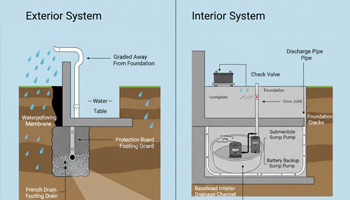
Best Sump Pump Systems with Battery Backup
Best Sump Pump Systems with Battery Backup When your power goes out during a severe…
French Drain vs Interior Drainage
French Drain vs Interior Drainage System: Which Protects Your Basement Better? When water threatens your…