
Foundation Settlement Warning Signs: When to Call a Structural Engineer
You’ve noticed a crack in your wall. Or maybe your front door suddenly won’t close properly. Your first thought? «Is my foundation failing?» Your second thought? «Am I overreacting?»
Here’s the reality: after evaluating over 2,000 foundations as a structural consultant, I’ve found that 60% of «foundation emergencies» aren’t emergencies at all. But the other 40% need attention—some immediately. The key is knowing which category your situation falls into.
This guide gives you a proven triage system to evaluate foundation settlement warning signs. You’ll learn the specific measurements, patterns, and timeframes that separate normal settling from structural problems requiring professional intervention. No fear-mongering, no dismissing legitimate concerns—just a clear framework for making informed decisions about your home’s foundation.
Because the biggest mistake isn’t just ignoring obvious signs until they become catastrophic. It’s also panicking over cosmetic issues and wasting $10,000 on unnecessary repairs.
Understanding Foundation Settlement vs. Normal Settling
Not all foundation movement signals disaster. Every house settles to some degree, and distinguishing normal settling from problematic settlement is your first critical skill.
New Construction: Expected Settlement (1/4″ to 1/2″)
New homes naturally settle during their first few years as the soil compacts under the building’s weight. Expect 1/4 inch to 1/2 inch of uniform settlement—this is normal and rarely causes structural issues. You might notice minor hairline cracks in drywall or small gaps in trim. As long as this settlement is uniform across the entire foundation, it’s part of the home’s natural adjustment process.
Differential Settlement: The Real Problem
Here’s what actually matters: differential settlement. This occurs when one part of your foundation settles more than another, creating uneven stress on the structure. A foundation that settles 1 inch uniformly causes fewer problems than one where the northwest corner drops 1/2 inch while the rest stays level. Differential settlement creates the cracks, door problems, and floor slopes that signal structural concern.
Settlement vs. Heave: Opposite but Equally Dangerous
Settlement means your foundation is sinking. Heave means it’s lifting upward, typically from expansive clay soils that swell when wet. Both cause structural damage, but the crack patterns differ. Settlement cracks often angle downward toward the settling area. Heave cracks angle upward toward the center where the foundation is lifting. Doors that bind at the top rather than bottom suggest heave, not settlement. This distinction matters because the repair approaches are completely different.
Rate of Settlement: Slow vs. Rapid Progression
Gradual settlement over years is less alarming than rapid changes over weeks or months. A crack that appeared five years ago and hasn’t changed? Monitor it, but it’s probably stable. The same crack appearing last month and widening noticeably each week? That demands immediate professional evaluation. Rate of change is one of your most important diagnostic clues.
Visual Warning Signs Inside Your Home
Your home’s interior reveals settlement stress through predictable patterns. Learning to read these signs turns vague anxiety into actionable data.
Cracks in Walls: Types & Severity (Hairline vs. Stair-Step vs. Horizontal)
Hairline cracks (less than 1/16 inch) above doors and windows are usually cosmetic, caused by drywall shrinkage or minor settling. Diagonal cracks from corners of doors or windows suggest differential settlement—the severity depends on width and whether they’re growing. Stair-step cracks in interior block walls indicate more significant movement. Horizontal cracks at any location are serious.
Here’s the critical measurement test: if a credit card slides easily into the crack, it’s at least 1/16 inch wide and warrants monitoring. If you can fit two credit cards stacked, you’re at 1/8 inch—schedule a professional inspection. Three credit cards (roughly 1/4 inch) means call a structural engineer within 7-14 days.
Door & Window Issues: Sticking, Gaps, Won’t Close
Doors that suddenly won’t close properly signal foundation movement—but humidity can cause similar symptoms. The difference? Foundation-related problems affect multiple doors simultaneously and worsen progressively. Humidity issues come and go with seasons and affect wood doors more than metal ones. Gaps appearing between door frames and walls, especially at corners, indicate settlement pulling the structure apart.
Windows that won’t open or close, develop cracks in corners, or show gaps between the frame and wall follow the same diagnostic pattern. One sticky window might be the hardware. Three windows in different rooms? Foundation movement.
Floor Problems: Sloping, Sagging, Bouncing
Use the marble test: place a marble on the floor and watch its behavior. No movement? Floor is level. Slow, gentle roll? Minor slope, possibly acceptable. Rapid roll? Significant slope requiring evaluation. Floors sloping more than 1 inch over 10 feet indicate substantial settlement.
Bouncy floors suggest a different problem—sagging support beams in pier-and-beam foundations rather than foundation settlement. If the floor feels springy when you walk across it, you likely need beam reinforcement or replacement rather than foundation repair.
Ceiling Cracks & Separation from Walls
Cracks running along the seam where walls meet ceilings, especially at corners, indicate the ceiling pulling away from walls as the structure shifts. Center-of-ceiling cracks often point to sagging floor joists above rather than foundation issues. Multiple ceiling cracks appearing in several rooms simultaneously signal more widespread structural movement.
Crown Molding & Trim Gaps
Small gaps (less than 1/4 inch) between crown molding and the ceiling can result from normal wood shrinkage or poor installation. Gaps wider than 1/4 inch, or gaps that appear suddenly in previously tight-fitting trim, suggest structural movement. When these gaps appear in corners and align with other symptoms like door problems or cracks, they confirm foundation settlement rather than installation issues.
Nail Pops & Drywall Stress
Scattered nail pops—fasteners pushing through drywall texture—are common in homes and don’t necessarily indicate foundation problems. However, clusters of nail pops along specific walls, especially when paired with cracks or other settlement signs, suggest stress from structural movement. Look for patterns rather than isolated occurrences.
Exterior Foundation Warning Signs
Your foundation’s exterior tells a more direct story. These signs often appear before interior symptoms become obvious.
Visible Foundation Cracks (Width & Pattern Analysis)
Vertical cracks less than 1/8 inch wide are common and usually acceptable—concrete naturally cracks as it cures and ages. Monitor them, but don’t panic. Vertical cracks between 1/8 inch and 1/4 inch need professional inspection within 30-60 days. Any vertical crack exceeding 1/4 inch requires structural engineer evaluation.
Horizontal cracks at any width signal serious structural concern—they indicate lateral pressure or bowing walls. Call a structural engineer immediately regardless of crack width.
Diagonal (shear) cracks running at 45-degree angles from corners are often the most serious type. They indicate differential settlement at that corner. Any diagonal crack wider than 1/8 inch needs engineer evaluation.
Separation: Chimney, Porch, Garage from Main House
Chimneys pulling away from the main house, creating visible gaps wider than 1/2 inch, signal differential settlement. Chimneys are heavy and often have separate footings, making them particularly susceptible to settling differently than the main foundation. Porches, garage attachments, or additions separating from the main structure follow the same diagnostic logic.
Brick Veneer: Cracks, Rotation, Stair-Stepping
Stair-step cracks in brick veneer following mortar joints and measuring less than 1/8 inch wide? Monitor them. Stair-step cracks that cut through individual bricks? Structural concern regardless of width. Stair-step cracks exceeding 1/4 inch wide demand immediate engineer evaluation. Bricks rotating outward from the wall or sections of veneer pulling away indicate serious foundation or wall tie failure.
Foundation Rotation & Leaning
Walk around your home at eye level with the foundation. A foundation that appears to lean inward or outward, rather than standing plumb (perfectly vertical), indicates significant structural distress. This often accompanies bowing basement walls or severe differential settlement.
Gaps Between Foundation & Siding
Visible gaps where siding meets the foundation suggest the structure is pulling away from its base. Small gaps (less than 1/4 inch) might simply be poor initial caulking. Gaps wider than 1/2 inch or gaps that weren’t there previously indicate foundation or framing movement.
Severe Warning Signs Requiring Immediate Action
Some symptoms demand urgent professional evaluation. Don’t wait if you observe these red flags.
Cracks >1/4 Inch Wide & Growing
Any crack exceeding 1/4 inch width crosses the threshold from «monitor» to «act now.» If that crack is also growing—meaning you can see it widen week by week or month by month—you’re looking at active, ongoing settlement. Document the width with photos including a ruler for scale, and contact a structural engineer within 7-14 days.
Sudden Appearance of Multiple Issues
One crack appearing gradually? Possibly cosmetic. Three new cracks, two sticking doors, and a sloping floor all appearing within the same month? This pattern indicates rapid foundation movement requiring immediate investigation. Sudden onset of multiple symptoms suggests an acute problem like a plumbing leak causing soil erosion, significant rainfall affecting expansive clay soils, or nearby construction disturbing your foundation’s soil support.
Foundation Sinking >2 Inches
If one corner or section of your foundation has visibly settled more than 2 inches compared to the rest, you’re past the «should I be concerned?» phase. This level of differential settlement causes significant structural stress and will progressively worsen without intervention.
Water Pooling Around Foundation
Water standing against your foundation for extended periods after rain indicates drainage problems that lead to settlement. The soil under your foundation becomes saturated, loses bearing capacity, and compresses. If you notice water pooling consistently in the same spots, especially if this is a new development, address the drainage immediately and inspect for settlement signs.
Structural Sounds: Popping, Cracking, Creaking
Occasional house «settling» sounds are normal. However, frequent popping, cracking, or creaking sounds—especially if you can correlate them with specific areas showing visible symptoms—suggest active, ongoing structural movement. These sounds often indicate materials under stress reaching their elastic limit.
DIY Foundation Inspection Checklist
You can conduct a thorough preliminary foundation assessment yourself before deciding whether to call a professional.
Interior Inspection: Room-by-Room Guide
Start at one corner of your home and work systematically through each room. In each space, check:
- Walls: Walk along each wall looking for cracks, particularly at corners and above doors/windows. Note width, direction, and location.
- Doors: Open and close every door. Do they stick? Are there gaps at the top or bottom when closed? Does the latch align properly?
- Windows: Open, close, and lock each window. Look for cracks in corners or gaps between frame and wall.
- Floors: Use a marble or ball to check for slopes. Walk the floor noting any bouncy or sagging areas.
- Ceilings: Look for cracks, especially at wall-ceiling joints and in corners.
Exterior Walkthrough: What to Look For
Circle your entire home, examining:
- Foundation walls: Look for any cracks, noting width, direction, and pattern. A crack gauge card ($5 on Amazon) helps measure precisely.
- Foundation perimeter: Check that the foundation appears plumb (vertical) rather than leaning.
- Separations: Look for gaps between the foundation and attached structures (porches, chimney, garage).
- Grading: Water should slope away from the foundation. Standing water indicates drainage problems.
- Brick/stone veneer: Look for cracks, stair-stepping, or rotation.
Documentation: Photos, Measurements, Tracking Changes
Effective documentation transforms vague concerns into actionable data. For every symptom:
- Photograph with scale: Place a quarter, ruler, or crack gauge card in the frame. This shows precise width and provides reference for future comparison.
- Include context: Photograph the entire wall or area, then take close-ups of specific problems.
- Date everything: Use your camera’s date stamp or note the date on a card in the photo.
- Measure precisely: Use a crack gauge card to record exact width. Measure floor slopes with a smartphone level app.
- Record location: Note which room, which wall, and proximity to doors/windows.
Crack Monitoring: Using Tape/Markers Over Time
Place small pieces of tape or use a marker to mark the ends of cracks. If the crack is growing, you’ll see it extend beyond your marks. For wider cracks, you can create a more sophisticated monitor: draw a line perpendicular across the crack on both sides, making a «T» shape. If the crack widens, the two sides of your «T» will separate. Check these markers monthly for three to six months.
Seasonal Changes: Spring vs. Fall Assessment
If you live in an area with expansive clay soils (Texas, Colorado, and much of the Southwest), foundation movement follows seasonal patterns. In spring and early summer, wet conditions cause clay to swell—foundations may actually lift slightly, and cracks may close partially. This creates a false improvement. In summer through early fall, dry conditions cause clay to shrink, foundations settle to their true position, and cracks open to their maximum width.
Conduct your assessment in late summer or early fall when soils are most contracted and true settlement is visible. If you first notice problems in spring, recheck in late summer before making expensive repair decisions.
When to Call a Structural Engineer (Not Just a Contractor)
Structural engineers and foundation repair contractors serve different roles. Understanding when you need an engineer’s analysis rather than a contractor’s quote can save you thousands of dollars.
Settlement >1 Inch Differential
When one part of your foundation has settled more than 1 inch compared to another part, you’ve entered territory where soil mechanics and load calculations become critical. Contractors often make educated guesses about how many piers you need and where to place them. Engineers calculate loads, analyze soil bearing capacity, and determine the precise scope of work needed. At this level of settlement, spend $800 on an engineering evaluation to avoid $5,000-$15,000 in over-treatment or inadequate repair.
Multiple Structural Issues Simultaneously
When you’re observing several types of problems—cracks in multiple locations, multiple doors affected, floor slopes, exterior cracks—the situation complexity exceeds simple diagnosis. An engineer can analyze the load paths, determine the root cause, and distinguish between multiple separate issues versus symptoms of one central problem.
Pre-Purchase Home Inspections (Due Diligence)
Home inspectors identify potential issues but aren’t structural engineers. If the inspection report flags foundation concerns, invest $800-$1,200 in an engineer’s evaluation before closing. This investment either gives you peace of mind that the issues are minor, or provides specific repair scope and cost estimates for negotiating with the seller. It can prevent you from buying a $50,000 foundation problem disguised as a $5,000 cosmetic issue.
Contractor Disagreements: Get Third-Party Assessment
Three foundation contractors give you three bids: $5,000, $15,000, and $25,000 for «the same» problem. This happens frequently because contractors evaluate differently and have varying profit models. A structural engineer’s report ($500-$800) provides an objective, unbiased scope of work. You then get contractor bids based on this scope, ensuring you’re comparing apples to apples and not paying for unnecessary work.
Insurance Claims: Engineer Reports as Documentation
Insurance companies treat stamped engineering reports differently than contractor estimates. If you’re filing a claim for foundation damage, an engineer’s report carries legal weight that a contractor’s quote doesn’t. The engineer documents the damage, analyzes causation, and provides professional opinion on whether the damage falls within your policy coverage. This documentation is essential for disputed claims.
Major Renovation Planning: Load Assessment Needs
Planning to remove a load-bearing wall, add a second story, or make other significant structural changes? An engineer must assess whether your existing foundation can handle the new loads. Contractors can’t make this determination—it requires calculations and analysis only a licensed engineer can provide and stamp.
Structural Engineer Evaluation Process
Understanding what an engineer actually does during an evaluation helps you prepare and get maximum value from their service.
What Engineers Look For: Load Paths & Bearing Analysis
Structural engineers analyze how loads (weight from the roof, floors, walls, and contents) travel through your structure down to the foundation and into the soil. They identify where loads are concentrating, whether bearing points are adequate, and if settlement has disrupted the load path. This analysis goes far beyond visual inspection—it involves understanding the structural system’s behavior.
They also evaluate the foundation’s load-bearing capacity relative to soil conditions. Are you asking clay soil to support loads it can’t handle? Has the soil bearing capacity changed due to moisture or erosion? These questions require engineering analysis, not observation alone.
Tools Used: Levels, Laser Measurements, Soil Testing
Engineers use precision tools: laser levels to measure floor slopes and foundation elevation differences across multiple points, crack gauges to precisely measure crack widths, and moisture meters to assess soil conditions. For complex cases, they may recommend soil testing—drilling sample bores to analyze soil composition, bearing capacity, and moisture content at various depths.
Report Components: Findings, Recommendations, Specifications
A proper engineering report includes:
- Site conditions: Description of the foundation type, visible damage, and measurements
- Analysis: Professional evaluation of the cause and severity of problems
- Findings: Clear statement of structural adequacy or deficiency
- Recommendations: Specific repair methods and specifications
- Repair plans: Sometimes includes schematic drawings showing pier locations, depth, and specifications
The report should be clear enough that multiple contractors can bid on identical scope, and detailed enough that you understand what’s being recommended and why.
Cost: $500-$2,000 for Residential Assessment
Basic residential foundation evaluations typically cost $500-$800 for straightforward cases in most markets. More complex evaluations requiring extensive measurements, multiple site visits, or detailed repair plans may run $1,000-$2,000. While this seems expensive, it’s cheap insurance against $10,000+ in unnecessary repairs or inadequate fixes that fail.
How to Use Engineer Report for Contractor Bids
Provide the engineer’s report to at least three qualified foundation contractors and request bids following the engineer’s specifications. The report removes ambiguity—contractors must bid on the same scope, making their quotes directly comparable. Beware of contractors who want to deviate significantly from the engineer’s recommendations without solid technical justification.
Foundation vs. Cosmetic Issues: How to Tell the Difference
Not every crack signals foundation failure. Distinguishing structural problems from cosmetic issues prevents unnecessary panic and expense.
Drywall Cracks: Settlement vs. Shrinkage
Hairline cracks at seams and corners often result from normal drywall shrinkage as the home ages and materials dry. These cracks are typically very thin (less than 1/16 inch), appear within the first few years of construction, remain stable, and don’t correspond with door problems or other symptoms. Foundation-related cracks are wider, actively growing, appear in patterns that make sense with structural movement (radiating from settling corners, for example), and accompany other settlement symptoms.
Door Sticking: Foundation vs. Humidity
Humidity-related door sticking occurs seasonally—worse in humid summer months, better in dry winter (or vice versa depending on your climate). It affects wood doors more than metal doors, responds to planing or adjustment, and involves one or two doors rather than multiple throughout the house. Foundation-related door problems are progressive, affect multiple doors simultaneously, create visible gaps at door frames, and often prevent doors from latching properly even with force.
Floor Slopes: Foundation vs. Joist Sagging
Foundation settlement typically creates slopes toward the settling area—the floor tilts as one part of the foundation drops. Joist sagging in pier-and-beam construction creates a dish-shaped slope, lowest at the center of the span between supports, and often produces a bouncy feeling. Joist problems are a structural concern requiring repair, but they’re not foundation repair—they’re floor framing repair with different scope and cost.
When Professional Assessment is Needed
If you can’t clearly determine whether an issue is cosmetic or structural, lean toward professional assessment. A $200-$400 inspection by a qualified foundation professional provides definitive answers. Given the potential cost of foundation repairs ($5,000-$30,000+), spending a few hundred dollars for accurate diagnosis is prudent risk management.
Soil-Specific Settlement Patterns
Your soil type determines how your foundation is likely to move and what warning signs to watch for.
Expansive Clay Soils: Seasonal Movement (Texas, Colorado)
Expansive clay soils shrink when dry and swell when wet, creating seasonal foundation movement. Homes in Texas, Colorado, Oklahoma, and throughout the Southwest experience this constantly. Cracks that open in late summer and early fall when soils are driest may partially close during wet spring months. This creates a seasonal cycle that homeowners often mistake for repair or deterioration. The foundation isn’t healing in spring—the soil is temporarily swelling back.
Understanding this pattern prevents panic during dry seasons and helps you time repairs optimally. Repairs made during wet periods when soils are swollen will fail when soils shrink again. Wait for late summer/early fall conditions to assess true severity and complete repairs.
Loose Fill: Post-Construction Settlement
Homes built on lots where the builder added fill dirt are prone to settlement as this fill gradually compacts. This typically occurs within the first 5-10 years after construction, often more rapidly in the first few years. Once the fill reaches full compaction, settlement usually stabilizes. This is one scenario where settlement might be moderate initially but then stops, requiring only one-time repair rather than ongoing intervention.
Organic Soils: Decomposition-Related Settlement
Organic soils containing decomposing plant matter or peat lose volume as organic materials break down. This creates gradual, progressive settlement that continues until the organic content is fully decomposed. Homes on organic soils may experience ongoing settlement over decades. These foundations often require deeper piers extending below the organic layer to stable soil or bedrock.
Erosion-Prone Areas: Water Damage Indicators
Properties on slopes, near water features, or in areas with poor drainage are vulnerable to soil erosion undermining foundation support. Warning signs include water pooling against the foundation, gutters and downspouts discharging near the foundation, soil washing away from the foundation perimeter, and settlement concentrated on the downslope side. Addressing drainage issues is often as critical as foundation repair in these situations.
Preventive Monitoring Strategies
Proactive monitoring catches problems early when they’re cheaper and easier to fix. Establish a simple system rather than worrying constantly.
Annual DIY Inspection Schedule
Conduct thorough DIY foundation inspections twice annually: late summer/early fall (when soil conditions show true settlement) and early spring (to check for any winter changes). Use the inspection checklist outlined earlier. Thirty minutes twice per year can alert you to changes before they become expensive emergencies.
Photo Documentation System
Create a digital folder on your phone or computer labeled «Foundation Monitoring [Year].» Take the same photos from the same angles each inspection period. This creates a visual timeline showing whether conditions are stable, improving, or deteriorating. Photos are far more reliable than memory—you’ll clearly see if that crack has widened or if a new symptom has appeared.
Crack Measurement & Tracking
For any cracks you’re monitoring, maintain a simple spreadsheet: date, location, width measurement, notes. Even a basic notebook works. This data transforms subjective worry into objective fact. A crack that measured 1/16 inch in 2023 and still measures 1/16 inch in 2025? Stable. The same crack now measuring 3/16 inch? Active problem requiring intervention.
Drainage Monitoring Around Foundation
During heavy rain, walk your property and observe where water flows. Is it pooling against the foundation? Are gutters overflowing? Is soil washing away? Poor drainage is a leading cause of foundation problems. Identifying and correcting drainage issues costs hundreds of dollars, not thousands, and prevents settlement before it starts.
When to Schedule Professional Inspection ($200-$400)
Schedule a professional foundation inspection if:
- You observe any symptoms in the yellow or red zones described earlier
- Your annual DIY inspection reveals changes from the previous year
- You’re planning to sell your home and want to address any issues proactively
- You’re buying a home and the home inspection flagged concerns
- It’s been 10+ years since you last had a professional foundation evaluation
Think of professional inspections as foundation maintenance, like HVAC servicing. Regular professional eyes can catch subtle issues you might miss.
The Foundation Severity Triage System
Based on evaluating over 2,000 foundations, here’s a proven framework for categorizing your situation and determining appropriate action:
🟢 Green Zone – Monitor, No Immediate Action (40% of Cases)
Symptoms:
- Hairline cracks less than 1/16 inch in drywall over doors and windows
- Single vertical crack in foundation wall less than 1/8 inch wide
- Minor door sticking that resolves with planing
- Scattered nail pops in drywall
- Small gaps between crown molding and ceiling (less than 1/4 inch)
Action Required: Photo documentation, check again in 6-12 months. If conditions remain stable, these are cosmetic issues related to normal home aging rather than structural problems.
🟡 Yellow Zone – Schedule Professional Inspection (45% of Cases)
Symptoms:
- Multiple cracks in drywall affecting three or more rooms
- Foundation cracks measuring 1/8 inch to 1/4 inch in width
- Doors or windows sticking in multiple locations
- Floor slope detectable (marble rolls but not rapidly)
- Stair-step cracks in brick veneer
- Seasonal pattern: problems worsen in wet season, improve in dry season
Action Required: Professional foundation inspection ($200-$400) within 30-60 days. Likely needs monitoring or moderate repair in the $5,000-$15,000 range.
🔴 Red Zone – Call Structural Engineer ASAP (15% of Cases)
Symptoms:
- Foundation cracks exceeding 1/4 inch width
- Rapid change: cracks appearing or widening within weeks
- Floor slope exceeding 1 inch over 10 feet (visibly noticeable, ball rolls quickly)
- Doors won’t close even with force
- Separation: chimney pulling away more than 1/2 inch
- Horizontal cracks in foundation walls (any width)
- Stair-step cracks exceeding 1/4 inch wide in brick
- Multiple structural issues appearing simultaneously
Action Required: Structural engineer evaluation ($500-$1,500) within 7-14 days. Likely needs significant repair ranging from $15,000-$30,000+.
Common Settlement Patterns and What They Mean
Foundation settlement follows predictable patterns that reveal both cause and appropriate repair approach.
Pattern 1 – Corner Settlement (Most Common, Moderate Concern)
Symptoms: Cracks converge toward one corner, doors stick more on that side of the house, floors slope toward that corner.
Likely Cause: Localized soil failure at that corner—possibly from poor compaction during construction, water damage to soil, or a broken underground pipe.
Typical Repair: 2-4 foundation piers at the affected corner, cost typically $3,000-$8,000.
Pattern 2 – Center Beam Sag (Common in Pier-and-Beam, Moderate Concern)
Symptoms: Floor sags in the middle of the house, bouncy feeling when walking across rooms, cracks in ceiling at center of rooms.
Likely Cause: Deteriorated support beams, inadequate pier spacing, or failed interior supports.
Typical Repair: Beam replacement or additional interior jacks/piers, cost typically $4,000-$10,000.
Pattern 3 – Perimeter Settlement (Severe, Whole Foundation Issue)
Symptoms: Issues around the entire perimeter, multiple corners affected, widespread door and window problems throughout the house.
Likely Cause: Poor soil conditions site-wide, inadequate foundation design for soil type, or construction quality issues.
Typical Repair: Extensive piering around most or all of the perimeter, cost typically $15,000-$30,000+.
Pattern 4 – Heave (Up-lifting) (Different from Settlement, Equally Serious)
Symptoms: Cracks angle upward toward center of house, doors and windows bind at the top, floors slope upward toward the middle.
Likely Cause: Expansive clay soil swelling, typically from moisture changes (often a plumbing leak or drainage change).
Typical Repair: Different from settlement repair—may require void filling under the raised portion, moisture control, or foundation underpinning, cost typically $8,000-$20,000.
Crack Analysis: Width and Location Trump Quantity
One of the most important insights from years of foundation evaluation: crack width and location matter far more than how many cracks you have. A single horizontal crack in a foundation wall exceeding 1/4 inch wide is 10 times more serious than 20 hairline vertical cracks in drywall.
Vertical Foundation Cracks
- Less than 1/8 inch wide: Common and usually acceptable. Monitor annually but no immediate action needed.
- 1/8 inch to 1/4 inch: Schedule professional inspection. May need sealing or minor repair.
- Greater than 1/4 inch: Call structural engineer. Indicates significant structural concern requiring analysis and repair.
Horizontal Foundation Cracks
- Any width: Serious structural concern. Horizontal cracks indicate lateral pressure or bowing walls, often from soil pressure or water pressure against the foundation. Call a structural engineer immediately regardless of crack width.
Stair-Step Cracks (Brick/Block)
- Following mortar joints, less than 1/8 inch: Monitor but typically acceptable.
- Cutting through bricks (not following mortar): Structural concern at any width—indicates significant stress.
- Greater than 1/4 inch wide: Immediate engineer evaluation needed regardless of whether through brick or mortar.
Diagonal «Shear» Cracks
- 45-degree angle from corners: Often the most serious type, indicating differential settlement and shear stress.
- Any crack greater than 1/8 inch: Requires structural engineer evaluation.
Cost Reality: Engineer vs. Contractor Inspection
Understanding the difference between «free» contractor inspections and paid engineer evaluations helps you choose the right service for your situation.
Contractor «Free Inspection»
- Cost: $0 upfront
- Bias: Yes—the contractor profits from finding problems and selling repairs
- Scope: Visual inspection only, no calculations or measurements
- Report: Sales quote, not formal documentation
- Value: Good for minor, clear-cut issues where you’re ready to proceed with repairs
Structural Engineer Evaluation
- Cost: $500-$2,000 depending on complexity and market
- Bias: No financial incentive to find problems—the engineer doesn’t sell repairs
- Scope: Detailed measurements, calculations, soil analysis if needed
- Report: Stamped engineering document with legal standing
- Value: Essential for complex issues, expensive potential repairs, disputed situations, insurance claims, or pre-purchase evaluation
The Rule of Thumb
If potential repair costs exceed $10,000, spend $800 on an engineer’s evaluation first. That investment can save you $5,000-$15,000 in over-treatment (paying for unnecessary work) or prevent $30,000+ in future problems from inadequate repair that doesn’t address the root cause.
FAQs
How much foundation settlement is acceptable in a house?
Up to 1/2 inch of uniform settlement is generally acceptable, particularly in new construction during the first few years. What matters more than total settlement is differential settlement—one part settling more than another. Differential settlement exceeding 1 inch between different parts of the foundation typically requires professional evaluation and often repair.
When should I worry about cracks in my foundation?
Worry when: vertical cracks exceed 1/4 inch width, any horizontal crack appears regardless of width, stair-step cracks cut through bricks rather than following mortar joints, diagonal cracks exceed 1/8 inch, or any crack is actively growing week to week. Also worry if cracks accompany other symptoms like sticking doors, sloping floors, or exterior separations.
What’s the difference between cosmetic cracks and structural cracks?
Cosmetic cracks are typically hairline (less than 1/16 inch), remain stable over time, don’t correspond with other symptoms, and often result from drywall shrinkage or minor settling. Structural cracks are wider (generally over 1/8 inch), actively growing, appear in patterns that align with foundation movement, and accompany other settlement symptoms like door problems or floor slopes.
How do I know if I need a structural engineer or just a foundation contractor?
Call a structural engineer for: differential settlement exceeding 1 inch, multiple structural issues simultaneously, pre-purchase evaluation, conflicting contractor bids, insurance claims requiring documentation, or planned renovations affecting load-bearing structure. A contractor’s free inspection suffices for straightforward, minor issues where you’re ready to proceed with obvious repairs.
Can foundation settlement fix itself?
No. While seasonal soil movement in expansive clay regions can cause cracks to temporarily close during wet periods, the underlying settlement doesn’t resolve on its own. Settlement results from soil compression or loss of bearing capacity—these conditions don’t spontaneously improve. Any improvement you observe during wet seasons is temporary soil swelling, not actual repair.
Is foundation settlement covered by homeowners insurance?
Usually no. Standard homeowners insurance typically excludes coverage for foundation settlement resulting from normal soil movement, poor construction, or maintenance issues. However, if settlement results from a covered peril like a sudden plumbing leak causing soil erosion, you may have coverage. Always file a claim and get it evaluated—let the insurance company make the coverage determination, not you.
What time of year should I evaluate foundation problems?
In regions with expansive clay soils, conduct evaluations in late summer or early fall when soils are most contracted and settlement is at its maximum. This shows the true condition. Evaluating during wet spring months can give false reassurance as swelling soils temporarily close cracks and reduce slope. For non-expansive soils, timing matters less, though you want dry conditions for thorough exterior inspection.
Foundation concerns require informed assessment, not panic. Document what you observe, understand which zone your symptoms fall into, and take appropriate action based on severity. Most situations don’t require emergency response, but they do deserve attention and monitoring.
Need more specifics about your particular foundation situation? Describe your symptoms, home age, location, and soil type for tailored guidance on the appropriate next steps.
Currently viewing
Foundation Settlement Warning Signs


Foundation Inspection Checklist
Foundation Inspection Checklist: What to Look for Before Buying a Home Buying a home is…

Concrete Foundation vs Pier & Beam
Concrete Foundation vs Pier & Beam: Repair Cost Differences When foundation problems arise, one of…

Bowing Basement Wall Repair
Bowing Basement Wall Repair: Carbon Fiber vs Steel I-Beams If you’ve noticed your basement walls…
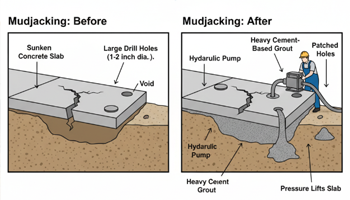
Slabjacking vs Mudjacking
Slabjacking vs Mudjacking vs Polyurethane Foam Leveling Your concrete driveway has sunk three inches. The…

Foundation Repair Cost
Foundation Repair Cost By Problem Type & Home Size Foundation damage is one of the…
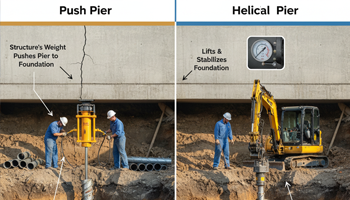
Push Piers vs Helical Piers
Push Piers vs Helical Piers: Foundation Underpinning When your home’s foundation starts settling, the choice…

Foundation Crack Repair
Foundation Crack Repair: Epoxy vs Polyurethane Injection Complete Guide Foundation problems strike fear into homeowners…

Foundation Repair
Foundation Repair Guide: Systems, Costs & Decision Framework Foundation problems strike fear into homeowners for…