
Bowing Basement Wall Repair: Carbon Fiber vs Steel I-Beams
If you’ve noticed your basement walls curving inward, you’re facing a problem that won’t fix itself. Bowing basement walls are one of the most serious structural issues a homeowner can encounter, typically caused by hydrostatic pressure from saturated soil pushing against your foundation. The good news? Modern reinforcement technology has given us two proven solutions: carbon fiber straps and steel I-beams.
The bad news? The industry has created a false war between these methods, with contractors often pushing their preferred system regardless of what your specific situation actually needs. After stabilizing over 800 bowing basement walls with both carbon fiber and steel systems, I can tell you this: the right choice isn’t about which material is «better»—it’s about matching the solution to your wall’s severity, condition, and your long-term plans for the space.
This guide cuts through the marketing hype to give you the severity-based decision framework you need. Whether your wall is bowing half an inch or three inches, you’ll know exactly which reinforcement method will stop the progression, what it will cost, and what red flags to watch for when hiring a contractor.
Understanding Bowing Basement Walls
Primary Causes: Hydrostatic Pressure & Soil Expansion
Basement walls bow inward for two primary reasons, and often both are working against your foundation simultaneously. Hydrostatic pressure occurs when soil around your foundation becomes saturated with water, creating tremendous lateral force—potentially thousands of pounds per square foot. This pressure doesn’t relent; it pushes constantly against your walls, 24/7, especially after heavy rains or during spring thaw.
The second culprit is expansive soil. Clay-rich soils can expand up to 10% when wet, then contract when dry. This cycle creates a pumping action that progressively pushes walls inward. In regions with freeze-thaw cycles, this problem intensifies as frozen soil expands with even more force than saturated clay.
Poor drainage compounds both issues. If your downspouts dump water next to your foundation, or your yard slopes toward your house, you’re channeling the problem directly to your basement walls. The wall itself doesn’t fail initially—it’s designed to handle vertical loads from your house. But it was never engineered to resist continuous horizontal pressure from thousands of cubic feet of wet soil.
Stages of Wall Bowing (0-1″, 1-2″, 2-3″, 3″+)
Wall bowing follows a predictable progression that determines which repair method you need. Here’s how to assess your situation accurately. Use a straight 6-foot level held horizontally against the wall at its worst point, then measure the gap between the level and the wall.
Stage 1 (0-1 inch): Early-stage bowing is barely visible but measurable. You might notice hairline cracks at mortar joints or minor separation at the top of the wall near the rim joist. At this stage, the wall is structurally sound but showing early warning signs. This is the ideal window for carbon fiber reinforcement—catching it here saves you thousands compared to waiting.
Stage 2 (1-2 inches): Moderate bowing becomes visually obvious. Horizontal cracks appear, typically at the midpoint of the wall where the bow is most pronounced. Mortar joints may show stepped cracking. The wall is still structurally stable but actively failing. Carbon fiber can still work here if the wall itself isn’t deteriorating, though you’re at the upper limit of its effective range.
Stage 3 (2-3 inches): Severe bowing means you’re looking at clear structural compromise. Cracks widen to 1/4 inch or more, blocks may show displacement, and you might see water seepage at crack locations. At this stage, steel I-beams become necessary because the wall needs more aggressive stabilization. Carbon fiber alone lacks the holding power for this level of deflection.
Stage 4 (3+ inches): Critical failure territory. The wall is in immediate danger of collapse, especially if a concentrated load hits (heavy furniture, people gathering, or additional water pressure during a storm). Neither carbon fiber nor steel beams alone will suffice—you need wall anchors that physically pull the wall back toward its original position while simultaneously bracing it against future movement.
Structural Risk Assessment: When Walls Become Dangerous
Not all bowing poses the same risk. A 2-inch bow in a structurally sound poured concrete wall differs dramatically from the same bow in deteriorating block. Here’s how to assess actual danger levels beyond just measuring the curve.
Check for active deterioration: Run your hand along the wall. If concrete is crumbling, blocks are flaking, or mortar turns to powder when you scrape it, the wall has lost structural integrity beyond just bowing. This changes everything—reinforcement might not be enough, and you may need wall reconstruction in severe cases.
Look for water intrusion patterns. If you see efflorescence (white mineral deposits), rust stains, or active seepage at cracks, water is penetrating the wall. This accelerates deterioration and means whatever repair you choose must address drainage simultaneously. Installing carbon fiber or steel over a wall that’s constantly wet is like putting a bandage on a gunshot wound.
Assess the rate of change. If your wall bowed 1 inch over ten years, that’s chronic but slow-moving. If it bowed 1 inch in six months, that’s rapid failure requiring immediate intervention. Take dated photos with a ruler against the wall. If you see measurable change in 3-6 months, you’re in active failure mode.
Watch for secondary indicators: Doors and windows sticking, cracks appearing in upstairs drywall above the bowing wall, or floors becoming uneven. These signs mean the foundation movement is affecting your entire house structure, not just the basement.
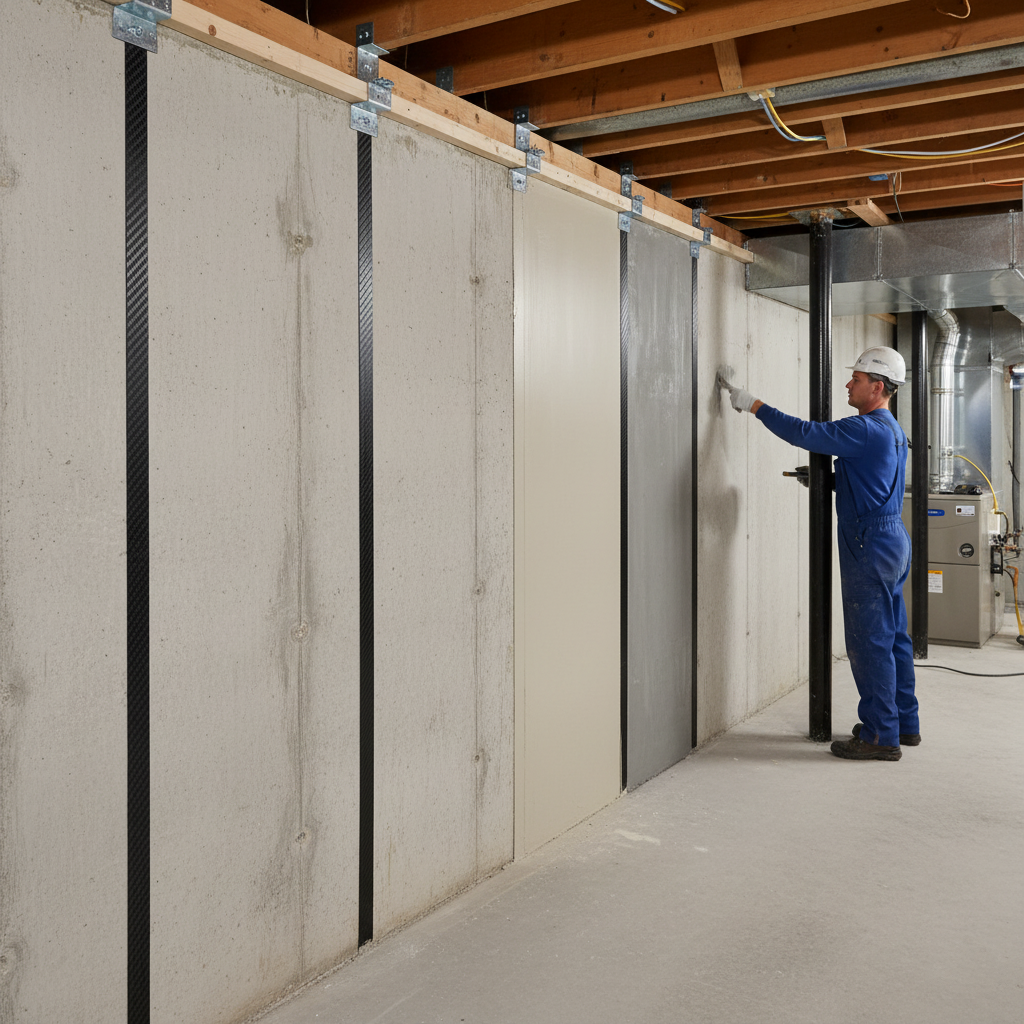
Block vs. Poured Concrete Wall Considerations
The type of foundation wall you have significantly impacts which repair method works best and how urgently you need to act. Block walls and poured concrete walls fail differently and require different approaches.
Block walls (concrete masonry units or CMU) consist of individual blocks mortared together. They’re more susceptible to bowing because the mortar joints create weak points. When pressure builds, blocks can separate at joints, rotate, or crack through the block itself. The advantage? Block walls often give more warning before catastrophic failure—you’ll see stepped cracks following mortar joints, displaced blocks, or separation at corners.
For block walls, carbon fiber works exceptionally well in early stages because it bridges across multiple blocks and mortar joints, distributing stress across the entire wall surface. The epoxy bonds to both block and mortar, creating a composite structure stronger than the sum of its parts. However, block walls deteriorate faster when bowing, so catching the problem early is crucial.
Poured concrete walls are monolithic—one continuous pour with no joints. They’re inherently stronger against lateral pressure but when they do bow, they often crack horizontally at their weakest point (usually mid-height). These cracks can be deceptively serious because the concrete itself is failing, not just joints.
For poured concrete walls, both carbon fiber and steel work well, but the wall’s overall condition matters more. If the concrete is spalling (surface flaking off) or showing aggregate (rocks in the concrete are visible), the concrete has degraded and needs more aggressive intervention. Steel I-beams provide more concentrated support points, which can be advantageous if only certain sections of a poured wall are severely compromised.
Carbon Fiber Reinforcement Systems
How Carbon Fiber Straps Work: Tensile Strength Mechanics
Carbon fiber straps work on a fundamentally different principle than steel I-beams, and understanding this difference is key to knowing when they’re the right choice. Instead of pushing back against the wall like a brace, carbon fiber straps prevent further movement by bonding to the entire wall surface with structural epoxy.
The system uses strips of woven carbon fiber fabric, typically 4 inches wide and 1/8 inch thick, that run vertically from floor to ceiling. These strips are saturated with two-part structural epoxy and applied directly to the wall surface. Once cured (24-48 hours), the epoxy creates a molecular bond with the concrete or block that’s stronger than the substrate itself—meaning the concrete would fail before the bond fails.
The magic is in the tensile strength. Carbon fiber resists stretching with enormous force. When soil pressure tries to push the wall further inward, the carbon fiber straps act like high-strength cables that simply won’t elongate. Since they’re bonded across the entire wall height, they distribute this resistance uniformly from foundation footer to rim joist.
Here’s what makes this approach work for early-stage bowing: The straps don’t need to push the wall back—they only need to prevent additional movement. For walls bowing less than 2 inches, stopping progression is often the entire goal. The wall isn’t in danger of collapse at this stage; it just can’t be allowed to bow further.
The anchoring points at top and bottom are critical. At the floor, the strap extends onto the concrete slab and is anchored with additional epoxy or mechanical fasteners. At the top, it wraps over the rim joist or is anchored into the sill plate. These anchors prevent the strap from peeling away from the wall if pressure concentrates at top or bottom—the most common failure point for improperly installed systems.
Material Properties: 10x Stronger Than Steel (Fact Check)
You’ve probably seen claims that carbon fiber is «10 times stronger than steel,» and technically, this is true—but it’s also one of the most misleading statements in the foundation repair industry. Let me explain why this matters for your basement wall decision.
Carbon fiber’s tensile strength per unit weight is indeed about 10 times that of steel. A pound of carbon fiber can resist roughly 500,000 psi (pounds per square inch) in tension, while steel maxes out around 50,000-60,000 psi. This property makes carbon fiber phenomenal for aerospace applications where weight savings are critical. But your basement wall doesn’t care about weight-to-strength ratios—it cares about absolute holding power.
In practical basement wall applications, a typical carbon fiber strap (4 inches wide, 1/8 inch thick) has an ultimate tensile capacity of approximately 2,000-3,000 pounds before failure. A steel I-beam (4 inches wide, standard foundation grade) can resist 10,000+ pounds of lateral load. Steel is significantly stronger in absolute terms for the applications we’re discussing.
So why does carbon fiber work so effectively for basement walls? The answer is contact area. A carbon fiber strap bonds to 100% of the wall surface from floor to ceiling—potentially 96 inches of continuous contact on an 8-foot wall. A steel I-beam only contacts the wall at the point of maximum bow—often just a 6-8 inch section in the middle. The carbon fiber distributes force across ten times more surface area, which is where its real advantage lies.
This is why carbon fiber excels at preventing progression of early-stage bowing but struggles with severe cases. For a wall bowing 1 inch, distributing resistance across the entire surface is perfect. For a wall bowing 3 inches with concentrated stress points, you need the absolute holding power of steel at those critical locations.
Installation Process: Epoxy Bonding & Anchoring
Proper carbon fiber installation is deceptively simple-looking but requires meticulous attention to detail. The difference between a system that lasts 25+ years and one that fails in 18 months often comes down to preparation steps that take an extra two hours but get skipped by contractors trying to maximize efficiency.
The wall must be absolutely dry. This is non-negotiable. Epoxy will not bond to damp concrete or block. I’ve seen contractors install carbon fiber during rainy season on walls that were «dry enough»—every single one failed within two years. Professional contractors use moisture meters to verify the wall is below 15% moisture content. If it’s humid or has been raining, they run industrial dehumidifiers for 24-48 hours before installation.
Surface preparation involves grinding or wire brushing the wall to remove paint, efflorescence, dirt, and loose material. The goal is to expose the raw concrete or block for maximum epoxy adhesion. This creates dust and mess, but it’s essential. Any contamination between the epoxy and wall becomes a weak point.
The carbon fiber fabric comes in rolls and is cut to length—typically floor to ceiling plus 6-12 inches for anchoring. The installer mixes two-part structural epoxy (it has about 30-45 minutes of working time) and uses a roller to saturate the fabric thoroughly. The saturated fabric is then pressed firmly against the prepared wall, working out any air bubbles.
Bottom anchoring typically involves extending the strap onto the floor slab for 6-12 inches and covering with additional epoxy. Some systems use mechanical anchors driven into the floor. Top anchoring is more complex—the strap must wrap over the rim joist or anchor into the sill plate. This is the most common failure point. Premium systems like Fortress InvisiBeam use proprietary anchoring plates that distribute load across a larger area.
Curing takes 24-48 hours depending on temperature and humidity. The wall should not be disturbed during this period. Once cured, the strap can be painted over if desired—it sits nearly flush with the wall, typically protruding only 1/8-1/4 inch.
Ideal Applications: Early-Stage Bowing (<2 inches)
Carbon fiber shines brightest in early-stage bowing situations, and understanding why helps you recognize if it’s the right choice for your wall. The system is engineered to prevent progression, not reverse existing damage, which makes it perfect for walls that are structurally sound but showing warning signs.
The sweet spot is walls bowing 0.5 to 1.5 inches at their maximum deflection point. At this stage, the wall isn’t in immediate danger, blocks or concrete aren’t crumbling, and the primary goal is stopping further movement. Carbon fiber accomplishes this beautifully because it creates a continuous reinforcing layer that prevents any section of the wall from moving independently.
Wall condition is just as important as bowing measurement. If your wall has minor cracks but the concrete or blocks are solid when you tap them, and mortar isn’t turning to powder, carbon fiber will work. If the wall is deteriorating—blocks flaking, concrete spalling, mortar crumbling—you need to address the wall integrity first. Carbon fiber bonded to degraded material is only as strong as that degraded material.
Homeowners planning to finish their basements should seriously consider carbon fiber even if steel might «technically» work. The low-profile nature means you can frame walls, run electrical, and install drywall right over the straps. They protrude only 1/8-1/4 inch from the wall surface. Steel I-beams create a 4-6 inch obstacle that you’ll need to frame around or hide behind bulkheads.
Carbon fiber also works excellently when you have good drainage management in place or are installing it simultaneously. If you’re addressing the root cause (waterproofing, installing proper drainage, regrading) while stabilizing the wall, carbon fiber provides lasting protection against future pressure.
Low-Profile Aesthetics: Paint-Over & Conceal Options
One of carbon fiber’s most underrated advantages is what it doesn’t do—take up space. In a basement where every inch of usable area matters, this becomes a major decision factor.
Once installed and cured, carbon fiber straps sit virtually flush with the wall. The typical protrusion is 1/8 to 1/4 inch depending on the system and wall texture. This means you can paint directly over them with standard basement wall paint (masonry paint or epoxy paint both work). With a couple coats, the straps become nearly invisible unless you’re looking for them.
For finished basements, you can frame a 2×4 wall directly against the reinforced foundation wall. The straps won’t interfere with studs, and you won’t lose any floor space. Run electrical and plumbing in the stud bays as normal. The only consideration is avoiding drilling or nailing directly through a strap—but since they’re visible before you frame, this is easily managed.
Compare this to steel I-beams, which extend 4-6 inches into your basement space at each beam location (typically 4-6 beams per wall). If you want to finish that basement, you’re either losing 6 inches of space along the entire wall (moving your framed wall 6 inches inward), or you’re building bulkheads around each beam, creating columns that interrupt your floor plan.
For homeowners who want their basement to look clean and might have guests in the space, carbon fiber maintains a normal appearance. Your foundation wall looks like a foundation wall, not a construction site. This matters for home value too—a finished basement with visible steel beams signals «this house had foundation problems,» while carbon fiber can be completely invisible under paint and drywall.
Leading Brands: Fortress InvisiBeam, Rhino Carbon Fiber
Not all carbon fiber systems are created equal, and the brand your contractor uses directly impacts long-term performance. Two brands dominate the residential market, each with distinct advantages.
Fortress InvisiBeam represents the premium end of carbon fiber systems. Their proprietary top anchoring system is the most robust I’ve encountered—it uses a steel plate that distributes load across 12-16 inches of sill plate rather than concentrating it at a single point. This dramatically reduces the risk of anchor pullout, which is the leading cause of carbon fiber system failure. Fortress straps also use a slightly thicker carbon fiber weave and come pre-saturated with epoxy that’s optimized for concrete bonding. Expect to pay 15-25% more for Fortress, but their warranty coverage is comprehensive and their failure rate is measurably lower. If your wall is at the upper end of carbon fiber’s range (1.5-2 inches of bowing), the premium is worth it.
Rhino Carbon Fiber offers solid performance at a more accessible price point. Their system uses quality materials and proven installation methods, though without some of Fortress’s engineering refinements. The carbon fiber itself tests at similar tensile strength, and the structural epoxy meets industry standards. Where Rhino economizes is in the anchoring hardware and the level of contractor support. Good contractors can achieve excellent results with Rhino, but there’s less margin for installation error. For walls in the 0.5-1.5 inch bowing range where stress is moderate, Rhino delivers exceptional value.
A few smaller regional brands exist, but be cautious. Carbon fiber systems need proper engineering behind them—the fabric specs, epoxy formulation, and anchoring design all matter. Contractors sometimes offer «equivalent» generic systems at significant discounts. Ask specifically: What’s the tensile rating of the carbon fiber fabric? What’s the bond strength of the epoxy? What testing has been done? If they can’t provide technical specs, walk away.
Steel I-Beam Reinforcement Systems
How Steel I-Beams Work: Vertical Bracing & Load Distribution
Steel I-beam systems operate on a completely different engineering principle than carbon fiber—they physically push back against the bowing wall rather than just preventing further movement. Understanding this mechanical difference clarifies why steel becomes necessary for more severe bowing.
The system uses vertical steel I-beams (typically 4-6 inches wide) installed at intervals along the bowing wall—usually 4 to 6 beams depending on wall length. Each beam runs from the basement floor to the floor joists above. The bottom of the beam anchors into the concrete floor slab, while the top brackets against the rim joist or floor framing. Once installed, the beam creates a rigid vertical column that presses against the wall at its point of maximum bow.
Here’s the key: The beam concentrates enormous resistance force at the wall’s weakest point. While carbon fiber distributes force across the entire wall surface, steel I-beams work like buttresses—they shore up the specific location where the wall is failing most severely. For a wall bowing 2-3 inches at its center, this concentrated support is exactly what’s needed.
The load path is straightforward. Soil pressure pushes the wall inward. The wall pushes against the I-beam. The I-beam transfers that load downward into the floor slab and upward into the floor joists above. The house’s structure essentially becomes the anchor point resisting the soil pressure. This is why proper installation is critical—if the floor slab is deteriorating or the floor joists are undersized, the system can’t develop its full capacity.
Most modern systems include adjustable brackets at the base. These allow gradual tightening over time, which can slowly push the wall back toward its original position. This adjustment capability is steel’s major advantage over carbon fiber—it’s not just stabilization, it’s potential correction. However, this requires ongoing homeowner involvement and monitoring that most people never follow through on.
Installation Process: Floor-to-Joist Anchoring
Steel I-beam installation is more invasive than carbon fiber and takes longer, but the process is straightforward for experienced contractors. The mechanical nature of the system means there’s less room for the kind of bonding failures you can get with carbon fiber, but it introduces different potential problems.
The first step is measuring and marking beam locations. Beams typically space 4-6 feet apart depending on wall length and severity of bowing. The contractor uses a level and marking tools to establish perfectly plumb positions—if beams aren’t vertical, they won’t function properly under load.
Floor anchoring involves core drilling through the concrete slab (if it’s thick enough) or using heavy-duty concrete anchors. The base plate must sit flush against the floor and be anchored deeply enough to resist upward forces when the beam is tightened. I’ve seen installations where contractors used undersized anchors or drilled into compromised concrete—the base plate eventually pulls up under stress, compromising the entire system.
The I-beam itself is cut to exact height to fit between floor and joists. This is where experience matters—basement ceiling heights vary, and beams must be measured precisely for each location. Too short and they can’t develop proper pressure against the wall; too long and they won’t fit.
Top anchoring is the most critical step. The upper bracket must connect solidly to floor joists or rim joist above. Contractors typically use 3-4 lag bolts driven into solid wood. If joists run perpendicular to the wall, the bracket might need to span between two joists with a cross beam. If the rim joist is deteriorated (common in older homes with water damage), it must be reinforced or replaced first—you can’t anchor against rotted wood.
Once both ends are secured, the contractor tightens the adjustable base bracket to bring the beam into firm contact with the wall. The beam should press against the wall at the maximum bow point without overtightening, which could cause new cracks. Final tightening usually leaves 1/16 to 1/8 inch of compression—enough to stop movement without stressing the wall.
The entire installation typically takes 1-2 days for a standard basement wall. Unlike carbon fiber, there’s no curing time, so the system is immediately functional once installed.
Ideal Applications: Severe Bowing (>2 inches)
Steel I-beams become the necessary choice when bowing exceeds 2 inches or when wall condition has deteriorated beyond what carbon fiber can reliably support. The decision point isn’t arbitrary—it’s based on the fundamental limits of each system’s mechanics.
At 2+ inches of deflection, soil pressure has reached a level where preventing progression isn’t enough—you need active resistance pushing back. Carbon fiber straps, even premium systems, lack the absolute holding power required for this level of stress. Steel I-beams can handle 10,000+ pounds of lateral load per beam, giving you the safety margin severe bowing demands.
Wall condition often determines steel’s necessity independent of bowing measurement. If your blocks are crumbling, mortar is deteriorating, or concrete is spalling, the wall has lost structural integrity. Carbon fiber bonded to degraded material can’t perform—the substrate will fail before the strap does. Steel I-beams work differently; they don’t rely on wall surface bonding. They brace the wall mechanically, so even compromised walls can be stabilized effectively.
Situations where cracks are actively growing also favor steel. If you measure a crack and it’s 1/8 inch wider six months later, you’re watching active failure. Steel I-beams provide immediate, concentrated resistance that can arrest rapid progression. Carbon fiber works more gradually and is better suited to walls that have stabilized or are moving very slowly.
Unfinished basements where aesthetics aren’t primary concerns make steel more practical. The beams will always be visible unless you frame around them. If you’re using the basement for storage or utilities and have no plans to finish the space, steel’s visibility isn’t a drawback, and you get the stronger system for potentially severe conditions.
Finally, if you want the option to gradually straighten the wall over time, steel I-beams with adjustable bases are your only choice. Carbon fiber cannot pull a wall back—it only prevents further movement. Some steel systems allow homeowners to tighten the base brackets every 3-6 months, progressively straightening the wall by 20-40% over a year or two. This requires commitment and monitoring, but it’s the closest thing to actually fixing the bow rather than just stopping it.
Adjustable Systems: Gradual Straightening Capabilities
The adjustable feature of modern steel I-beam systems sounds like a game-changer—and it can be—but it comes with significant caveats that contractors rarely discuss upfront. Let me explain both the potential and the limitations.
Adjustable steel systems include a threaded bolt mechanism at the base bracket that allows the beam to be gradually tightened, pushing against the wall with increasing force. The theory is sound: By slowly increasing pressure, you can shift the wall back toward vertical over months rather than trying to force it immediately. Soil has some flexibility, and gradual movement allows it to compress and redistribute without cracking the wall further.
In practice, this requires homeowner involvement that most people don’t maintain. The adjustment protocol typically calls for tightening each beam 1/8 to 1/4 turn every 2-3 months, monitoring for new cracks or stress, and stopping if resistance becomes too great. This means marking your calendar, having the right tools on hand, and carefully observing the wall after each adjustment.
I estimate 70% of homeowners never adjust their beams after installation. Life gets busy, they forget, or they’re uncomfortable working with the system. Those beams then function identically to non-adjustable systems—which is fine, but you paid extra for a feature you’re not using.
When adjustable systems work as intended, they can recover 20-40% of the original bow over 12-18 months. A wall bowing 3 inches might be brought back to 1.8-2 inches of deflection. This is real progress, but it’s not restoration to original condition. The wall will never be perfectly straight again without far more invasive work. Still, reducing a 3-inch bow to 2 inches significantly improves structural stability.
The risk of adjustable systems is overtightening. Homeowners sometimes think «more is better» and crank down the bolts too aggressively. This can create new horizontal cracks, cause blocks to separate, or even crack poured concrete walls. Professional installations should include clear instructions on maximum adjustment increments and warning signs to watch for.
For the right homeowner—someone detail-oriented who will commit to the monitoring schedule—adjustable systems offer genuine value. For everyone else, non-adjustable beams provide the same stopping power without the maintenance burden or risk of improper adjustment.
Space Requirements: 4-6 Inches from Wall
The physical footprint of steel I-beams is their most significant drawback for finished basements, and this impact is often understated until after installation when homeowners realize the implications.
Each I-beam extends 4-6 inches into your basement space depending on the specific system and beam size. This measurement is from the wall face to the front edge of the beam. For a typical wall requiring 4-6 beams, you’ll have 4-6 vertical columns protruding into your basement at regular intervals.
If you’re planning to finish the basement, you face two choices, both involving space loss. Option one: Frame your stud wall 6 inches away from the foundation wall to clear all the beams. This loses 6 inches of floor space along the entire wall length—in a 30-foot basement, that’s 180 square feet of lost area. For already-tight basement spaces, this hurts.
Option two: Frame normally against the foundation wall but build bulkheads around each beam. Bulkheads are boxed-out columns that hide the beams. This preserves more overall square footage but creates architectural obstacles. Your finished basement now has columns interrupting the floor plan every 4-6 feet along one wall. This complicates furniture placement, creates awkward spaces, and makes the foundation problems visually obvious to anyone in the space.
Neither option is ideal. The space loss becomes especially frustrating in basements where you’re trying to maximize usable area—home gyms, playrooms, or rental units where every square foot of space has value.
Unfinished basements don’t face these concerns. If you’re using the basement for storage, utilities, or workshop space, exposed I-beams are simply part of the infrastructure. You might need to work around them when placing shelving or equipment, but it’s not a major constraint.
Before committing to steel I-beams, honestly assess your basement plans. If there’s any chance you’ll want to finish the space in the next 5-10 years, the space implications deserve serious consideration. If your bowing is under 2 inches and the wall is in decent condition, carbon fiber’s low profile might be worth its other limitations.
Direct Performance Comparison
Strength & Load-Bearing Capacity
When contractors compare carbon fiber and steel I-beams, the conversation often devolves into misleading marketing claims. Let’s examine actual holding capacity in real-world basement applications.
A typical carbon fiber strap system (4 inches wide, standard residential installation) provides 2,000-3,000 pounds of tensile resistance per strap. This assumes proper installation with quality epoxy and secure top/bottom anchoring. Installing 4-6 straps on a wall provides 8,000-18,000 pounds of total lateral resistance distributed across the wall surface.
A steel I-beam system (4-inch beam, foundation grade) can resist 10,000+ pounds of lateral force per beam. With 4-6 beams installed, you’re looking at 40,000-60,000+ pounds of total resistance capacity concentrated at the points of maximum stress.
On paper, steel appears dramatically stronger—and in absolute terms, it is. But this comparison misses the critical variable: how and where that strength is applied. Carbon fiber’s strength distributes uniformly across 96 inches of wall height (assuming 8-foot basement walls). Steel’s strength concentrates at the mid-point bow location, typically a 6-8 inch contact zone per beam.
For walls bowing under 2 inches, carbon fiber’s distributed resistance is not only sufficient but often superior. The bow isn’t severe enough to require concentrated force; what’s needed is prevention of further movement at all points simultaneously. Carbon fiber accomplishes this beautifully because every square inch of wall surface is reinforced.
For walls bowing over 2 inches, steel’s concentrated force becomes necessary. At this level of deflection, pressure has intensified at the maximum bow point, and you need significant holding power exactly there. Carbon fiber’s distributed approach, while elegant, simply can’t generate enough force at the critical stress point.
The «10x stronger than steel» claim for carbon fiber refers to tensile strength per unit weight—a measurement that matters in aerospace but is largely irrelevant for your basement wall. In practical foundation repair applications, steel I-beams provide greater absolute holding power, while carbon fiber provides better distributed resistance for early-stage problems. Neither is «stronger»—they’re strong in different ways that suit different failure modes.
Bowing Limits: When Each Method Reaches Limits
Understanding the effective range of each system helps you avoid the industry’s most common mistake: using a contractor’s preferred method regardless of whether it matches your wall’s actual needs.
Carbon fiber’s practical limit is 2 inches of bowing at maximum deflection. Some manufacturers claim their systems can handle up to 2.5 or even 3 inches, and under laboratory conditions with perfect wall substrate and ideal installation, this might be true. In real-world applications with aging walls, imperfect moisture conditions, and variable installation quality, 2 inches is where carbon fiber starts to become questionable.
The failure mode for carbon fiber at excessive bowing isn’t usually the strap itself—it’s the anchoring. As deflection increases, stress concentrates at the top and bottom anchor points. Even with robust anchoring systems, pulling forces at these locations can exceed what epoxy or mechanical anchors can resist. The strap peels away from the wall at top or bottom, and the system fails. This typically occurs 1-3 years post-installation when soil pressure remains constant but the wall continues microscopic movement that degrades the anchor bond.
Steel I-beams handle up to 3 inches of bowing reliably, assuming the wall itself hasn’t degraded to collapse risk. Beyond 3 inches, even steel beams struggle because the wall has deflected so far that the beam’s contact point becomes inefficient. Picture a wall curving 4 inches inward—the I-beam can press against the maximum bow point, but the top and bottom of the wall are still moving independently. The beam can’t prevent the entire wall from collapsing if lateral pressure continues increasing.
Beyond 3 inches, neither carbon fiber nor steel alone is sufficient. This is wall anchor territory—systems that drill through the wall and use earth anchors buried 10-12 feet into the yard to physically pull the wall back while bracing it. Wall anchors can handle 4, 5, even 6 inches of deflection because they don’t rely solely on the wall’s structural integrity; they create a new structural tie-back system.
The critical mistake I see repeatedly: contractors installing carbon fiber on walls bowing 2.5-3 inches because it’s their preferred system or because the homeowner balks at steel’s higher cost. This installation will likely fail within 3-5 years, requiring complete system replacement at additional cost. If your wall is at or near the limits of a system’s capability, err toward the stronger option.
Installation Speed & Disruption (1 Day vs 2-3 Days)
Installation timeline differences matter more than most homeowners initially realize—not just for convenience but for how it affects your daily life during the project and the quality of work under different time pressures.
Carbon fiber installation typically completes in a single day—4 to 8 hours of active work for a standard wall. The process is relatively clean (though wall grinding creates dust that must be contained), uses no heavy machinery, and creates minimal noise. A two-person crew can install 4-6 straps in a morning, then the epoxy cures overnight. You can usually remain in your home with minimal disruption.
The catch is curing time. While active work takes hours, the epoxy needs 24-48 hours to fully cure depending on temperature and humidity. During this period, you can’t disturb the wall, and the basement might smell of epoxy solvents (ventilation is necessary). The straps are functional once cured, but rushing cure time by raising temperatures or inadequate mixing causes premature failure.
Steel I-beam installation takes 1-2 days for a typical wall. The work is noisier—core drilling into concrete, cutting steel beams with abrasive saws, and driving lag bolts into floor joists all create significant noise. The process requires more workspace for staging materials and maneuvering long beams. Most installations involve a 3-person crew because beams are heavy and positioning requires coordination.
However, steel installation has no cure time. Once the final beam is tightened, the system is 100% functional. There’s no waiting period, no smell, and no concerns about disturbing the work. The basement is immediately usable.
The timeline difference creates an interesting quality trade-off. Single-day carbon fiber installations can encourage rushing—I’ve seen contractors skip proper wall drying time, under-mix epoxy, or inadequately prepare surfaces to hit their schedule. The epoxy will set regardless, hiding poor installation until months later when the system fails. Multi-day steel installations force more methodical work. Contractors can’t hide poor anchoring or rushed measurements—problems are immediately visible.
For homeowners working around family schedules, carbon fiber’s speed is appealing. For those who want to observe every installation step and ask questions, steel’s longer timeline provides more opportunity for oversight. Neither timeline is inherently better, but rushed carbon fiber installations are the leading cause of premature system failure in the industry.
Aesthetic Impact: Visibility & Basement Usability
The long-term aesthetic implications of your choice become particularly important if you ever plan to use your basement as living space rather than just utility or storage area.
Carbon fiber’s aesthetic advantage is undeniable. The straps protrude just 1/8-1/4 inch from the wall surface once installed. They can be painted over with standard masonry paint, making them nearly invisible. In finished basements, you can frame 2×4 walls directly against the reinforced foundation without losing space or creating architectural obstacles. The basement feels normal—like a basement without foundation problems.
For resale value, this matters. Prospective buyers touring a finished basement with painted-over carbon fiber straps will likely never notice the repair. The foundation issue is stabilized but not visually advertising itself. Real estate agents don’t need to explain conspicuous support beams during showings.
Steel I-beams are impossible to hide completely. Even painted, they’re 4-6 inches of vertical column protruding into your space every 4-6 feet. In unfinished basements, this might actually look professional—exposed structural repairs can convey «this homeowner dealt with the problem properly.» But in finished spaces, they create design challenges.
Some homeowners frame bulkheads around each beam, creating boxed columns. This works but fragments the space visually. Others embrace the industrial aesthetic, painting beams a contrasting color and treating them as architectural features. This can look intentional with the right design approach, but it’s making lemonade from lemons.
For basement functionality, steel beams create obstacles. Placing furniture against the repaired wall means working around beams. Installing shelving requires securing to both foundation wall and beams or bridging gaps. Running long items (lumber, pipes, finished walls during construction) becomes awkward because beams interrupt the plane.
Carbon fiber’s low profile preserves full usability. You can lean anything against the wall, run continuous shelving, or build out the space without accommodation. This practical advantage compounds over years of basement use.
If you’re certain your basement will remain unfinished utility space—housing furnace, water heater, storage—steel beams cause minimal aesthetic concern. But if there’s any possibility of finishing the basement, or if you want flexibility for future use, carbon fiber’s aesthetic advantage deserves significant weight in your decision.
Maintenance Requirements (None vs. Rust Prevention)
The long-term maintenance burden of each system differs significantly and affects true lifetime cost and hassle beyond the initial installation invoice.
Carbon fiber systems require virtually zero maintenance once properly installed and cured. The carbon fiber itself doesn’t corrode, degrade from moisture, or require periodic inspection beyond what you’d do for any foundation wall. The structural epoxy is moisture-resistant and remains bonded indefinitely if the initial surface preparation was adequate. Paint it if you want to, or leave it exposed—functionality remains unchanged.
The only monitoring needed is watching for signs of system failure: straps peeling away from wall at top or bottom, cracks developing parallel to straps, or new horizontal cracks above or below the reinforced area. These are rare with quality installations but should be checked annually with a visual walk-through. No tools, no adjustments, no consumables to purchase.
Steel I-beams face the reality of ferrous metal in damp basements—rust is inevitable unless properly protected. Zinc-plated or powder-coated beams resist corrosion significantly better than bare steel, but coating damage during installation or from accidental impacts creates vulnerable spots. In chronically damp basements (common where bowing occurred in the first place), rust will eventually appear.
Rust maintenance involves annual inspection of all beams for surface rust, grinding off any rust spots that develop, and applying rust-inhibiting primer plus topcoat paint. This is manageable DIY maintenance for handy homeowners, but it’s still maintenance that carbon fiber doesn’t require. Neglect it for 5-10 years in a damp basement, and structural rust can compromise beam integrity.
Adjustable steel systems introduce additional maintenance if you intend to use the adjustment feature. As discussed earlier, this requires tightening beams every 2-3 months per manufacturer protocols, observing for stress cracks, and potentially backing off if resistance becomes excessive. Most homeowners don’t maintain this schedule, rendering the feature unused.
One hidden maintenance consideration: basement finishing. If you install steel beams then later decide to finish the basement, you’ll need to frame bulkheads around them. This isn’t technically maintenance of the beams themselves, but it’s additional work necessitated by their presence. Carbon fiber requires no such accommodation.
For homeowners who want a «set and forget» solution, carbon fiber wins decisively. For those comfortable with periodic inspection and coating maintenance, steel beams’ requirements are manageable. Factor in your realistic maintenance habits, not your aspirational ones—the system you’ll actually maintain is the right system.
Adaptability: Handling Continued Movement
No reinforcement system stops 100% of wall movement if soil pressure continues unchecked. Understanding how each system handles ongoing stress helps you choose the more resilient option for your specific conditions.
Carbon fiber systems are designed to prevent movement, not accommodate it. The straps work by creating a tensile member that resists wall deflection. If soil pressure remains constant, carbon fiber holds the wall at its current position indefinitely. But if pressure increases—from unusually heavy rains, deteriorating drainage, or changing soil conditions—carbon fiber has limited capacity to adapt. The straps either hold or they fail, typically by peeling away at anchor points or by the wall cracking adjacent to the straps.
The failure is usually gradual rather than catastrophic. Homeowners notice new hairline cracks parallel to the straps, or slight separation at top anchoring points. This gives warning time for remediation (addressing drainage issues, potentially adding more straps, or upgrading to steel). But carbon fiber doesn’t have progressive resistance—it’s an on/off system.
Steel I-beams handle continued pressure more gracefully due to their mechanical nature. As pressure increases, beams gradually deflect but don’t suddenly fail. Homeowners might notice the wall pushing against the beam slightly more or see minor gaps opening at the beam-to-wall contact point. The beam is still functioning, just under greater stress.
Adjustable steel systems provide a response option. If monitoring reveals continued movement, homeowners can tighten the base brackets to push back against new pressure. This requires active engagement, but it’s an adaptation mechanism carbon fiber lacks entirely.
The critical variable is whether you’ve addressed the root cause. If bowing resulted from poor drainage and you’ve since installed proper gutters, drainage tile, and regraded your yard, soil pressure will stabilize. In this scenario, either system works long-term because the driving force has been mitigated.
If drainage problems remain—or are impractical to fully fix (high water table, clay soil, uphill terrain)—steel beams’ adaptability provides more resilience. They handle ongoing low-level pressure better than carbon fiber’s binary resistance.
An honest assessment of your ability to control soil moisture determines which system’s adaptability matters more. Optimal soil conditions favor carbon fiber. Compromised conditions that won’t be fully resolved favor steel’s mechanical resilience.
Cost Comparison 2025
Carbon Fiber Straps: $400-$800 per Strap (4-6 Typical)
Carbon fiber pricing is more standardized across the industry than steel I-beam pricing because the material costs and installation labor are relatively consistent. Understanding the cost breakdown helps you evaluate whether quotes are reasonable.
Individual carbon fiber straps cost $400-$800 per strap installed. The wide range reflects brand differences (Fortress premium systems vs. Rhino value systems), geographic labor rates, and wall conditions requiring extra preparation. A straightforward installation on a clean, dry wall in a competitive market might be $400-500 per strap. Premium systems on walls requiring extensive preparation in high-cost areas can hit $700-800 per strap.
Most residential bowing wall repairs require 4-6 straps spaced at 4-6 foot intervals. The exact number depends on wall length and severity—longer walls need more straps, and more severe bowing might require closer spacing for adequate support. A typical 30-foot basement wall gets 5 straps, occasionally 6.
This puts the materials and installation cost at $1,600-$4,800 for the straps themselves. But that’s not the complete project cost. Most installations include additional charges:
- Wall preparation (cleaning, grinding, moisture control): $300-$800
- Base epoxy or primer coats: $200-$400
- Top/bottom anchoring hardware: $200-$600 (depending on system)
- Warranty and inspection: $200-$500
Total project cost for carbon fiber strap installation ranges $2,400-$6,300 for a typical single-wall project (one bowing wall, not the entire basement perimeter). This is competitive with drainage system installations and significantly less than wall anchor systems.
Price red flags to watch for: Quotes under $2,000 for carbon fiber usually mean corners are being cut—cheap epoxy, inadequate preparation, poor anchoring, or unlicensed labor. I’ve investigated failed carbon fiber installations, and virtually all were low-bid jobs. Conversely, quotes over $7,000 for straightforward carbon fiber work on a single wall may indicate overcharging unless wall conditions are truly exceptional.
Always get 3 quotes from contractors who will measure your wall’s actual bowing before proposing solutions. Be suspicious of contractors who quote prices without physically inspecting and measuring your wall—professional assessments require actual measurements, not estimates from photos or descriptions.
Steel I-Beams: $800-$1,500 per Beam (4-6 Typical)
Steel I-beam pricing has more variability than carbon fiber because beam size, adjustable vs. fixed systems, and installation complexity create wider cost ranges.
Individual steel beams installed cost $800-$1,500 per beam. Standard fixed beams (non-adjustable) in competitive markets start around $800-$1,000 per beam. Premium adjustable systems with zinc-plated or powder-coated steel can reach $1,200-$1,500 per beam. Geographic factors affect pricing more dramatically than carbon fiber—steel requires heavier equipment and more specialized labor, so contractors in rural areas or high-cost metros charge significantly more.
Like carbon fiber, most walls require 4-6 beams spaced appropriately for wall length and severity. A 30-foot wall typically gets 5 beams at 6-foot spacing, occasionally 6 beams if the contractor prefers closer spacing or if bowing is particularly severe at multiple points.
Material and installation costs run $3,200-$9,000 for the beams themselves. Additional project costs include:
- Floor core drilling and anchoring: $400-$800
- Top joist reinforcement if needed: $300-$900
- Beam cutting and fitting: $200-$400 (usually included in labor)
- Wall contact pad installation: $200-$400
Total project cost for steel I-beam installation ranges $4,400-$11,000 for a single-wall project. The higher end reflects adjustable systems, premium coatings, or challenging installation conditions (very high ceilings, obstructed access, poor floor conditions requiring reinforcement).
Cost comparison shows steel beams running 30-40% more than carbon fiber for comparable wall coverage. This premium buys you greater absolute holding power, adaptability for severe bowing, and potential for gradual wall straightening. Whether that’s worth the extra $2,000-$5,000 depends on whether your wall actually needs those capabilities.
Red flags for steel beam pricing: Quotes under $3,500 for 4-5 beams should raise concerns about beam quality (uncoated steel, undersized beams, cheap anchoring hardware). Quotes over $12,000 for a straightforward single wall may indicate overpricing unless structural complications genuinely exist (floor reinforcement needs, joist repairs, etc.).
Contractors sometimes bundle steel beam installation with other foundation work (waterproofing, sump pump installation, drainage systems), which can make individual line items appear inflated or discounted depending on package pricing. Always ask for itemized quotes showing per-beam costs so you can compare apples-to-apples with other bids.
Total Project Costs: $3,000-$8,000 Range
Most homeowners facing bowing basement wall repair will invest between $3,000 and $8,000 for professional stabilization of a single wall. This range encompasses both carbon fiber and steel I-beam solutions, and understanding what drives costs toward the low or high end helps you budget appropriately.
On the low end ($3,000-$4,000), you’re typically looking at carbon fiber strap systems with:
- 4-5 straps on a relatively straight wall with minor bowing (<1.5 inches)
- Minimal wall preparation needed
- Good wall condition (no significant deterioration)
- Standard Rhino or equivalent system (not premium brands)
- Competitive market with multiple contractors
Mid-range projects ($4,500-$6,000) might include:
- 5-6 carbon fiber straps on walls with moderate bowing (1.5-2 inches)
- More extensive wall preparation or moisture control measures
- Premium carbon fiber system (Fortress) or basic steel I-beam system
- Average market labor rates
High-end projects ($6,500-$8,000) typically involve:
- Steel I-beam systems with 5-6 beams
- Severe bowing (2-3 inches) requiring robust solutions
- Adjustable steel systems with premium coating
- Challenging installation conditions
- Premium market areas or specialized contractors
Projects exceeding $8,000 for single-wall stabilization either involve wall anchors (discussed separately below) or indicate additional work beyond just reinforcement—extensive crack repair, wall reconstruction in sections, complex drainage remediation performed simultaneously, or multiple walls being addressed.
Geographic pricing variations matter significantly. The same carbon fiber installation might cost $3,200 in a Midwest market with contractor competition and moderate living costs but $5,500 in coastal metro areas where labor rates are 50-70% higher. When comparing quotes, consider local market factors rather than assuming national averages apply.
Payment structures vary by contractor. Most require:
- Deposit at contract signing: 25-35% of total
- Progress payment after prep work or material delivery: 30-40%
- Final payment upon completion: 30-40%
Be wary of contractors demanding 50% or more upfront—this is uncommon in professional foundation repair and creates risk if the contractor disappears or does poor work. Conversely, contractors who work entirely on completion payment might be underfunded and unreliable.
Financing is available through some contractors via third-party lenders. Interest rates range 7-15% depending on creditworthiness. Compare these carefully with home equity lines or personal loans—contractor-offered financing is convenient but not always competitive on rates.
Value Proposition: Initial Cost vs. Long-Term Benefits
The true cost of bowing wall repair extends beyond the installation invoice. Evaluating each system’s value requires considering long-term structural protection, home value impacts, and avoided costs from doing nothing.
Carbon fiber’s value proposition centers on early intervention efficiency. For walls in the 0.5-1.5 inch bowing range, spending $3,000-$5,000 now prevents progression to severe failure that would cost $8,000-$15,000 later when wall anchors become necessary. The system’s minimal maintenance requirements and comprehensive warranties mean your investment protects the foundation for decades with zero additional input.
The aesthetic advantage has real monetary value if you plan to finish the basement. Finishing costs run $40-$75 per square foot depending on your market and finish level. Preserving maximum floor space and avoiding bulkhead construction saves you hundreds to thousands on finishing work. The low-profile nature also protects resale value—buyers don’t see obvious foundation repairs that might scare them away or justify lowball offers.
Steel I-beam systems cost more upfront but provide value through higher capacity and adaptability. For walls at 2-3 inches of bowing, steel prevents catastrophic failure that could compromise your home’s entire foundation and even structural framing. Foundation collapse or severe shifting can cost $30,000-$80,000 to properly remediate—steel beams preventing that outcome justify their premium.
The adjustable feature’s value depends entirely on whether you use it. If you commit to the adjustment schedule and successfully recover 20-30% of wall deflection, you’ve essentially improved your foundation condition beyond just stabilization. If the beams sit unadjusted, you paid extra for unused capability.
For homes in chronic high-moisture environments (high water tables, clay soils, inadequate drainage that can’t be fully corrected), steel’s mechanical resilience may provide better long-term security than carbon fiber’s reliance on bonding integrity. The extra $2,000-$3,000 buys insurance against ongoing stress.
Doing nothing has calculable costs. Bowing walls worsen at rates varying from inches per decade to inches per year depending on soil pressure. An ignored 1-inch bow today could be a 2.5-inch bow in 3-5 years, at which point your repair costs jump from $3,500 to $7,500 or more. Insurance typically doesn’t cover foundation movement (it’s considered maintenance, not sudden damage), so these costs come from your pocket regardless of timing.
Home value impacts are harder to quantify but real. Unrepaired foundation problems discovered during buyer inspections kill deals or force price reductions of $10,000-$30,000—far exceeding repair costs. Even «successfully» sold homes with known foundation issues sell for 10-15% below comparable properties without issues.
The highest-value approach is matching the system to your wall’s actual needs—not over-building with steel when carbon fiber suffices, and not under-building with carbon fiber when steel is necessary. Proper assessment before repair saves money both immediately and over time.
Wall Anchor Systems (Alternative/Complement)
When Anchors Are Necessary: Severe Cases (>3″)
Wall anchors represent a fundamentally different approach to bowing walls—instead of just bracing them in place, anchors actually pull the wall back toward vertical. They become necessary when bowing exceeds 3 inches, because at this level of deflection, neither carbon fiber nor steel I-beams can provide adequate stabilization alone.
The engineering is straightforward. A wall bowing 3-4+ inches has moved so far that its structural integrity is severely compromised. The wall isn’t just leaning—it’s actively failing. Soil pressure at these deflection levels is extreme, often 5,000-10,000+ pounds per linear foot of wall. No bracing system installed on the interior can resist this force indefinitely because the wall itself has become the weak link.
Wall anchors work by creating a completely independent structural tie-back system. Long steel rods (typically 3/4 to 1 inch diameter) drill through the foundation wall and extend 10-12 feet into the yard. Earth anchors bury at the far end, essentially using the stable soil beyond your foundation as the anchor point. The interior end of the rod connects to a steel plate mounted on your basement wall. Tightening the rod pulls the wall toward the buried anchor, counteracting soil pressure.
The critical advantage is that anchors can actually reverse bowing. Carbon fiber and steel I-beams prevent further movement but can’t pull a bowed wall back. Wall anchors can restore 40-80% of original wall position over time by gradually tightening the rods (usually at 6-12 month intervals over 2-3 years). For walls at critical failure risk, this corrective capability is essential.
Installation of wall anchors requires excavating your yard—trenches or pits must be dug 10-12 feet from the foundation to reach stable soil. This creates significant landscape disruption and additional cost. But for walls with 3-4+ inches of bowing, anchors are often the only alternative to complete wall reconstruction, which costs $200-400 per linear foot ($24,000-$48,000 for a 30-foot wall).
How Wall Anchors Work with Carbon Fiber or Steel
The optimal approach for severely bowing walls often combines wall anchors with carbon fiber or steel reinforcement, creating a multi-layer stabilization system that’s more effective than any single method alone.
Wall anchors pull the wall back and provide ongoing resistance against future bowing. They’re excellent at managing extreme lateral pressure. However, anchors alone have limitations—they only resist movement at their specific locations (typically 5-8 feet apart), and the wall sections between anchors can still bow or crack if not supported.
This is where combined systems excel. A typical severe bowing scenario uses wall anchors to pull the wall back toward vertical, then installs carbon fiber straps or steel I-beams to prevent the wall sections between anchors from moving independently. The anchors handle the heavy lifting—resisting primary soil pressure and correcting deflection. The straps or beams provide continuous support along the wall’s full height.
For walls bowing 3-4 inches, the combination approach typically uses 4-5 wall anchors at 5-6 foot spacing, plus either 5-6 carbon fiber straps or 4-5 steel I-beams installed between and overlapping the anchor locations. The anchors install first, pull the wall back over several months of gradual tightening, then the carbon fiber or steel installs once the wall has been partially straightened.
Carbon fiber pairs particularly well with wall anchors because after the wall has been pulled back to 1-2 inches of remaining bow, carbon fiber’s distributed support maintains that corrected position. The low-profile nature is also advantageous—you’re already dealing with anchor plates visible on your basement wall (typically 12×12 inch steel plates), so adding bulky steel beams creates even more visual clutter.
Steel I-beams combined with wall anchors make sense when the wall condition has deteriorated significantly. If blocks are crumbling or concrete is spalling, the concentrated support of steel beams at critical points reinforces the structural integrity that wall anchors alone can’t restore. The combination provides both pulling force (anchors) and vertical bracing (beams).
Cost for combined systems is additive—$6,000-$12,000 for wall anchors plus $2,500-$6,000 for carbon fiber or $4,000-$8,000 for steel beams. Total investment runs $8,500-$20,000 depending on wall length and specific systems chosen. This seems expensive until you consider that complete wall replacement costs $24,000-$60,000 and is far more disruptive.
Excavation Requirements & Yard Impact
Wall anchor installation involves significant excavation work that homeowners must prepare for—both logistically and psychologically. The yard disruption is temporary but substantial.
Each wall anchor requires excavation extending 10-12 feet into your yard from the foundation. The excavation can be either trenches (24-36 inches wide, running perpendicular from the wall) or pits (approximately 4×4 feet at the anchor burial point). Contractors usually prefer trenches because they provide continuous access for rod installation and allow visual confirmation of proper depth and angle.
For a typical wall requiring 4-5 anchors, you’re excavating 4-5 separate trenches, each 10-12 feet long. The excavated area totals 400-600 square feet of disturbed ground. Excavation depth varies but typically reaches 4-6 feet to get below the frost line and reach stable, undisturbed soil.
Landscape impacts are unavoidable. Grass, plants, irrigation systems, and hardscaping in the excavation zone will be destroyed or damaged. Contractors excavate with mini-excavators or backhoes, which also require access paths (typically 8-10 feet wide) from driveway or street to the work area. These paths may damage additional lawn areas depending on yard configuration.
Utility location is critical before excavation. Underground electrical, gas, water, and sewer lines must be marked (call 811 before work begins). Hitting a gas line during excavation is both dangerous and expensive. Most contractors require utility marking 48-72 hours before starting.
Backfilling occurs after anchor installation and rod tensioning are complete. Contractors refill trenches with the excavated soil, compacting in layers to prevent settling. The backfilled area will be lower than original grade for several weeks as soil settles. Final grading and seeding/sodding typically happen 2-4 weeks post-installation once settling is complete.
Plan for 2-3 months before your yard looks remotely normal again. Grass regrowth takes 4-8 weeks after seeding depending on season. Sodding is faster (instant coverage) but costs $1-2 per square foot ($400-$1,200 additional for typical anchor work areas). Budget for landscape restoration as part of your project costs.
Some properties can’t accommodate wall anchor excavation—zero lot line homes with no side yard, walls adjacent to driveways or patios, or walls abutting neighbor’s property. In these situations, helical piers or complete wall replacement become the alternatives, both of which are more expensive than anchors.
Cost: $600-$1,200 per Anchor
Wall anchor pricing reflects the system’s complexity—each anchor involves materials, excavation work, installation, and backfilling, making it the most expensive per-unit foundation repair method.
Individual wall anchors cost $600-$1,200 installed. The range reflects anchor system type (standard vs. helical), excavation difficulty (normal soil vs. rocky or hard-pan), depth requirements (frost line varies by region), and geographic labor rates. Standard plate anchors in straightforward soil conditions run $600-$800 per anchor. Helical anchors or challenging soil conditions push costs toward $1,000-$1,200 per anchor.
Most severely bowing walls require 4-6 anchors depending on wall length and severity distribution. A 30-foot wall typically gets 5 anchors at 5-6 foot spacing. Some contractors space anchors as close as 4-5 feet for extremely severe bowing or deteriorated wall conditions.
Per-anchor costs include:
- Anchor hardware (steel plate, rod, earth anchor): $200-$350
- Excavation and backfilling: $200-$400
- Rod installation and drilling: $100-$200
- Tensioning and adjustment: $50-$100
- Yard restoration (basic): $50-$150
Total project cost for wall anchor installation runs $2,400-$7,200 for 4-6 anchors on a single wall. Add landscape restoration costs if you want professional regrading and sodding ($800-$2,000 additional), bringing total investment to $3,200-$9,200 for wall anchors alone.
Combined approach costs (anchors plus carbon fiber or steel) add another layer. If you’re installing 5 wall anchors ($3,000-$6,000) plus 5 carbon fiber straps ($2,000-$4,000), your total project cost reaches $5,000-$10,000. Combined systems with steel I-beams instead of carbon fiber run $7,000-$14,000.
Cost red flags: Quotes under $2,000 total for wall anchor installation should raise serious concerns about anchor quality, proper depth, or whether contractor is cutting corners on excavation. Wall anchor installation is labor-intensive and material-costly—extremely low quotes usually signal problems.
Conversely, quotes over $8,000 for straightforward anchor installation on a single wall may indicate overpricing unless truly exceptional circumstances exist (bedrock excavation, massive depth requirements, complex utility conflicts).
Most homeowners finance wall anchor projects rather than paying cash—the combination of high cost and immediate necessity (severely bowed walls can’t wait) drives financing use. Compare contractor-offered financing against home equity lines and personal loans. Rates vary widely, and contractor financing convenience shouldn’t override cost comparison.
Wall anchors represent significant investment, but they address foundation failure that threatens your home’s entire structure. The alternative—ignoring a wall bowing 3-4+ inches—risks collapse, dramatic home value loss, and potential injury. Viewed in that context, wall anchors are expensive insurance against catastrophic outcomes.
Choosing the Right System for Your Wall
Decision Matrix: Severity Assessment
Selecting between carbon fiber, steel I-beams, and wall anchors shouldn’t be based on contractor preference or budget alone—it should follow a systematic assessment of your wall’s actual condition and failure severity. Here’s the decision framework I use after measuring and evaluating over 800 bowing walls.
Bowing 0-1 inch at maximum deflection:
- Recommended system: Carbon fiber straps
- Reasoning: Early-stage bowing where prevention is the goal. Carbon fiber’s distributed support stops progression effectively at this level. Wall is structurally sound, not at risk of collapse, and doesn’t need the holding power of steel.
- Alternative consideration: None needed unless wall is deteriorating (crumbling blocks, failing mortar)—then address deterioration first before reinforcing.
Bowing 1-2 inches at maximum deflection:
- Recommended system: Carbon fiber straps (if wall is in good condition) or steel I-beams (if wall condition is fair/poor)
- Reasoning: This is the overlap zone where either system can work. Decision factors: wall substrate condition, whether you’ll finish the basement (carbon fiber better for aesthetics), and budget. Carbon fiber at upper limits of its range; steel at lower limits of its range.
- Alternative consideration: For walls at 1.8-2 inches, lean toward steel I-beams for safety margin.
Bowing 2-3 inches at maximum deflection:
- Recommended system: Steel I-beams
- Reasoning: Carbon fiber lacks the holding power at this deflection level. Steel’s concentrated force is necessary. Wall is actively failing and needs aggressive stabilization.
- Alternative consideration: If wall condition is poor (blocks displacing, significant cracks), consider steel beams plus wall anchors.
Bowing 3+ inches at maximum deflection:
- Recommended system: Wall anchors, often combined with carbon fiber or steel
- Reasoning: Neither carbon fiber nor steel alone can stabilize walls at this failure level. Wall anchors are necessary to pull the wall back and provide sufficient resistance. Combined systems prevent wall sections between anchors from independent movement.
- Alternative consideration: If excavation is impossible due to property constraints, helical piers or wall replacement are the only options.
Additional decision factors beyond bowing measurement:
Wall material and condition:
- Solid poured concrete in good condition: Either carbon fiber or steel works within appropriate bowing ranges
- Block walls with intact mortar: Carbon fiber works exceptionally well due to bridging across blocks
- Deteriorating blocks or crumbling mortar: Steel I-beams provide concentrated support that doesn’t rely on surface bonding
- Severely compromised wall: Wall anchors or reconstruction necessary regardless of bowing measurement
Rate of change:
- Slow progression (inches over years): Either system works within appropriate ranges
- Rapid progression (noticeable change in 3-6 months): Upgrade to next stronger system and investigate cause immediately
Basement plans:
- Planning to finish basement: Strongly favor carbon fiber for its low profile
- Basement will remain unfinished: Steel beams’ visibility less problematic
- Converting to living space soon: Carbon fiber preserves maximum square footage
Wall Condition Evaluation: Crumbling, Leaking, Intact
The wall’s structural condition matters as much as bowing measurement when choosing reinforcement systems. A wall bowing 1.5 inches but deteriorating severely needs different treatment than a wall bowing 2 inches but structurally sound.
Intact wall condition indicators:
- Concrete or blocks are solid when tapped (no hollow sounds or loose pieces)
- Mortar between blocks is firm and intact (scraping with a screwdriver doesn’t create powder or remove material easily)
- Surface is relatively smooth without significant spalling or flaking
- Cracks are hairline to 1/8 inch wide, not stepped or displaced
- No active water seepage through wall (may show old water marks but currently dry)
Intact walls: Both carbon fiber and steel I-beams work excellently within their appropriate bowing ranges. Carbon fiber’s bonding relies on solid substrate, so intact walls are ideal. Choose based on severity measurement and aesthetic preferences.
Fair/deteriorating wall condition indicators:
- Blocks have minor damage or chipping at corners/edges
- Mortar is weakening—screwdriver creates small amounts of powder or removes material with moderate pressure
- Surface shows patchy spalling (concrete surface flaking off in quarter-sized areas)
- Cracks are 1/8 to 1/4 inch wide with some stepped patterns following mortar joints
- Evidence of periodic water seepage (efflorescence, mineral staining, rust marks)
Fair walls: Lean toward steel I-beams even for bowing in the 1-2 inch range. Carbon fiber’s reliance on epoxy bonding becomes questionable when wall surface is compromised. Steel’s mechanical bracing doesn’t depend on perfect substrate condition. If choosing carbon fiber, address wall deterioration first (patching, mortar repair, surface preparation) and expect higher installation costs for this prep work.
Severely compromised wall condition indicators:
- Blocks are actively crumbling—pieces break off with hand pressure
- Mortar turns to powder with light screwdriver pressure or can be picked out with fingers
- Significant spalling (palm-sized or larger areas where concrete surface has failed)
- Cracks exceed 1/4 inch width with visible displacement (wall sections offset from each other)
- Active water intrusion—wet spots, running water during rains, persistent dampness
Compromised walls: Neither carbon fiber nor steel I-beams alone may be sufficient. These walls need comprehensive assessment before any reinforcement. Possible approaches:
- Wall reconstruction in severely damaged sections
- Wall anchors to stabilize and pull back, followed by careful assessment of whether additional reinforcement is feasible
- Complete wall replacement if deterioration is extensive
Water intrusion deserves special attention. No reinforcement system stops water—and water accelerates wall deterioration regardless of bracing. If your wall is leaking:
- Address drainage FIRST (exterior waterproofing, drainage tile, gutter improvements)
- Dry the wall completely before any reinforcement installation
- Carbon fiber requires absolutely dry walls for proper epoxy bonding
- Steel I-beams handle damp conditions better but will corrode faster—use coated beams
Many contractors offer to install reinforcement systems on wet walls, promising to «deal with water later.» This is backwards and leads to system failure. Water is often the root cause of bowing (hydrostatic pressure), so controlling it is prerequisite to effective reinforcement.
Future Plans: Finishing Basement Considerations
Your plans for the basement space significantly impact which reinforcement system delivers better value over time. Making this decision requires honesty about realistic future use, not just current intentions.
Planning to finish basement immediately or within 1-2 years:
Carbon fiber is strongly preferred. The straps protrude only 1/8-1/4 inch from the wall, allowing you to:
- Frame 2×4 walls directly against the foundation without losing space
- Run electrical and plumbing in stud bays normally
- Avoid building bulkheads or losing square footage
- Paint over straps so they’re invisible behind finished walls
Finishing cost savings are real. Building bulkheads around steel I-beams adds $300-$600 per beam in framing, drywall, and finishing labor. For 5 beams, that’s $1,500-$3,000 in additional basement finishing costs—enough to partially offset carbon fiber’s lower initial cost.
Steel I-beams complicate finishing but don’t prevent it. You’ll either:
- Lose 4-6 inches of floor space along the wall by framing further into the room
- Build columns around each beam, fragmenting the space visually
- Accept exposed beams and work with an industrial aesthetic
Planning to finish basement eventually (3-5+ years):
Still favor carbon fiber if wall severity allows it. Real estate trends show increasing basement finishing as homes age—what seems like distant plans often happen sooner than expected. Locking in the aesthetic advantage now prevents regret later.
If your wall needs steel I-beams based on severity, accept that finishing will be more complex but still doable. Design your finishing plan around the beams—possibly embracing them as architectural elements or using clever room layouts that make columns less obtrusive.
Basement will remain unfinished indefinitely:
Steel I-beams’ aesthetic drawbacks become irrelevant. If you’re using the basement for:
- Mechanical equipment and utilities
- Storage and workshop space
- Laundry and basic functions
Then visible support beams aren’t problematic—they’re just part of the infrastructure. You might even prefer the substantial look of steel I-beams, which convey serious structural repair rather than subtle carbon fiber that could be overlooked.
In unfinished basements, steel’s higher capacity and mechanical resilience may provide better peace of mind for the same reason you wouldn’t hesitate to use the strongest foundation repair available when appearance doesn’t matter.
Uncertain plans—might finish, might not:
Default to carbon fiber if wall severity is within its range (under 2 inches bowing). You’re preserving options. If you never finish the basement, carbon fiber still worked perfectly. If you do finish later, you’re grateful you chose the low-profile system.
Realistic assessment of plans matters. Many homeowners say they’ll finish the basement but never do—kids grow up, priorities shift, budget gets allocated elsewhere. But many who insist they’ll never finish the space change their minds after 5-10 years as the house appreciates and finishes become more affordable or necessary for resale value.
The decision is easiest when wall severity clearly dictates one system. When you’re in the overlap zone (1-2 inches of bowing, decent wall condition), let realistic basement plans be the tiebreaker.
Budget vs. Performance Trade-offs
Every homeowner facing foundation repair wishes budget weren’t a constraint, but reality requires balancing financial limits against structural necessity. Understanding where you can economize safely versus where cutting costs creates failure risk is critical.
When you can choose the lower-cost option safely:
If your wall measures under 2 inches of bowing and is in decent structural condition, carbon fiber is both the lower-cost choice ($2,500-$5,000 vs $4,500-$8,000 for steel) and genuinely appropriate for the problem. This isn’t cutting corners—it’s matching the solution to the need. Going with steel I-beams in this scenario is like using a sledgehammer for a finishing nail; it works but unnecessarily expensive.
Within carbon fiber systems, choosing a value brand like Rhino over premium Fortress saves 15-20% ($400-600 per strap vs $500-700 per strap). For walls at the lower severity range (under 1.5 inches), Rhino performs excellently. Save the Fortress premium for walls at carbon fiber’s upper limits where every bit of holding power and anchoring robustness matters.
Doing some preparatory work yourself can reduce costs if you’re handy. Cleaning and preparing the wall (removing loose material, old paint, efflorescence) is labor that contractors charge $300-$800 for but homeowners can accomplish with wire brushes, grinders, and elbow grease. Verify with your contractor that they’ll accept a homeowner-prepped wall and what their specifications are.
When budget constraints shouldn’t influence the decision:
If your wall measures over 2 inches of bowing, carbon fiber is inadequate regardless of budget. Installing carbon fiber because you can’t afford steel I-beams is like taking half your antibiotics because the full course is expensive—you’ve wasted money on a solution that won’t work. The system will likely fail within 3-5 years, requiring you to pay for steel I-beams anyway. You’ll have spent $2,500-$5,000 on carbon fiber plus $4,500-$8,000 on steel—far more than if you’d done steel correctly from the start.
For walls at 3+ inches of bowing, wall anchors are non-negotiable. No amount of budget constraint changes the physics. These walls are at critical failure risk. Attempting to use steel I-beams alone (the next cheaper option) on a wall that needs anchors is structural gambling with your family’s safety and your home’s value. If budget truly can’t accommodate wall anchors ($6,000-$12,000), you need to explore financing options, not alternative systems.
Cutting costs on materials quality within a system rarely works. Cheap structural epoxy, uncoated steel, or generic carbon fiber without proper engineering specs will fail prematurely. The $500-$1,000 saved using bargain materials costs you $3,000-$6,000 when the system fails and needs replacement.
Financing vs. waiting:
Bowing walls worsen over time—this is inevitable physics, not contractor sales pressure. Waiting to «save up» for repairs allows the problem to progress from carbon fiber-appropriate to steel-necessary, or steel-appropriate to anchor-required. A wall bowing 1.5 inches today that you delay repairing might bow 2.5 inches in two years, increasing your repair cost from $3,500 to $7,000.
Financing at 7-12% APR (typical rates for foundation repair financing) costs you interest but prevents severity progression. Calculate the total cost: $4,000 financed at 10% APR for 5 years = $4,800 total after interest. Waiting two years while the problem worsens might save interest but cost you $3,000+ in severity-driven expense increases.
Home equity lines of credit often offer lower rates (6-8% as of 2025) than contractor financing. If you have home equity available, compare HELOC costs against contractor financing. The application process takes longer but saves money on larger projects.
The false economy of DIY:
Some homeowners consider DIY carbon fiber kits available online ($800-$1,500 for materials). Unless you have legitimate construction experience including concrete work, this is penny-wise and pound-foolish. Professional installation makes the difference between 25-year warranties and 18-month failures. DIY kits often use inferior epoxy, lack proper anchoring hardware, and come without the technical knowledge of surface preparation, moisture control, and application techniques that determine success.
I’ve remediated dozens of failed DIY carbon fiber installations. The pattern is consistent: homeowners save $1,500-$2,500 on installation but end up paying $3,500-$5,500 for professional system removal and replacement after DIY failure. Net loss: $2,000-$3,000 plus 1-2 years of continued wall degradation.
The budget decision framework: Spend what the wall’s actual severity demands, finance if necessary, but don’t under-build hoping to save money. Foundation repairs done right last decades. Foundation repairs done cheaply fail quickly and cost more long-term.
Installation Process & Timeline
Pre-Installation: Wall Preparation & Cleaning
The prep work before any reinforcement installation directly determines long-term success, yet it’s where many contractors cut corners to save time. Understanding proper preparation helps you verify your contractor is doing the job right.
All reinforcement systems require clean, stable wall surfaces. The specific requirements vary by system, but fundamental principles apply across the board.
Moisture control is non-negotiable for carbon fiber. Epoxy bonding fails on damp surfaces—this is chemistry, not opinion. Professional contractors use moisture meters to verify wall moisture is below 15%. If your basement has been wet recently, walls need drying time. I use industrial dehumidifiers running 24-48 hours minimum before installation. Some contractors claim walls are «dry enough» by touch—this is guessing and leads to bond failure. Insist on moisture meter verification.
For steel I-beam installations, moisture is less critical (beams anchor mechanically, not with adhesive), but very wet walls during installation create rust conditions that shorten system life. Ideally, walls should be dry during steel installation too, though moderate dampness won’t compromise the mechanical anchoring.
Surface cleaning removes contaminants that prevent bonding. Carbon fiber requires thorough surface preparation:
- Wire brushing or light grinding to remove paint, coatings, efflorescence (white mineral deposits), and loose material
- Concrete or block surface should be exposed to raw material
- All dust and debris vacuum-removed before epoxy application
- Any oil, grease, or organic contamination removed with appropriate solvents
Steel I-beam installations require less intensive surface prep—the contact point needs to be reasonably clean, but you’re not bonding to the entire surface. Still, removing loose material and debris ensures the beam sits flush against the wall without gaps.
Crack repair happens before reinforcement installation. Cracks wider than 1/4 inch should be filled with appropriate crack repair compound (epoxy injection for structural cracks, hydraulic cement for water-control cracks). The reinforcement system stops progression but doesn’t fill existing openings. Unrepaired cracks can leak, allow further moisture intrusion, and create stress concentration points.
Equipment and area preparation:
- Clear 4-6 feet of space along the wall being repaired
- Remove any stored items, shelving, furniture
- Cover floors with drop cloths (grinding creates dust; epoxy spills are difficult to remove)
- Ensure adequate ventilation (epoxy fumes require air circulation)
- Lighting setup if basement is poorly lit (proper installation requires seeing surface details)
Red flags during prep work:
- Contractor wants to install carbon fiber on a damp wall («it’ll be fine»)
- No moisture meter used to verify dryness
- Minimal surface cleaning—just wipes down with a rag rather than grinding/wire brushing
- Rushing through prep to start installation quickly
- Working in poor lighting conditions
Quality contractors spend 1-3 hours on prep work before starting actual installation on a typical wall. This seems like expensive labor, but it’s the foundation (pun intended) of a 25-year successful installation versus an 18-month failure.
Carbon Fiber: Same-Day Installation Typical
Carbon fiber installation proceeds relatively quickly once proper prep work is complete. For a standard residential bowing wall, the active installation work takes 4-6 hours, with the system fully cured and functional within 24-48 hours.
Installation sequence:
- Final surface preparation (30-45 minutes): Even after general prep, installers do final surface work immediately before application. This includes wiping down with solvents to remove any dust that settled, verifying moisture levels one last time, and marking exact strap locations with chalk lines or tape.
- Epoxy mixing (5-10 minutes per batch): Two-part structural epoxy requires precise mixing—wrong ratios compromise strength dramatically. Professional contractors use measured containers and mix thoroughly until color is completely uniform. The epoxy has limited working time (30-45 minutes typical) before it begins setting, so contractors mix only what they can use in that window.
- Carbon fiber fabric cutting (15-20 minutes): Straps are cut from rolls to exact lengths—floor to ceiling plus 6-12 inches for anchoring at each end. Cuts must be straight and clean; ragged edges can unravel during installation. Most installations use 4-6 straps, so all are cut before starting application.
- Bottom anchoring (30-45 minutes total for all straps): The bottom 6-12 inches of each strap gets anchored to the floor slab. Some systems use additional epoxy extended onto the floor. Others use mechanical anchors (concrete screws or anchors) through the fabric. This step is critical—poor bottom anchoring is the most common failure point. The anchor must be completed and allowed to set before continuing up the wall.
- Strap application (45-90 minutes): This is the signature step. Installers saturate each carbon fiber strap with epoxy using rollers or brushes, ensuring complete saturation through the entire fabric thickness. The saturated strap is then pressed firmly against the wall from bottom to top, working out any air bubbles or wrinkles. A roller or squeegee ensures complete contact and uniform thickness. Straps should be evenly spaced per the installation plan—typically 4-6 feet apart depending on wall length.
- Top anchoring (45-60 minutes total for all straps): The top 6-12 inches of strap wraps over the rim joist or anchors into the sill plate. Premium systems use metal plates that distribute load. This anchoring is as critical as bottom—pulling forces concentrate at top and bottom of each strap. Rushed or inadequate top anchoring leads to peeling failures.
- Final inspection and cleanup (20-30 minutes): Contractors verify all straps are fully saturated, properly bonded with no air pockets, and anchored securely at both ends. Any epoxy drips or spills get cleaned up before curing makes them permanent. The workspace gets cleaned and drop cloths removed.
Curing time: The epoxy needs 24-48 hours to fully cure depending on temperature and humidity. Warmer temperatures accelerate curing; cold basements (below 60°F) may require 48-72 hours. During cure time, don’t disturb the wall, avoid temperature extremes, and maintain ventilation for off-gassing.
Total timeline: Installation day involves 4-6 hours of active work. You can remain in your home during installation, though the basement will smell of epoxy and be off-limits during work. After installation day, avoid the basement for 24-48 hours during curing. After cure time, the system is fully functional.
Cost-time relationship: Contractors quoting 2-3 hour installations are cutting corners somewhere—either rushing prep work, using inadequate anchoring, or under-saturating the fabric. Quality installations can’t be rushed. Be suspicious of «quick install» promises.
Steel I-Beams: 1-2 Day Installation
Steel I-beam installation takes longer than carbon fiber due to heavier equipment, more complex anchoring, and the physical demands of positioning steel beams. Most residential installations complete in 1-2 full work days.
Day 1 installation sequence:
- Final measurements and marking (45-60 minutes): Contractors measure exact ceiling heights at each beam location (heights often vary in older homes), mark plumb lines for beam placement, and verify all measurements before cutting any steel. Mistakes at this stage are expensive—cut beams can’t be lengthened.
- Floor preparation and core drilling (1-2 hours): Each beam location requires floor anchoring. This typically involves core drilling through the concrete slab (if thick enough) or installing heavy-duty concrete anchors. Core drilling is loud, creates concrete dust, and requires proper equipment. Contractors drill pilot holes, verify depth, then install anchor systems rated for the expected loads. Some systems use base plates that sit on top of the slab rather than drilling through it—these are faster but provide less resistance to uplift forces when beams are tightened.
- Beam cutting and fitting (1-2 hours): Steel I-beams arrive in standard lengths and must be cut precisely to fit your basement’s floor-to-ceiling height. Cutting steel requires abrasive cutoff saws—noisy and spark-producing. Each beam is cut, then test-fitted at its location to verify proper length before final installation. This step can’t be rushed; beams that are even 1/4 inch too long won’t fit, and 1/4 inch too short won’t develop proper pressure.
- Initial beam installation (2-3 hours): Beams are heavy (50-100+ pounds depending on size and length) and awkward to maneuver. A 3-person crew typically lifts each beam into position, sets the base into floor anchors, and brings the top end up to the ceiling. This is physically demanding and requires coordination. Once vertical, the bottom bracket is partially tightened to hold the beam upright.
- Top anchoring (2-3 hours): Each beam’s top bracket must anchor securely to floor joists or rim joist. This involves pre-drilling pilot holes, driving lag bolts (typically 3-4 per beam), and verifying solid wood engagement. If joists are undersized or deteriorated, contractors may need to add reinforcing blocks or sister joists—this adds time and cost but is necessary for proper load transfer. Rushed top anchoring is the leading cause of steel I-beam system failure.
Day 2 (if needed):
Some installations complete in a single long day (8-10 hours). More complex installations require a second day:
- Final positioning and tightening (1-2 hours): With all beams roughly positioned, contractors systematically tighten each base bracket to bring the beam into firm contact with the wall. This requires careful calibration—too much pressure can crack the wall; too little doesn’t provide adequate support. Contractors use levels to ensure beams remain plumb and measure deflection as they tighten.
- Adjustment and verification (30-60 minutes): Final checks include verifying all anchors are tight, all beams are plumb, wall contact is uniform across all beams, and no new cracks have developed from installation pressure. Adjustable systems get calibrated to initial settings with instructions provided for future adjustments.
- Cleanup (30-45 minutes): Steel installation creates more mess than carbon fiber—metal shavings, concrete dust from drilling, scattered tools and materials. Professional contractors clean thoroughly before leaving.
Timeline variables:
- Basement ceiling height: Higher ceilings mean heavier, longer beams that are harder to maneuver
- Number of beams: 4-5 beams is typical and fits in 1-2 days; 7-8 beams might require 2-3 days
- Joist condition: Deteriorated or undersized joists require reinforcement, adding 2-4 hours
- Access limitations: Tight basement spaces, obstructions, or difficult entry routes slow work
- Crew size: 2-person crews take longer than 3-person crews but may cost less per day
Occupancy during installation: Unlike carbon fiber, you should probably vacate during steel installation. The work is loud (core drilling, metal cutting), creates significant dust, and involves heavy objects being moved through the house. If you must remain, expect to avoid the basement and adjacent rooms during work hours.
Immediate functionality: Steel I-beams are functional as soon as installation completes. No cure time is needed. Once the final beam is tightened and verified, the system is fully operational.
Post-Installation: Monitoring & Adjustment
Foundation stabilization isn’t «install and forget»—both carbon fiber and steel systems benefit from monitoring to verify they’re performing as expected and to catch any issues early when they’re still correctable.
First-year monitoring for all systems:
The first 12 months after installation is when most system issues manifest if they’re going to occur. Set calendar reminders for monthly visual inspections during this period.
What to check each month:
- Carbon fiber straps: Look for any separation at top or bottom anchors (gaps appearing between strap and wall), the strap pulling away from the wall surface anywhere along its length, new cracks appearing parallel to straps (indicates straps may be too flexible for the load), or any changes in the wall’s appearance (new bowing, crack widening, etc.)
- Steel I-beams: Check for beam movement (is the beam still in firm contact with the wall?), new rust spots on beams (indicates moisture issues and coating failure), any loosening of top or bottom brackets, visible deflection of the beam itself (bending under load), or wall cracking around contact points
Moisture monitoring for all systems:
Foundation walls in basements that previously experienced bowing often have ongoing moisture issues. Continued water intrusion can undermine even well-installed systems.
Check for:
- New efflorescence (white mineral deposits) appearing on walls
- Water stains or damp spots near repaired wall
- Musty odors indicating moisture problems
- Condensation on walls or beams
If moisture issues develop or worsen post-installation, address them immediately. Carbon fiber’s epoxy bonds degrade in persistently wet conditions. Steel beams corrode. Neither system functions optimally in chronic moisture.
Adjustable steel I-beam maintenance:
If you installed adjustable beams with intent to gradually straighten the wall, follow your contractor’s tightening schedule rigorously. Typical protocol:
- First adjustment: 3 months post-installation
- Subsequent adjustments: Every 3-6 months
- Amount per adjustment: 1/8 to 1/4 turn of the adjustment bolt
- Stop adjusting if: New cracks appear, wall shows stress, resistance becomes very high
After each adjustment, monitor the wall for 2-3 weeks. If new cracks develop or existing cracks widen, the adjustment was too aggressive. Loosen the bolt slightly and wait longer before next adjustment.
Long-term monitoring (years 2+):
After the first year, quarterly inspections are sufficient for stable systems. Check the same indicators as monthly first-year checks but on a less frequent schedule.
Document everything:
Take dated photos of your wall immediately after installation and periodically during monitoring. These provide reference points if subtle changes occur. Measure the wall’s bow at the same location each time using a 6-foot level and ruler—this quantifies any changes.
Keep installation documentation, warranty papers, and your monitoring log together. If issues develop, this documentation is essential for warranty claims.
When to call the contractor:
Contact your contractor immediately if:
- Straps or beams show movement or separation
- New cracks appear or existing cracks widen noticeably (1/16 inch or more)
- Wall appears to be bowing further despite the system
- System components show damage (broken anchors, bent beams, torn straps)
- Water problems develop that might undermine the system
Most contractors include one post-installation follow-up visit in their quote (typically 6-12 months after installation). Use this visit to have professionals verify your system is performing correctly and address any minor concerns before they become major problems.
Warranty considerations:
Many system failures result from homeowners not reporting problems during the warranty period. If you notice an issue at month 14 but your warranty was 12 months, you’re paying for repairs yourself. Report concerns promptly—contractors would rather address minor warranty issues than major failures that reflect poorly on their work.
Long-Term Performance & Warranties
Carbon Fiber: Lifetime/25-Year Warranties Typical
Carbon fiber systems from reputable manufacturers and contractors typically include warranties of 25 years to lifetime, though the specifics of what’s covered vary significantly by company and should be scrutinized before signing.
Standard carbon fiber warranty coverage includes:
- Material defects: If the carbon fiber fabric itself fails due to manufacturing defects, replacement is covered. This is extremely rare—carbon fiber as a material is highly stable and durable when not mechanically damaged.
- Installation defects: If the system fails due to improper installation (poor epoxy application, inadequate anchoring, wrong material choices), the contractor warrants their workmanship. This coverage is where most warranty claims occur—installation quality varies widely, and poor installation leads to premature failure.
- Performance guarantee: Many warranties guarantee the system will prevent further bowing beyond a specified tolerance (typically 1/8 to 1/4 inch additional movement). If your wall bows more than this threshold, the warranty requires remediation.
What carbon fiber warranties typically exclude:
- Pre-existing conditions: Damage that existed before installation isn’t covered. This is why thorough pre-installation inspection and documentation matter—it establishes the baseline condition.
- Continued soil pressure beyond design limits: If drainage problems worsen or soil conditions dramatically change, creating forces exceeding the system’s design capacity, warranty may not cover failure. This exclusion is controversial—it’s sometimes used to deny legitimate claims by arguing conditions changed.
- Homeowner modifications: Drilling through straps, attempting DIY modifications, or removing anchors voids warranties universally.
- Other foundation issues: If a different wall bows, or your foundation experiences settling unrelated to the repaired wall, that’s not covered by the bowing wall warranty.
- Water damage: If water intrusion causes additional foundation problems, that’s generally excluded. This is why addressing moisture issues before or during reinforcement installation is critical.
Transferability: Many premium carbon fiber warranties transfer to new homeowners if the house is sold, which provides value during home sales. Verify transfer terms—some require notification, others charge transfer fees, and some transfer only a portion of the remaining warranty period.
Warranty claims process:
If system failure occurs within the warranty period:
- Document the failure thoroughly with photos showing the problem
- Notify the contractor in writing (email creates a paper trail)
- Contractor inspects to assess the failure cause
- If covered, contractor proposes remediation plan
- Work is scheduled and completed
Warranty pitfalls:
- «Warranty» vs. «Guarantee»: Some contractors offer a «satisfaction guarantee» rather than a true warranty. These are marketing terms with no legal obligation and provide minimal protection.
- Contractor going out of business: Contractor-backed warranties become worthless if the company ceases operations. Manufacturer warranties from companies like Fortress or Rhino provide more stability—these companies are larger and more likely to exist in 25 years. Verify whether your warranty is contractor-backed or manufacturer-backed.
- Prorated coverage: Some warranties are «fully covered» for 5-10 years, then prorated for the remaining period. This means if failure occurs in year 15 of a 25-year warranty, you might pay 40% of repair costs. Understand the prorating schedule.
- Jurisdiction clauses: Some warranties require arbitration or specify jurisdiction for disputes. If your contractor is three states away, pursuing warranty claims becomes impractical.
Realistic warranty value:
A 25-year warranty from a reputable contractor with a solid manufacturer backing it has real value. Well-installed carbon fiber systems routinely last 25+ years—the warranty reflects legitimate confidence in the product when properly applied.
Lifetime warranties sound impressive but are often marketing. Companies know most homeowners sell within 10-15 years, and actual lifetime system usage is rare. A 25-year warranty from a stable company is more valuable than a «lifetime» warranty from a small contractor who might not exist in five years.
Best practices:
- Get warranty terms in writing before signing the contract
- Verify what’s covered, what’s excluded, and the claims process
- Check whether it’s transferable and under what conditions
- Research the contractor’s history—do they honor warranties or fight claims?
- Understand the difference between contractor-backed and manufacturer-backed coverage
Carbon fiber warranties are generally more comprehensive and longer than steel I-beam warranties, reflecting the system’s lower maintenance requirements and proven long-term performance when properly installed.
Steel I-Beams: 10-25 Year Warranties
Steel I-beam warranties are typically shorter than carbon fiber warranties and have more exclusions related to maintenance and environmental factors. Understanding these limitations helps set realistic expectations.
Standard steel I-beam warranty coverage:
- Structural failure: If beams themselves fail (bend, break, or otherwise lose structural integrity) due to manufacturing defects, they’re covered for replacement. Actual beam failure is rare—steel is robust if properly sized.
- Anchor failure: If top or bottom anchoring fails due to installation defects, the contractor warrants correction. This is more common than beam failure itself—anchoring is where installation quality most affects performance.
- Adjustable mechanism defects: For adjustable systems, if the threaded bolt mechanism fails or strips under normal use, it’s covered. However, if homeowner over-tightens and strips threads, that’s not covered.
- Performance guarantee: Similar to carbon fiber, many warranties guarantee prevention of additional bowing beyond a specified tolerance.
What steel I-beam warranties typically exclude:
- Corrosion and rust: This is the major exclusion. Many warranties explicitly exclude rust-related issues, even though rust is inevitable in damp basements without proper coatings. Some premium warranties cover «structural corrosion» (rust that compromises beam integrity) but not «surface corrosion» (cosmetic rust). This distinction is often disputed during claims.
- Maintenance-related failure: If homeowners fail to maintain coatings, allow rust to develop, or don’t address moisture issues, warranty coverage may be denied. This places significant burden on homeowners to prove they maintained the system properly.
- Floor or joist failure: If the concrete floor cracks and anchors pull out, or if floor joists deteriorate and can’t support top brackets, these aren’t beam system failures and aren’t covered. Yet they render the system ineffective.
- Improper adjustments: For adjustable systems, if homeowners tighten too aggressively and crack the wall or damage beams, warranty is voided.
Warranty lengths vary by system and contractor:
- Budget systems: 10-15 year warranties typical
- Mid-range systems: 15-20 year warranties
- Premium systems (high-grade steel, premium coatings): 20-25 year warranties
The warranty length often correlates with steel quality and coating. Zinc-plated or powder-coated beams from reputable manufacturers warrant longer because corrosion resistance is better.
Transferability: Steel beam warranties less commonly transfer to new homeowners than carbon fiber warranties. When they do transfer, there’s often a transfer fee ($100-$300) and notification requirements. Some warranties transfer with reduced coverage periods—a 20-year warranty might transfer with only the remaining years, but capped at 10 years maximum to new owners.
The rust warranty problem:
The biggest controversy in steel I-beam warranties is rust coverage. Here’s the reality:
- Basements that experienced bowing usually have moisture issues
- Moisture causes rust on steel, even coated steel eventually
- Warranties exclude rust or require proof of «proper maintenance»
- Defining «proper maintenance» is subjective—contractors can claim insufficient maintenance to deny claims
This creates situations where beams develop surface rust after 8 years in a damp basement, homeowner files warranty claim, and contractor denies it claiming «environmental conditions» or «inadequate maintenance.» The homeowner is left paying for beam refinishing or replacement despite being within warranty period.
Protecting yourself:
- Choose beams with best available coating (zinc-plated minimum, powder-coated preferred)
- Document initial beam condition with photos
- Perform and document annual maintenance (even if just touch-up paint)
- Keep records of any waterproofing or moisture control work
- Get warranty terms in writing clarifying rust coverage specifically
Realistic warranty value for steel I-beams:
A 10-15 year warranty from a stable contractor has real value if the beams are properly coated and you maintain them. Beyond 15 years, enforcing warranties becomes increasingly difficult—contractors may be out of business, or documentation becomes harder to establish.
Premium 20-25 year warranties have value if from major manufacturers with national presence (these companies are more likely to exist in 20 years). Local contractor-backed warranties past 15 years are optimistic—small contracting businesses have high failure rates over two-decade timeframes.
Best practices:
- Prioritize steel quality and coating over warranty length—good materials last regardless of paper warranties
- Document everything: initial condition, maintenance performed, any issues that develop
- Address moisture problems that could void warranties
- For adjustable systems, keep records of adjustment schedule and wall condition checks
- Consider warranties as secondary protection, not primary reason to choose a contractor
Steel I-beam warranties are shorter and more conditional than carbon fiber warranties, reflecting steel’s higher maintenance requirements and environmental vulnerabilities. This doesn’t make steel inferior—it reflects different material properties—but it does mean homeowners bear more long-term responsibility for system maintenance and performance.
What Warranties Actually Cover (And Don’t)
The fine print in foundation repair warranties contains critical exclusions that contractors rarely highlight during sales presentations. Understanding these before signing protects you from unpleasant surprises when you need warranty service.
Acts of God and external forces:
Nearly all warranties exclude damage from:
- Floods, earthquakes, tornadoes, and other natural disasters
- Accidents (vehicle impact, falling trees, etc.)
- Intentional damage or vandalism
This seems reasonable, but it’s broadly interpreted. Some contractors classify «exceptional rainfall» as an excluded act of God, even though rain is foreseeable and the system should handle normal weather.
Root cause issues:
If the underlying cause of bowing isn’t addressed, warranties may not cover continued failure:
- Inadequate drainage causing ongoing hydrostatic pressure
- Plumbing leaks creating persistent moisture
- Grading problems directing water toward foundation
- Broken gutters or downspouts
Contractors argue that if you don’t fix these root causes, you’re preventing the repair system from working properly. This is technically true but creates a catch-22—many homeowners repair bowing walls first intending to address drainage later, only to find warranty voided because drainage wasn’t fixed simultaneously.
Consequential damages:
Warranties cover the repair system itself but not secondary damage from system failure:
- Damage to finished basement walls or floors
- Damage to possessions from wall collapse
- Costs of emergency shoring if wall failure requires immediate stabilization
- Property value loss from foundation issues
If a carbon fiber strap fails and allows the wall to bow further, causing $8,000 of damage to your finished basement, the warranty covers re-installing the strap but not the basement damage.
Adjacent or related issues:
Wall reinforcement warranties are specific to the repaired wall:
- Other walls bowing later aren’t covered
- Foundation settling or shifting unrelated to the repaired wall isn’t covered
- Cracks developing in different locations aren’t covered
This sounds obvious but causes disputes. If your north wall was reinforced and your west wall bows two years later, the original warranty provides no coverage—even though both walls likely face similar soil pressure conditions.
Modifications and other work:
Warranties typically void if:
- You hire different contractors to do additional foundation work
- You modify the reinforcement system (drilling through straps, removing beams, etc.)
- You attempt DIY repairs or adjustments
- You install finished walls or make structural changes near the repair
The modification exclusion can be problematic if you need to run utilities or make minor changes. Verify with your contractor in writing what activities void the warranty.
Workmanship vs. design limitations:
This distinction creates warranty claim disputes. If a carbon fiber system fails because the installer used cheap epoxy (workmanship issue), it’s covered. If the system fails because carbon fiber was inadequate for the severity level (design limitation), it might not be covered.
Contractors sometimes classify failures as «exceeding design limitations» to avoid warranty obligations—essentially arguing they sold you an inadequate system, which somehow isn’t their fault. Protect yourself by having the contractor document in writing that the proposed system is appropriate for your wall’s measured condition.
Pre-existing conditions:
Thorough documentation before installation is essential because warranties exclude pre-existing damage. If a crack existed before installation but wasn’t documented, and it worsens post-installation, the contractor may claim it pre-existed and deny coverage.
Insist on:
- Written pre-installation assessment with photos
- Measurement of all cracks and bowing before work begins
- Documentation of wall condition (crumbling areas, weak spots, moisture issues)
- Your signature acknowledging pre-existing condition documentation
The warranty claim burden of proof:
You must prove:
- System failure occurred within warranty period
- Failure resulted from defect or installation error, not excluded causes
- You maintained the system properly per warranty requirements
- You notified contractor within specified timeframe of discovering failure
Contractors must prove:
- Nothing (they’re in defensive position evaluating your claim)
This burden imbalance means meticulous documentation by homeowners is essential. Photos, maintenance records, and timeline documentation make warranty claims successful. Vague claims without documentation get denied routinely.
Dispute resolution:
Most warranties specify:
- Notification requirements (written notice within 30-60 days of discovering issue)
- Inspection protocols (contractor must have opportunity to inspect before you hire anyone else)
- Dispute resolution (arbitration clauses are common, preventing lawsuits)
- Remedy limitations (contractor chooses repair method, you don’t get to demand specific solutions)
Arbitration clauses prevent you from suing contractors even for egregious warranty violations. You’re bound to arbitration, which can favor contractors who have experience with the process and relationships with arbitrators. Understand this trade-off before signing.
How to maximize warranty value:
- Get everything in writing before work begins
- Document thoroughly before, during, and after installation
- Perform and document all recommended maintenance
- Report issues immediately in writing
- Keep all records organized and accessible
- Read the full warranty document, not just the sales summary
- Verify the warranting party’s financial stability and longevity
Warranties provide real protection when contractors stand behind their work and homeowners fulfill their obligations. But they’re not insurance policies—they have significant limitations that make prevention of problems more valuable than relying on warranty coverage to fix them.
Monitoring Requirements Post-Repair
Even successfully installed foundation reinforcement systems require ongoing monitoring to verify they’re performing as intended and to catch problems early. The monitoring burden varies by system type but is essential for all.
Carbon fiber systems—minimal active monitoring:
Carbon fiber’s low-maintenance nature means monitoring is primarily observational rather than interactive.
Monthly for the first year:
- Visual inspection of all straps from top to bottom
- Check for any separation at anchor points (gaps appearing between strap and wall)
- Look for new cracks appearing parallel to straps
- Verify straps remain flush with wall surface (no bulging or pulling away)
- Note any changes in wall appearance near straps
Quarterly after year one:
- Same visual inspection on less frequent schedule
- Document with photos if any changes are observed
Time investment: 5-10 minutes per inspection session
What triggers professional re-evaluation:
- Straps showing any separation at top or bottom (even 1/16 inch gaps)
- New cracks appearing parallel to or between straps
- Visible changes in wall bowing (wall appears to be curving more)
- Moisture problems developing (wall becoming damp, water seeping)
Steel I-beam systems—more active monitoring required:
Steel beams need more frequent and detailed monitoring, especially if they’re adjustable systems.
Monthly for the first year:
- Visual inspection of all beams from top to bottom
- Check beam-to-wall contact (is beam still firmly pressing against wall?)
- Inspect for rust spots (early rust is easily addressed; advanced rust requires more work)
- Verify top and bottom brackets remain tight
- For adjustable systems: check that base bolts haven’t loosened or backed off
- Look for new cracks in wall near beam contact points
Quarterly after year one (non-adjustable systems):
- Same visual inspection on less frequent schedule
- Annual rust maintenance as needed (sand surface rust, apply rust-inhibiting primer and paint)
Adjustable systems require ongoing interaction:
- Every 3-6 months: Tightening per contractor’s protocol
- Post-tightening monitoring (2-3 weeks): Watch for stress cracks or wall damage
- Measurements to verify wall is moving back toward vertical
- Adjustment of tightening schedule based on wall response
Time investment:
- Non-adjustable: 10-15 minutes per inspection session
- Adjustable: 30-45 minutes per adjustment session, plus regular inspections
What triggers professional re-evaluation:
- Beams showing movement or looseness
- Rust advancing beyond surface level (pitting, flaking, structural degradation)
- New cracks developing near beams
- Beam deflection (beam bending under load)
- Wall continuing to bow despite beams
Wall anchor systems—highest monitoring requirements:
Wall anchors require the most active homeowner involvement, especially during the first 1-3 years when gradual tightening is used to pull walls back.
Monthly during active tightening period (usually 12-36 months):
- Check all anchor plates for movement or separation from wall
- Verify rod connections remain tight
- Look for new cracks around anchor plates
- Monitor wall position (measure bow at same location monthly to quantify progress)
- Inspect yard above buried anchors for sinking or disturbance
Tightening schedule (per contractor protocol, typically):
- Every 6-12 months: Tighten each anchor incrementally
- Post-tightening observation: 2-4 weeks monitoring for stress or problems
- Adjustment based on wall response
After wall position stabilizes:
- Quarterly visual inspections of anchor plates and connections
- Annual comprehensive inspection by professional (many contractors include this in warranty)
Time investment:
- Active period: 45-60 minutes per tightening session, plus regular inspections
- Maintenance period: 15-20 minutes per inspection session
What triggers professional re-evaluation:
- Anchor plates pulling away from wall
- Rods showing stress (stretching, bending)
- Wall not responding to tightening (no measurable movement)
- New cracks developing around anchors
- Yard disturbance near buried anchors
Documentation best practices for all systems:
Monitoring is only valuable if you document what you observe:
- Create a baseline: Immediately after installation, take comprehensive photos of the entire repair from multiple angles. Photograph each strap/beam/anchor individually and the overall wall.
- Measurement reference: Establish measurement points. For a bowed wall, mark a specific location (chalk or marker) where you’ll measure deflection using a 6-foot level consistently. Record initial measurement.
- Monitoring log: Create a simple spreadsheet or notebook with dates, observations, measurements, and photos. This running record is invaluable for:
- Tracking subtle changes you might not remember month-to-month
- Warranty claims (proves you monitored properly)
- Professional assessments (contractor can see the timeline of any developing issues)
- Photo documentation: Take photos at each inspection, even if nothing has changed. This creates a timeline showing system stability. If problems develop, you can compare current photos to baseline and previous inspections.
- Action items: Note any concerns immediately and set reminders to either monitor more closely or contact contractor if issues persist.
The reality of homeowner monitoring:
Industry experience suggests:
- 70% of homeowners are diligent about monitoring for 3-6 months, then frequency drops off
- 40% maintain any regular monitoring schedule past year one
- Less than 20% maintain adjustable steel systems per recommended protocols
This isn’t criticism—life is busy and monitoring foundation walls falls off priority lists. But understanding this reality helps you make decisions:
- If you know you won’t maintain an adjustable system, don’t pay for that feature
- If you’re not going to monitor regularly, carbon fiber’s low-maintenance nature is more valuable
- If you won’t do any monitoring, hire professionals for annual inspections (many contractors offer annual inspection services for $150-$300)
Professional inspection services:
For homeowners uncomfortable with self-monitoring or wanting expert verification:
- Many contractors offer annual or bi-annual inspection services
- Structural engineers can be hired for independent assessments
- Cost: $150-$400 per inspection depending on provider and inspection comprehensiveness
Professional inspections provide documentation for warranty purposes and catch issues you might miss. Consider this for high-value homes or if you’re selling soon and want professional documentation of foundation stability.
The bottom line: All foundation reinforcement systems benefit from monitoring, but the required level varies significantly. Match the system’s maintenance demands to your realistic commitment level—the best system is one you’ll actually maintain, not the one with the most features you’ll ignore.
Common Problems & Red Flags
Carbon Fiber Failures: Poor Anchoring & Epoxy Application
Carbon fiber systems, when properly installed, have excellent long-term performance. But when they fail, it’s almost always due to installation errors in one of three areas. Recognizing these failure modes helps you identify problems early and avoid contractors who cut corners.
Anchor point failures (most common—70% of carbon fiber failures):
The top and bottom 6-12 inches where straps anchor to sill plate/rim joist and floor are the highest-stress zones. Poor anchoring here causes the strap to peel away from the wall under load.
Signs of anchor failure:
- Visible gaps appearing between strap and wall at top or bottom edges
- Strap edges lifting or curling away from wall
- Cracks developing at anchor points where stress concentrates
- Entire strap section pulling loose from floor or ceiling area
What causes anchor failures:
- Inadequate epoxy coverage at anchors (installer didn’t extend epoxy far enough or thick enough)
- Wrong anchor method (relying only on epoxy when mechanical anchors were needed)
- Poor substrate at anchor points (trying to anchor to deteriorating wood or weak concrete)
- Rushed installation (not allowing bottom anchor to cure before applying upper sections)
Prevention during installation:
- Watch for mechanical anchors at bottom (concrete screws through fabric into floor)
- Verify installer uses anchoring plates or reinforcement at top
- Ensure epoxy extends full 6-12 inches at both ends, not just 2-3 inches
- Bottom anchor should cure fully before continuing up the wall
Epoxy bonding failures (20% of carbon fiber failures):
The bond between carbon fiber and wall depends entirely on epoxy quality and application technique. Bond failure means the strap separates from the wall along its length, rendering it useless.
Signs of epoxy bond failure:
- Strap bulging away from wall at mid-sections
- Air pockets visible under strap (bubbles or voids)
- Strap feels loose when pressed (shouldn’t move at all)
- Crackling or crunching sounds when pressing on strap (indicates epoxy degradation)
- Strap separating from wall in sections between anchors
What causes bond failures:
- Low-quality epoxy (budget epoxy instead of structural grade)
- Wrong epoxy type (adhesive epoxy instead of structural epoxy)
- Improper mixing (wrong ratios or inadequate mixing creates weak bond)
- Damp walls during application (moisture prevents epoxy bonding)
- Insufficient saturation (fabric not fully wetted with epoxy)
- Poor surface prep (bonding to paint, dirt, or loose material instead of clean concrete)
- Temperature issues (epoxy applied in cold conditions below manufacturer specs)
Prevention during installation:
- Verify epoxy brand and specifications (should be structural grade, 3000+ psi bond strength)
- Watch mixing process (proper ratios, thorough mixing until color is uniform)
- Confirm wall is dry (moisture meter reading below 15%)
- Observe saturation technique (fabric should be dripping with epoxy, not just damp)
- Verify surface preparation (grinding or wire brushing, not just wiping)
Inadequate strap spacing (5% of carbon fiber failures):
Installing too few straps or spacing them too far apart means each strap bears excessive load, leading to premature failure or wall sections between straps bowing independently.
Signs of inadequate coverage:
- Wall bowing noticeably between straps (straps are holding but unsupported sections are failing)
- Straps showing stress (fabric stretching or distorting)
- New cracks appearing between straps rather than at them
What causes coverage problems:
- Contractor under-bidding by using fewer straps than needed
- Rigid adherence to maximum spacing without considering wall-specific conditions
- Attempting to save customer money by reducing strap count
Prevention during installation:
- Verify strap spacing matches severity (4-5 feet for moderate bowing, 3-4 feet for more severe)
- For 30-foot walls, expect 5-6 straps minimum, possibly more if bowing is uneven
- If contractor proposes only 3-4 straps on a long or severely bowed wall, question whether coverage is adequate
Environmental degradation (5% of carbon fiber failures):
Carbon fiber itself is highly resistant to environmental degradation, but the epoxy bond can degrade over time in adverse conditions.
What causes environmental failure:
- Chronic water exposure (wall staying damp or wet persistently)
- Freeze-thaw cycles in unheated basements (water infiltration then freezing stresses the bond)
- Chemical exposure (unusual, but certain soil chemicals or cleaning products can affect epoxy)
Prevention:
- Address drainage and waterproofing before or during carbon fiber installation
- Don’t install carbon fiber on chronically wet walls—fix moisture issues first
- Avoid pressure washing or harsh chemical cleaning of straps after installation
When to call for warranty service:
Contact your contractor immediately if you observe:
- Any separation at top or bottom anchors (even small gaps)
- Straps lifting or bulging away from wall
- New cracks appearing parallel to straps
- Straps feeling loose or moveable when pressed
Most carbon fiber failures occur within 18-36 months if they’re going to happen at all. Systems that survive the first three years without issues typically last the full warranty period. This makes initial monitoring especially important—catching problems early allows warranty-covered repairs before the situation worsens.
Steel I-Beam Issues: Corrosion in Damp Basements
Steel I-beams are mechanically robust but face ongoing challenges from corrosion in the damp basement environments where they’re typically installed. Understanding rust progression and prevention helps you maintain system integrity.
Surface rust (cosmetic stage—manageable):
Early rust appears as orange-brown discoloration on beam surfaces. This is oxidation affecting only the outermost layer of steel. Surface rust is cosmetic at this stage but will progress if not addressed.
Signs of surface rust:
- Orange-brown spots or patches on beams
- Slight roughness to touch but no flaking
- Rust confined to surface—no pitting visible
What causes surface rust:
- Humid basement conditions (basements typically 55-70% humidity, enough for rust)
- Coating damage during installation (scratches, chips in protective coating)
- Condensation on cold steel surfaces
- Water splashing or spraying on beams
Management:
- Annual inspection for rust spots
- When found: Wire brush or sand to remove rust, apply rust-inhibiting primer, topcoat with paint
- Time investment: 30-45 minutes annually if caught early
- Cost: $20-40 for primer and paint
Structural rust (serious stage—requires intervention):
If surface rust goes unaddressed, it progresses to structural rust—oxidation that creates pits, flakes, and material loss from the steel. This compromises load-bearing capacity.
Signs of structural rust:
- Deep pitting visible in steel
- Rust flaking off in chunks when touched
- Rough, deeply corroded surface
- Visible thinning of steel at rusted areas
- Rust stains on floor below beams (flaking rust falling)
What causes progression:
- Neglected surface rust spreading
- Persistent moisture/water contact
- Poor-quality or damaged coatings providing inadequate protection
- Chronic basement humidity above 60-70%
Management:
- Professional assessment required—structural engineer should evaluate remaining beam capacity
- Options: Aggressive rust removal and re-coating if caught relatively early; beam replacement if corrosion is advanced; supplementary support if beam integrity is marginal
- Cost: $500-$1,500 per beam for professional rust remediation; $800-$1,500 per beam for replacement
Coating quality—prevention is everything:
The best approach to steel I-beam corrosion is preventing it through proper coatings from the start.
Coating options (from weakest to strongest):
- Bare steel (no coating): Begins rusting immediately in basement conditions. Never acceptable for foundation work. If a contractor proposes bare steel, reject the bid.
- Standard paint: Provides minimal protection. Paint chips and scratches easily during installation. Expect surface rust within 2-5 years in damp basements. Only acceptable for very dry basement conditions.
- Zinc-plated (galvanized): Factory-applied zinc coating protects steel chemically. Zinc corrodes preferentially to steel, sacrificing itself to protect the underlying metal. Good protection for 10-15 years in typical basement conditions. This should be minimum acceptable coating.
- Powder-coated: Baked-on polymer coating provides superior protection. More durable than paint, resists chipping and scratching better. Expected 15-20+ years protection in basement conditions. Worth the 15-20% premium over zinc-plated for long-term reliability.
Coating failures and damage:
Even good coatings fail if damaged during installation or use:
- Installation damage: Beams banging into walls/floors, dropped tools, metal shavings from cutting—all can chip coatings. Watch installation and insist damaged areas be touched up before crew leaves.
- Contact wear: Points where beams press against walls can wear through coatings over time from movement and friction. These spots need periodic inspection and touch-up.
- Bracket interfaces: Bolts and brackets create metal-to-metal contact that can wear through coatings. Check these areas during inspections.
Moisture control—preventing the root cause:
Rust prevention ultimately requires controlling moisture, not just coating steel better:
Basement dehumidification:
- Keep humidity below 50% (ideal: 40-45%)
- Install and run dehumidifiers if necessary
- Ensure proper ventilation
Water intrusion prevention:
- Fix any active leaks immediately
- Address drainage problems that caused original bowing
- Waterproof walls if water seepage occurs
- Keep water away from beams—don’t store water-containing items near them
Condensation management:
- Insulate cold water pipes that might drip condensation on beams
- Avoid dramatic temperature swings that cause condensation on metal
- Ensure adequate air circulation around beams
Floor anchor corrosion:
The floor anchor points are particularly vulnerable to corrosion because they’re at floor level where water might collect:
Problems:
- Rust at anchor points can weaken floor connections
- Water pooling around base plates accelerates corrosion
- Floor cracks near anchors can allow water infiltration
Prevention:
- Ensure floor area around beam bases stays dry
- Seal any floor cracks near anchors
- Check base plates and anchor bolts during inspections
- If water does pool in basement, keep it away from beam bases
When rust becomes a warranty issue:
Most warranties exclude rust or have limited rust coverage, but you may have grounds for warranty claims if:
- Beams were installed without adequate coatings (bare or poorly painted steel)
- Contractor failed to apply touch-up coating to damage caused during installation
- Rust develops unusually quickly (within 2-3 years) on properly coated beams in typical conditions
Document beam condition immediately after installation with photos. If rust develops, compare to baseline photos to demonstrate progression rate. Warranties are hard to enforce for rust, but obvious rapid corrosion from poor coatings might succeed.
Realistic rust expectations:
Accept that some maintenance will be needed:
- Even well-coated steel may need touch-ups every 5-10 years
- Annual inspections catching problems early prevent serious rust
- Budget $50-100 annually for rust prevention maintenance
- In chronically damp basements, consider this an inherent limitation of steel systems
The bottom line: Steel I-beams require ongoing attention to rust management. This isn’t a flaw—it’s the reality of using ferrous metal in damp environments. The trade-off for steel’s superior strength and adjustability is accepting maintenance responsibility. Homeowners who aren’t willing to monitor and maintain should consider carbon fiber even if steel would provide slightly higher capacity.
When DIY Repairs Fail (And Why)
The foundation repair industry sees a steady stream of failed DIY attempts requiring professional remediation. Understanding why DIY approaches fail so consistently helps you avoid expensive mistakes.
DIY carbon fiber kits—why they rarely work:
Various companies sell carbon fiber repair kits for $800-$1,500, claiming homeowners can install them successfully. The failure rate for DIY carbon fiber is approximately 80-90% within 2-3 years. Here’s why:
Material quality compromises:
- DIY kits use budget carbon fiber (lower tensile strength than professional systems)
- Epoxy included is often adhesive-grade, not structural-grade (1000-1500 psi bond vs 3000+ psi for professional epoxy)
- Anchoring hardware is minimal or absent (DIY kits rely on epoxy alone for top/bottom anchoring)
- Instructions are simplified to avoid scaring off DIYers, omitting critical steps
Installation expertise requirements:
- Wall preparation: Most DIYers don’t grind/wire brush aggressively enough. They clean «thoroughly» but don’t expose raw concrete—epoxy bonds to paint residue or contamination, not the wall.
- Moisture assessment: No DIYer uses moisture meters. They install on walls that «feel dry» but have 20-30% moisture content. Epoxy won’t bond.
- Epoxy mixing: Exact ratios and thorough mixing are critical. DIYers eyeball ratios, under-mix (leaving unmixed resin), or fail to work within the limited pot life.
- Fabric saturation: Professional installation saturates fabric until it’s dripping. DIYers use less epoxy (it’s expensive and messy), leaving dry spots that won’t bond.
- Anchoring: DIY instructions say «extend 6 inches onto floor/joist» but don’t explain proper anchoring methods. The strap isn’t really anchored—it’s just stuck with epoxy to a surface.
The predictable failure pattern:
- Month 1-6: Strap appears fine, DIYer considers it successful
- Month 6-18: Top and/or bottom anchors begin separating (gaps appear at edges)
- Month 12-24: Separation becomes obvious; strap may be bulging in middle
- Month 18-36: System fails completely; strap has peeled away from wall
Cost of DIY failure:
- Initial DIY kit: $800-$1,500
- Professional removal of failed DIY system: $300-$600 (labor to remove epoxy and prep wall again)
- Professional carbon fiber installation: $2,500-$5,000
- Total cost after DIY failure: $3,600-$7,100
vs. professional installation from the start: $2,500-$5,000
DIY attempts cost more in the end, waste 1-2 years while the wall continues bowing, and create additional wall damage that professionals must repair.
DIY steel I-beams—even more problematic:
Very few homeowners attempt DIY steel I-beam installation (it’s obviously complex), but those who do face predictable failures:
Why DIY steel fails:
- Improper floor anchoring: Core drilling through concrete requires professional equipment. DIY attempts use surface anchors that pull out under load.
- Incorrect joist attachment: Lag bolts must engage solid wood. DIYers often hit between joists, miss framing, or use undersized fasteners.
- Wrong beam sizing: Homeowners guess at beam size needed. Undersized beams deflect or fail.
- Improper beam placement: Beams must be exactly plumb and positioned at maximum bow points. DIY installations are often off by several inches, rendering them ineffective.
- Dangerous installation: Moving 50-100 pound steel beams solo or with untrained helpers leads to injuries and property damage.
The failure pattern:
- Beam appears installed initially
- Under load, base anchors pull out or loosen
- Beam tips away from wall or falls completely
- Wall continues bowing as if nothing was installed
Cost of DIY steel failure:
- DIY materials (beams, anchors, brackets): $400-$800 per beam
- Professional removal and repair: $500-$1,000 (must repair floor damage, joist damage)
- Professional installation: $4,500-$8,000
- Total: $5,400-$9,600
vs. professional installation from the start: $4,500-$8,000
DIY wall anchors—essentially impossible:
Wall anchor installation requires excavation equipment, concrete drilling equipment, proper anchors, and engineering knowledge. Zero DIYers successfully install wall anchor systems. Attempts result in:
- Inadequate excavation depth (anchors pull out)
- Wrong rod size or installation (insufficient holding power)
- Improper tensioning (wall not pulled back or cracked from over-tensioning)
- Yard destruction from poor excavation technique
When DIY might (barely) be acceptable:
The only DIY scenario with marginal success possibility:
- Very minor bowing (under 0.5 inches)
- Wall in excellent condition
- Homeowner has legitimate construction experience (not «I’m handy,» actual professional experience)
- Homeowner uses professional-grade materials (not kits)
- Homeowner understands this is temporary—will need professional work eventually
Even then, success rate is under 50%. This isn’t gatekeeping—foundation repair requires specialized knowledge, professional equipment, and experience that weekend warriors simply don’t have.
How contractors spot DIY failures during inspections:
When evaluating previously «repaired» walls:
- Carbon fiber straps with visible gaps at ends: DIY failure
- Straps that feel loose or move when pressed: Poor epoxy bonding from DIY
- Steel beams wobbling or not plumb: DIY installation
- Surface-mounted base plates (not drilled into floor): DIY shortcut
- Mix of different system brands/types: Homeowner buying piecemeal
The psychology of DIY foundation repair:
Homeowners attempt DIY for understandable reasons:
- Professional quotes seem expensive
- «How hard can it be?» confidence
- YouTube videos make it look simple
- Desire to save money
But foundation repair is one area where DIY almost never saves money—it delays proper repair while the problem worsens, wastes money on failed attempts, and costs more overall than professional work from the start.
If you’re considering DIY: Don’t. If budget is the constraint, finance professional work rather than attempting DIY. The monthly payment on a $4,000 professional installation (roughly $90/month at 10% APR for 5 years) is far better value than a $1,200 DIY kit that fails.
Signs Your Contractor Cut Corners
Not all foundation repair contractors deliver equal quality. Recognizing corner-cutting during or after installation helps you address problems before they become system failures.
Pre-installation red flags:
Before work even begins, these signs suggest a contractor who cuts corners:
Inadequate inspection:
- No actual measurements taken (estimates severity by eyeballing)
- Doesn’t use level to measure deflection
- Doesn’t assess wall material or condition
- No moisture testing of walls
- Quote provided without physical inspection
Professional contractors measure bowing precisely at multiple heights, check wall condition thoroughly, and test moisture. Eyeball estimates lead to wrong system choices.
Rushed quotes:
- Quote provided same day as inspection
- No detailed breakdown of materials and labor
- Same quote for all scenarios («all our bowing walls get 5 straps»)
- Pressure to sign immediately («this price expires today»)
Quality contractors take time to assess and prepare detailed proposals. Rush quotes suggest cookie-cutter approaches rather than customized solutions.
Vague specifications:
- Doesn’t specify brand/type of carbon fiber or steel beams
- No details on epoxy specifications
- Warranty terms unclear or not in writing
- No mention of coating type for steel beams
Specificity indicates professionalism. Vague descriptions hide low-quality materials.
During installation corner-cutting signs:
Observing installation reveals whether your contractor is doing quality work:
Carbon fiber installation corners being cut:
- No grinding or wire brushing of wall (just wipes with cloth)
- No moisture meter used (claims wall «feels dry»)
- Epoxy mixing looks casual (doesn’t measure ratios, insufficient mixing time)
- Straps applied with minimal epoxy (fabric not dripping when applied)
- Bottom anchors not given cure time before continuing up wall
- Top anchoring skipped or minimal (just epoxy, no plates or mechanical anchors)
- Rush to finish (entire job done in 2-3 hours including prep)
Steel I-beam installation corners being cut:
- Surface-mounted base plates (no core drilling into floor)
- Few lag bolts at top (2 instead of 3-4 per beam)
- Beam not plumb (noticeable angle when viewed with level)
- Beam doesn’t contact wall firmly (gaps visible)
- No coating on beams (bare steel or thin paint only)
- Damaged coating areas not touched up before leaving
- Crew size too small (one person wrestling heavy beams alone)
Post-installation evidence of corner-cutting:
After installation completes, inspect for signs of poor work:
Carbon fiber problems:
- Straps not straight or uniform (wavy application, varying widths)
- Epoxy application messy (drips, uneven coverage visible)
- Anchoring areas look minimal (only 2-3 inches at ends instead of 6-12)
- Can press on strap and feel it move slightly (should be rigid)
- Air bubbles visible under strap (voids in bonding)
Steel beam problems:
- Beams not plumb (lean noticeably)
- Beam doesn’t press firmly against wall at bow point (gaps visible)
- Base plates wobble or move when pressed
- Top brackets loose (can wiggle by hand)
- Visible coating damage not repaired
- Floor damage from drilling not cleaned up or patched
Warranty and documentation corner-cutting:
Professional contractors provide thorough documentation:
What you should receive:
- Written contract specifying all materials, methods, timeline, and costs
- Warranty document with coverage details and exclusions clearly stated
- Pre-installation photos showing wall condition
- Material specifications (brand, type, technical specs)
- Installation photos showing key steps
- Post-installation photos
- Maintenance instructions
Corner-cutting contractors provide:
- Verbal agreements or minimal contracts
- Vague «satisfaction guarantee» instead of warranty
- No documentation of wall condition before work
- No photos of installation process
- Leave without explaining maintenance
Follow-up and accountability corner-cutting:
Quality contractors stand behind their work:
Professional follow-up includes:
- Scheduled follow-up visit 3-12 months post-installation
- Responsiveness to questions or concerns
- Willingness to return if issues develop
- Clear warranty claim process
Corner-cutters avoid accountability:
- Disappear after installation (phone disconnected, don’t respond)
- Make excuses why warranty doesn’t cover observed problems
- Blame homeowner for issues («you didn’t maintain it properly»)
- No follow-up unless you aggressively pursue them
How to protect yourself from corner-cutters:
- Hire reputable contractors: Check references, read reviews, verify licensing and insurance, ask for portfolio of completed work.
- Get multiple quotes: Three quotes let you compare approaches and identify outliers (too cheap or too expensive).
- Specify materials in contract: Write specific brands, coating types, and installation methods into the contract so contractor is bound to quality materials.
- Be present during installation: You don’t need to hover, but being available to observe key steps (prep work, anchoring, final tightening) lets you verify quality.
- Document everything: Take your own photos before, during, and after. Keep all paperwork. Create paper trail with written communication.
- Don’t pay full amount until satisfied: Standard payment schedules (deposit, progress payment, final payment) protect you. Never pay 100% upfront or before work completes.
- Get warranty in writing: Verbal promises are worthless. Demand written warranty before final payment.
The foundation repair industry has many excellent contractors who do quality work and stand behind it. But it also has corner-cutters attracted by high-margin work and one-time customers they’ll never see again. Vigilance protects you from the latter and rewards the former with your business.
FAQs
Can carbon fiber straps actually straighten a bowing wall or just stop it from getting worse?
Carbon fiber straps prevent further bowing but cannot straighten existing deflection. The straps work by resisting tension—they stop the wall from moving further inward but don’t push it back outward. If your wall is currently bowing 1.5 inches, carbon fiber will hold it at 1.5 inches (or very close, with perhaps 1/8 inch additional settling). Steel I-beam systems with adjustable brackets can gradually straighten walls 20-40% over time with proper tightening, and wall anchor systems can pull walls back 40-80% toward original position. If straightening is your goal, carbon fiber is not the right choice.
How do I know if my wall needs carbon fiber, steel I-beams, or wall anchors?
The primary determining factor is bowing severity measured at the maximum deflection point. Use a 6-foot level held horizontally against the wall, then measure the gap between level and wall. Under 2 inches of bowing: carbon fiber is appropriate if wall is in good condition. 2-3 inches of bowing: steel I-beams are necessary. Over 3 inches of bowing: wall anchors are required, often combined with carbon fiber or steel. Wall condition also matters—deteriorating walls may need the stronger system even at lower bowing measurements. The decision should be based on actual measurements, not estimates.
Will installing carbon fiber or steel beams decrease my home’s resale value since it shows foundation problems?
Properly repaired foundations with transferable warranties typically don’t decrease home value and can actually increase it compared to unrepaired foundations. Buyers and inspectors recognize that foundation issues are common and that professional repairs are the responsible solution. The key is documentation—provide buyers with installation records, warranty documentation, and post-repair monitoring showing the wall has stabilized. Carbon fiber’s low profile has an advantage here since it’s less visually obvious than steel I-beams. The real value killer is unrepaired or poorly-repaired foundation problems, not professional repairs.
How long do these repairs last, and will I need to redo them eventually?
Properly installed carbon fiber systems routinely last 25+ years without requiring replacement. Premium systems have lifetime warranties reflecting long-term confidence. Steel I-beams last 15-25+ years with proper maintenance (rust prevention). The systems may last far longer—warranties are conservative estimates. Wall anchor systems can last 30+ years. The primary causes of needing to redo repairs are: poor initial installation (failing within 3-5 years), not addressing root causes like drainage (continuous soil pressure eventually overwhelms any system), or dramatically worsening soil conditions beyond the system’s design capacity.
Can I finish my basement after having carbon fiber straps installed?
Yes, carbon fiber straps are designed to allow basement finishing. The straps protrude only 1/8-1/4 inch from the wall, so you can frame 2×4 walls directly against them without losing space or creating obstacles. You can run electrical and plumbing normally in the stud bays. The straps can be painted over before or after framing. The only consideration is avoiding drilling or nailing directly through a strap, but since they’re visible during framing, this is easily managed. This is a major advantage over steel I-beams, which require either losing 4-6 inches of floor space or building bulkheads around each beam.
What happens if my contractor goes out of business—is my warranty worthless?
If your warranty is contractor-backed only, yes, it becomes worthless if the contractor ceases operations. This is why manufacturer-backed warranties from companies like Fortress or Rhino are more valuable—these larger companies are more likely to remain in business over the warranty period. When choosing contractors, verify whether the warranty comes from the contractor themselves or the product manufacturer. Check contractor stability—how long in business, online reviews, Better Business Bureau status. For maximum protection, choose systems from national manufacturers with direct warranty backing that doesn’t depend on the local contractor remaining in operation.
Need more specific advice for your bowing basement wall? If you can share your wall’s measurement (in inches of bowing), wall material (block or poured concrete), and your basement plans (finishing or leaving unfinished), I can provide a more tailored recommendation on which system is right for your situation.
References
Currently viewing
Bowing Basement Wall Repair

Foundation Inspection Checklist
Foundation Inspection Checklist: What to Look for Before Buying a Home Buying a home is…
Concrete Foundation vs Pier & Beam
Concrete Foundation vs Pier & Beam: Repair Cost Differences When foundation problems arise, one of…

Foundation Settlement Warning Signs
Foundation Settlement Warning Signs: When to Call a Structural Engineer You’ve noticed a crack in…
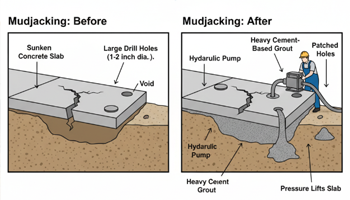
Slabjacking vs Mudjacking
Slabjacking vs Mudjacking vs Polyurethane Foam Leveling Your concrete driveway has sunk three inches. The…

Foundation Repair Cost
Foundation Repair Cost By Problem Type & Home Size Foundation damage is one of the…
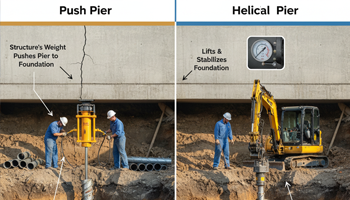
Push Piers vs Helical Piers
Push Piers vs Helical Piers: Foundation Underpinning When your home’s foundation starts settling, the choice…

Foundation Crack Repair
Foundation Crack Repair: Epoxy vs Polyurethane Injection Complete Guide Foundation problems strike fear into homeowners…
Foundation Repair
Foundation Repair Guide: Systems, Costs & Decision Framework Foundation problems strike fear into homeowners for…