
Foundation Crack Repair: Epoxy vs Polyurethane Injection Complete Guide
Foundation problems strike fear into homeowners for good reason—they represent one of the most expensive home repairs, with costs ranging from hundreds to tens of thousands of dollars. But here’s what the industry won’t readily tell you: nearly 40% of foundation repairs are either unnecessary or significantly oversold. After 15+ years working in foundation repair and construction, I’ve reviewed hundreds of estimates where contractors recommended $25,000 in piering when $3,000 in crack injection would have sufficed.
This guide cuts through the industry noise to give you a framework for making informed decisions about foundation repair in 2025. You’ll learn how to identify genuine structural issues, understand which repair methods actually fit your situation, evaluate contractors beyond price alone, and protect yourself from the predatory practices that have proliferated—especially in regions with expansive clay soils like Texas, Colorado, and California.
The foundation repair landscape has evolved dramatically. New technologies like polyurethane foam and carbon fiber reinforcement are displacing traditional methods, not always because they’re superior for every application, but because they’re faster to install and offer higher profit margins. Understanding when each technology is truly appropriate versus when it’s just marketing makes the difference between a $4,000 solution and a $20,000 expense.
Most critically, understand this: 80% of foundation problems are symptoms of drainage issues. I’ve watched homeowners spend $20,000 on piering only to see problems resurface within five years because they never addressed the gutters and grading that caused the settlement in the first place. Your foundation is just one component of an integrated system—you need a holistic strategy that addresses root causes, not just visible symptoms.
Understanding Foundation Problems: Types, Causes & Diagnosis
Foundation issues don’t announce themselves with neon signs. They reveal themselves gradually through interconnected symptoms that homeowners often dismiss until the damage becomes severe. Recognizing these early warning signs and understanding their underlying causes separates a manageable repair from a structural catastrophe.
Common Foundation Issues (Settlement, Cracks, Bowing Walls, Water Intrusion)
Settlement occurs when soil beneath your foundation compresses unevenly, causing portions of your home to sink. This manifests as sloping floors, doors that won’t close properly, and gaps appearing between walls and ceilings or floors. Settlement exceeding 2 inches represents a severe structural concern requiring immediate professional evaluation.
Foundation cracks vary widely in severity. Hairline vertical cracks less than 1/8 inch wide typically result from normal concrete curing and pose minimal structural risk. Horizontal cracks, stair-step patterns in block foundations, or vertical cracks exceeding 1/4 inch signal serious structural movement. The location, orientation, and width of cracks tell experienced engineers exactly what forces are acting on your foundation.
Bowing basement walls indicate lateral soil pressure overwhelming your foundation’s strength. This occurs most frequently in regions with expansive clay soils or poor exterior drainage. Walls bowing inward more than 2 inches represent an emergency—complete collapse becomes increasingly likely as displacement increases.
Water intrusion often appears first as dampness, musty odors, or efflorescence (white mineral deposits) on basement walls. While seemingly a waterproofing issue, chronic moisture typically signals foundation movement creating new pathways for water entry. The two problems interconnect—foundation movement allows water in, while water further destabilizes soil supporting the foundation.
Warning Signs That Require Immediate Attention
Certain symptoms demand urgent professional evaluation:
- Doors and windows that suddenly stick or won’t latch indicate active foundation movement
- New cracks appearing in drywall, especially above doorframes or at wall-ceiling junctions
- Gaps between walls and floors or ceilings measuring more than 1/4 inch
- Sloping or uneven floors noticeable when rolling a ball or visually obvious
- Cracks in exterior brickwork or siding following stair-step patterns
- Basement walls bowing inward or showing horizontal cracks
- Separation between walls and chimney or between walls themselves
- Nails popping out from drywall or trim work throughout the house
- Windows or doors separating from frames creating visible daylight gaps
These aren’t signs to «monitor»—they indicate ongoing structural movement requiring professional diagnosis. Every month of delay allows more damage accumulation and typically increases repair costs.
DIY Diagnosis vs. Professional Structural Engineering Assessment
Homeowners can perform preliminary assessments. Document crack locations and widths with photographs, using a coin or ruler for scale. Mark crack ends with tape and dates to monitor growth. Check floors for levelness using a smartphone level app or carpenter’s level. Note where doors stick and inspect your home’s exterior grade—soil should slope away from the foundation at least 6 inches over 10 feet.
However, DIY diagnosis has critical limitations. You can’t see soil conditions beneath your foundation, identify which cracks represent active structural issues versus cosmetic concerns, or determine whether symptoms stem from foundation problems or separate structural issues.
This brings us to the single most valuable piece of advice I can offer: invest $500-$1,200 in an independent structural engineer’s evaluation BEFORE contacting foundation repair contractors. This upfront cost saves thousands by providing an unbiased assessment of what actually needs repair. Engineers have no financial incentive to oversell repairs—they simply identify problems and recommend solutions based on structural principles.
Contractors, conversely, make money from performing repairs. While many operate ethically, the industry’s commission-based sales structures create inherent conflicts of interest. An engineer’s report in hand lets you evaluate contractor proposals against an objective standard, making it immediately obvious when someone’s pushing unnecessary work.
Foundation Repair Methods by Problem Type
Foundation repair isn’t one-size-fits-all. Each problem type demands specific solutions, and understanding these distinctions prevents contractors from selling you expensive fixes for issues that need simpler interventions.
Crack Repair Solutions (Epoxy Injection, Polyurethane Foam, Surface Sealing)
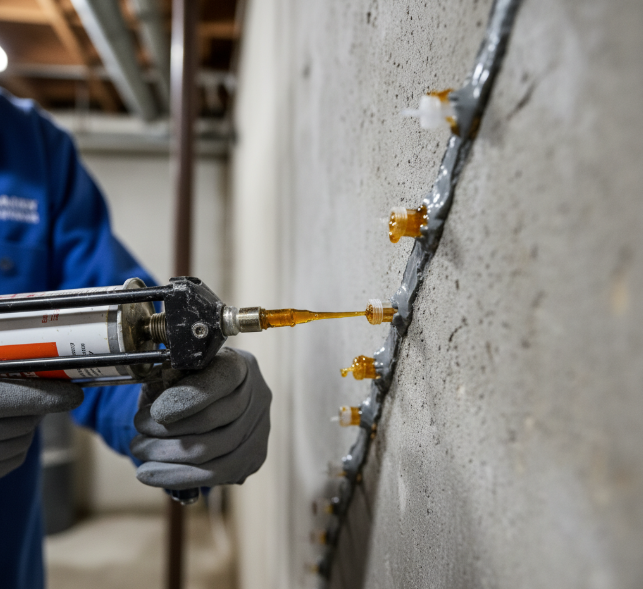
Epoxy injection creates structural bonds for stable cracks in poured concrete foundations. The two-part epoxy resin penetrates the full crack depth, essentially welding the concrete back together. This method works exclusively for cracks that aren’t actively widening—if movement continues, the repair fails. Cost ranges from $300-$800 per crack depending on length and depth. Epoxy provides the strongest structural repair for static cracks but offers no flexibility for ongoing movement.
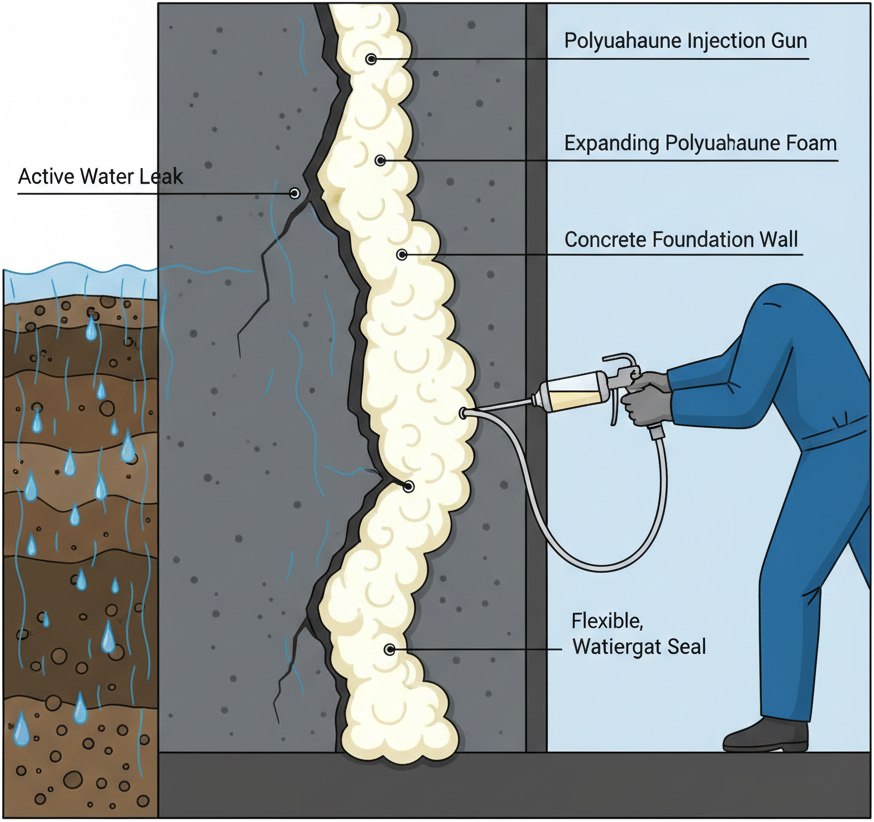
Polyurethane foam injection seals cracks while accommodating minor continued movement. The foam expands to fill voids and creates a waterproof barrier. This makes it ideal for basement wall cracks where moisture intrusion is the primary concern and structural integrity remains adequate. Polyurethane costs $400-$900 per crack and includes waterproofing benefits that epoxy lacks. However, it doesn’t restore structural strength—it’s a sealing solution, not a structural repair.
Surface sealing involves applying hydraulic cement or specialized masonry coatings to crack exteriors. This cosmetic approach costs $100-$300 per crack and serves only to prevent water infiltration through minor, stable cracks. Surface sealing never addresses structural issues and fails quickly if cracks widen from continued foundation movement. Contractors who lead with surface sealing for structural cracks are either incompetent or dishonest.
The decision framework: If your crack is stable, narrow (under 1/4 inch), and primarily a moisture concern, polyurethane makes sense. For wider stable cracks in poured concrete foundations where structural strength matters, epoxy is appropriate. If your engineer identifies active movement, crack repair alone is insufficient—you need to address the underlying settlement or wall displacement first.
Settlement & Sinking Repairs (Push Piers, Helical Piers, Slabjacking)
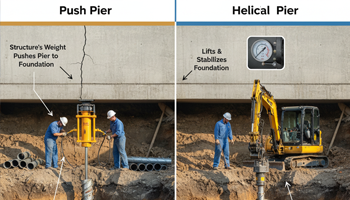
Push piers (also called resistance piers) are hydraulically driven through unstable soil until reaching bedrock or load-bearing strata. Steel brackets attached to your foundation transfer the home’s weight to these deep piers. Push piers work in most soil conditions and can stabilize homes even where bedrock sits 40+ feet deep. Installation involves excavating along the foundation perimeter, which means potential landscaping disruption. Costs run $1,500-$2,500 per pier, with typical installations requiring 8-15 piers ($12,000-$37,500 total).
Helical piers (screw piers) use helical plates that screw into soil like enormous ground anchors. They work best in soils with good shear strength and install with less disruption than push piers—no heavy equipment driving piers to refusal. Helical piers excel for lighter structures, additions, or situations where access for heavy hydraulic equipment is limited. Cost ranges from $1,200-$2,000 per pier, with similar installation quantities to push piers.
The push pier vs. helical pier decision depends primarily on soil conditions and structural loads. Push piers handle heavier loads and work in virtually any soil, making them the default choice for main structure underpinning. Helical piers suit lighter structures, existing soil with good bearing capacity, or installations where vibration from driven piers could damage nearby structures.
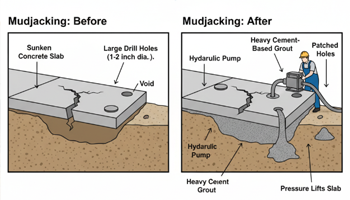
Slabjacking (mudjacking) addresses settled concrete slabs—driveways, patios, garage floors, and slab foundations—by pumping material beneath the concrete to raise it. Traditional mudjacking uses a cement-based slurry, while modern polyurethane foam slabjacking (often marketed as PolyLevel) uses expanding foam. Polyurethane costs more upfront ($5-$25 per square foot vs. $3-$6 for traditional mudjacking) but cures in 15 minutes versus 24 hours, weighs far less (reducing future settlement risk), and involves smaller injection holes.
For most residential slab lifting, polyurethane foam has displaced traditional mudjacking—not just because contractors make better margins, but because it genuinely performs better for most applications. The lightweight foam won’t overload already-stressed soils, and the fast cure time means you can use the area immediately. However, if you’re lifting a massive garage slab in stable soil and cost is paramount, traditional mudjacking still works fine.
Bowing Wall Stabilization (Carbon Fiber, Steel I-Beams, Wall Anchors)
Carbon fiber reinforcement involves epoxying carbon fiber straps vertically along basement walls to prevent further bowing. This solution works only for walls with less than 2 inches of displacement that aren’t actively worsening. Carbon fiber doesn’t push walls back to original position—it halts additional movement. Installation takes 1-2 days with minimal disruption and costs $300-$600 per strap, with typical basements requiring 6-10 straps ($1,800-$6,000 total).
The carbon fiber revolution in foundation repair happened because it’s fast, clean, and profitable—not because it solves every bowing wall problem. Many contractors push carbon fiber for situations requiring more aggressive intervention simply because they can install it quickly. If your walls are actively bowing or already displaced more than 2 inches, carbon fiber is inappropriate.
Steel I-beams (also called PowerBraces or similar proprietary names) perform the same function as carbon fiber but with greater strength. Vertical steel beams are installed against the wall and secured to floor joists above. Unlike carbon fiber, adjustable steel systems can potentially straighten walls over time through periodic tightening. Costs run $400-$800 per beam, with typical installations using 4-8 beams ($1,600-$6,400 total). Steel beams suit walls with 2-4 inches of displacement or situations where the homeowner wants the option to gradually straighten the wall.
Wall anchors (also called earth anchors or plate anchors) provide the most aggressive bowing wall repair. Installation involves excavating outside the basement wall, driving steel rods through the wall to exterior earth anchors, then tightening the system to pull walls back toward original position. This method addresses walls with severe displacement (4+ inches) or active movement. Costs range from $400-$800 per anchor, with typical installations requiring 4-6 anchors ($1,600-$4,800). The system’s strength comes from anchoring to undisturbed soil 10-12 feet from the foundation—well beyond the failure zone causing the bow.
Decision framework: For walls bowing less than 2 inches with no active movement, carbon fiber provides adequate reinforcement at the lowest cost. For 2-4 inches of displacement or preference for potential wall straightening, steel I-beams make sense. For severe bowing exceeding 4 inches or walls with active ongoing movement, only wall anchors provide sufficient correction force.
Waterproofing & Drainage Systems Integration
Foundation repair without addressing drainage is like treating symptoms while ignoring the disease. Most foundation problems trace back to water—either too much concentrated near the foundation or soil moisture levels fluctuating dramatically between seasons.
Comprehensive foundation protection integrates multiple drainage components. Exterior waterproofing involves excavating around the foundation, applying waterproof membrane coatings, and installing perimeter drainage tile that routes water away. This exterior approach costs $8,000-$15,000 for a typical basement but provides the most effective moisture control. However, it requires excavating your landscaping and isn’t feasible if adjacent structures or accessibility issues prevent exterior excavation.
Interior drainage systems install a perimeter drain channel inside the basement floor edge, routing water to a sump pump system. This costs $4,000-$8,000 and works well when exterior excavation isn’t practical. While not as comprehensively effective as exterior drainage, interior systems handle most residential moisture problems adequately.
Beyond waterproofing systems, address basic drainage fundamentals: gutters that discharge at least 6 feet from the foundation, proper lot grading that slopes away from the house, and avoiding irrigation systems that saturate soil near the foundation. These unglamorous basics prevent more foundation problems than any repair technology.
The interconnection with foundation repair: stabilize the foundation first, then address drainage to prevent recurrence. Attempting drainage improvements alone won’t fix existing structural damage, but foundation repairs without drainage improvements guarantee the problem returns.
Foundation Repair Cost Breakdown
Foundation repair costs vary dramatically based on problem severity, repair methods, home size, and regional factors. Understanding these cost ranges helps you identify reasonable estimates versus price gouging.
Minor Repairs ($500-$3,500): Crack Sealing & Surface Fixes
Minor repairs address isolated cracks in stable foundations with no active structural movement. Epoxy or polyurethane injection for 1-3 cracks typically runs $500-$1,500. Small-scale surface waterproofing, installing window well covers, or repairing isolated mortar joints adds another $500-$2,000. These repairs typically complete in a single day with minimal disruption.
The key qualification: «minor» only applies when problems are genuinely isolated and no structural movement is occurring. Contractors sometimes categorize more serious issues as «minor repairs» to get in the door with low initial quotes, then discover «additional problems» requiring extensive work once they start. This bait-and-switch tactic is why an independent engineer’s evaluation matters—you’ll know exactly what qualifies as genuinely minor versus what needs more extensive repair.
Moderate Repairs ($4,000-$10,000): Piering & Concrete Lifting
Moderate repairs involve structural stabilization for limited foundation sections. Installing 2-5 piers to stabilize a corner or section of settling foundation costs $4,000-$10,000. Slabjacking a moderately settled concrete slab (500-1,000 square feet) runs $3,000-$8,000. Stabilizing a bowing wall with carbon fiber straps or steel I-beams falls in this range at $2,000-$7,000. These projects typically require 2-4 days of work.
This category represents the sweet spot where proper repair delivers excellent ROI. You’re addressing genuine structural issues before they escalate into major problems, and costs remain manageable relative to home values. However, this is also the category where contractor recommendations vary most wildly—I’ve seen estimates for identical problems ranging from $4,500 to $18,000. Multiple bids and that engineer’s report become absolutely critical.
Major Structural Repairs ($10,000-$30,000+): Full Underpinning & Replacement
Major repairs involve extensive foundation work or multiple simultaneous problems. Full perimeter underpinning with 10-15 piers costs $15,000-$30,000+. Replacing entire foundation sections, addressing severely bowing walls with wall anchor systems throughout the basement, or combining foundation stabilization with comprehensive waterproofing systems pushes into this range. Projects require 1-2 weeks for completion and cause significant short-term lifestyle disruption.
At this cost level, some homeowners question whether repair makes economic sense versus other options. The answer depends on home value, location, and emotional attachment. If your home is worth $400,000 and has excellent location, a $25,000 foundation repair preserves substantial equity and may be non-negotiable for resale. If your home is worth $150,000 in a declining area, that same repair changes the financial calculus dramatically.
In extreme cases where foundation damage is catastrophic—more than 6 inches of settlement, multiple walls severely compromised, or foundation literally separating from the structure—you’re looking at $50,000-$100,000+ for full foundation replacement. At these numbers, «repair» becomes economic nonsense for most situations. Demolition and rebuild, or walking away from the property entirely, may be the only sensible options.
Cost Factors: Home Size, Soil Conditions, Access & Geography
Home size impacts costs directly—larger foundation perimeters need more piers, longer walls require additional bracing, and bigger slabs cost more to lift. A 1,200 square foot home might need 8 piers for full stabilization ($12,000-$20,000) while a 2,400 square foot home needs 14+ piers ($21,000-$35,000).
Soil conditions dramatically affect both the type of repair needed and its cost. Expansive clay soils—prevalent throughout Texas, Colorado, Oklahoma, and California’s Central Valley—create the most challenging conditions. These soils swell when wet and shrink when dry, generating enormous forces that push foundations upward in wet seasons and allow settling during droughts. Piers in expansive clay regions must extend deeper to reach stable soil, increasing costs 20-30% versus more stable soil regions.
Poor soil bearing capacity means piers must be driven deeper to find adequate support. In some coastal and river valley areas, bedrock sits 50+ feet deep, requiring longer piers and more installation time. Organic soils with high water content compress more readily, often requiring more piers to distribute loads adequately.
Access and site conditions add costs when complicated. Homes with limited access for equipment—fenced backyards with no gate access, homes on hillsides, or urban properties with no space for equipment staging—require hand excavation or smaller equipment, adding 15-25% to costs. Existing landscaping, decks, or other structures requiring temporary removal and reinstallation add further expenses.
Geographic variation reflects local labor costs, competition levels, and regulatory requirements. Foundation repairs in major metropolitan areas (New York, San Francisco, Los Angeles) cost 30-50% more than identical work in smaller Midwest or Southern markets. However, beware of unusually low bids in any market—foundation repair requires skilled labor and quality materials. «Too good to be true» pricing usually is.
Seasonal timing affects pricing more than most homeowners realize. Late summer through early fall (August-October) typically offers the best pricing—30% lower in some markets compared to spring peak season. Demand drops after the spring/summer home buying rush, and contractors become more flexible on pricing. Winter work is possible in most climates but may require accommodations for frozen ground or temperature-sensitive materials, potentially adding 10-15% to costs.
Selecting a Foundation Repair Contractor
The foundation repair industry has relatively low barriers to entry, which means quality varies wildly. Selecting the right contractor requires looking beyond smooth sales presentations and low bids to evaluate actual qualifications and business practices.
Essential Credentials: Licenses, Insurance & Certifications
Start with the non-negotiables. Your contractor must carry:
General contractor licensing (requirements vary by state—verify your state’s requirements and confirm the license is current and in good standing with no disciplinary actions)
Liability insurance of at least $1 million (request a current certificate of insurance directly from their insurance provider, not a photocopy they provide—contractors have been known to show expired or fabricated certificates)
Workers’ compensation insurance covering all employees (without this, you become liable if a worker is injured on your property)
Bonding in states that require it (the bond protects you financially if the contractor fails to complete work or meet contractual obligations)
Beyond these basics, look for voluntary certifications. Organizations like the Foundation Supportworks Network, Ram Jack, Atlas Piers, or similar national franchises require training and quality standards from their affiliates. Membership in the National Association of Foundation Repair Professionals demonstrates commitment to industry standards, though verify actual participation rather than simply paying membership dues.
Structural engineering credentials matter most for complex jobs. Some foundation companies employ or maintain relationships with structural engineers who review jobs, provide engineering stamps for permits, and validate repair designs. Companies with in-house engineering staff or formal engineer relationships demonstrate higher operational sophistication.
Red Flags vs. Quality Indicators in Contractor Evaluations
Red flags that should immediately disqualify a contractor:
- Refusing to provide proof of insurance or licensing
- Pressure tactics like «discount expires today» or «we happened to be in your neighborhood»
- Refusing to provide written estimates or insisting on starting immediately
- No local business address or working from a residential address
- Unable to provide local references or past project examples
- Significantly lowest bid without clear explanation of differences
- Recommending repairs that contradict an engineer’s evaluation
- Requiring full payment upfront (standard terms involve progress payments)
- No written warranty or unclear warranty terms
Quality indicators that distinguish professional contractors:
- Willingness to accommodate an independent engineer’s evaluation
- Detailed written proposals explaining exactly what work will be performed, materials used, and timeline expected
- Itemized pricing showing costs for each repair component
- Clear warranty documentation with specific coverage terms
- References you can contact and actual project sites you can visit
- Established local business with verifiable years in operation
- Professional website with educational content (not just sales pitches)
- Membership in Better Business Bureau with positive rating
- Written explanation of how they determined the repair method and scope recommended
Pay attention to the sales process itself. Quality contractors educate you about the problem, explain why their recommended solution addresses your specific situation, and present costs transparently. High-pressure contractors fixate on closing the sale, create artificial urgency, and deflect questions about alternatives or cost breakdowns.
How to Evaluate Multiple Bids (Not Just Price)
Never accept a single bid for foundation work. Three bids from different contractors reveals the market range and identifies outliers—both suspiciously low and potentially inflated.
When comparing bids, standardize the comparison:
Repair scope: Do all contractors recommend the same general approach, or do proposals range from simple crack sealing to full underpinning? Dramatically different recommendations suggest some contractors aren’t correctly diagnosing the problem.
Material specifications: Are contractors proposing equivalent materials? Steel pier capacity ratings, concrete strength specs, and waterproofing membrane brands all affect performance and cost. The lowest bidder using inferior materials isn’t a bargain.
Warranty terms: Compare not just warranty length but what’s actually covered. Some warranties cover only pier movement beyond a specified threshold (essentially useless), while comprehensive warranties cover any further foundation movement and transfer to subsequent property owners.
Timeline and disruption: How long will work take? What accommodations must you make? Will you need to temporarily relocate? The fastest proposal isn’t always best—rushed work leads to problems.
Payment terms: Standard practice involves a deposit (typically 10-25%), progress payments as work proceeds, and final payment upon completion. Contractors requesting unusual payment structures—very large deposits, payment in cash, or full payment before starting—raise red flags.
Create a comparison spreadsheet listing these factors. The goal isn’t identifying the absolute lowest price but the best value—the optimal combination of appropriate repair scope, quality materials, comprehensive warranty, and fair pricing from a reputable contractor.
If one bid is significantly lower than others (more than 20% below the next lowest), investigate why. Sometimes small, hungry contractors underbid to win work, planning to cut corners or manufacture «change orders» to increase the final cost. Other times, they’ve missed something significant that other contractors caught. Either scenario creates problems.
Conversely, if one bid is dramatically higher (40%+ above others), the contractor may be either operating at very high overhead (franchise fees, extensive marketing) or simply trying to profit from homeowner fear. Unless they’re providing substantially more value—better warranty, superior materials, engineer-backed design—the premium isn’t justified.
Questions to Ask Before Signing a Contract
Before committing, ask these questions and evaluate the answers carefully:
- «How did you determine this is the appropriate repair method for my specific situation?» You want detailed explanations referencing soil conditions, symptom patterns, and structural principles—not sales scripts.
- «What alternatives did you consider and why did you reject them?» Good contractors can explain why other approaches won’t work or cost more without providing better outcomes.
- «Exactly what does your warranty cover, and does it transfer if I sell the property?» Get specific—warranty against what, for how long, and what limitations or maintenance requirements apply?
- «What testing or monitoring do you do to verify the repair worked as designed?» Quality contractors measure foundation levels before and after work, document pier depths and capacities, and provide post-repair monitoring recommendations.
- «What could go wrong during this repair, and how would you handle it?» Every construction project encounters surprises. How contractors plan for contingencies reveals their experience and professionalism.
- «Do you handle permits, and who pays for them?» Foundation repairs often require building permits. Ensure the quote includes permit costs and the contractor manages the permitting process.
- «What’s your typical timeline from contract signing to project completion?» This reveals their schedule—contractors booked months out demonstrate healthy demand, while those who can start immediately might lack steady business for a reason.
- «Can you provide a detailed project schedule with specific milestones?» Vague «we’ll get it done in a week or so» timelines suggest poor project management.
- «How do you protect my property during work?» Foundation repairs create disruption. Professional contractors explain their protection protocols—floor and carpet protection, dust barriers, landscaping restoration, etc.
- «What does your contract cancellation policy look like?» Understand your options if problems arise before work begins.
Trust your instincts. If a contractor’s answers feel evasive, overly technical (deliberately confusing), or dismissive of your concerns, that’s how they’ll handle issues during the project. Find someone who communicates clearly and treats your questions with respect.
Foundation Repair Warranties & Long-Term Protection
Foundation repair warranties vary dramatically between contractors—from virtually worthless to genuinely comprehensive coverage. Understanding warranty structures protects your investment and reveals contractor confidence in their work.
Understanding Warranty Coverage (Transferable vs. Non-Transferable)
Transferable warranties remain valid if you sell the property, covering the new owner for the remaining warranty term. This warranty type provides substantial value in real estate transactions—buyers will pay premiums for homes with transferable foundation warranties, and lenders view them favorably. Expect transferable warranties from established contractors who stand behind their work.
Non-transferable warranties expire upon property sale, providing no benefit to future owners. These warranties cost contractors nothing long-term since most homeowners sell within 7-10 years. Contractors offering only non-transferable warranties either lack confidence in their repairs or operate on short-term business models that won’t survive long enough to honor warranty claims.
Read warranty terms carefully. Some warranties sound comprehensive but contain exclusions rendering them practically worthless:
- Movement thresholds: Some warranties only activate if settlement exceeds specific measurements (often 1-2 inches)—essentially ensuring they’ll never pay out since that much movement means catastrophic failure, not a warranty claim.
- Maintenance requirements: Warranties requiring annual paid inspections by the original contractor create revenue streams and provide excuses to deny claims. Reasonable maintenance requirements (keeping gutters functional, maintaining proper grading) are fine; excessive or expensive requirements suggest warranty manipulation.
- Prorated coverage: Some warranties decrease in value annually—if failure occurs in year 5 of a 10-year warranty, they only cover 50% of repair costs. This structure limits contractor liability while sounding comprehensive.
- New damage only: Some warranties cover only foundation movement not present at the original repair—if your north wall was stabilized but your south wall later fails, it’s not covered. This makes sense for unrelated issues but provides little protection for recurring problems from the same root cause.
Insist on written warranty documentation before signing contracts. Verbal warranty promises mean nothing—get specific coverage terms, exclusions, duration, and transferability in writing.
Typical Warranty Lengths by Repair Method (2-25 Years)
Warranty length should reflect the permanence and invasiveness of the repair method:
Short-term warranties (2-5 years): Surface-level repairs like crack injection or surface waterproofing typically carry shorter warranties. These repairs address symptoms without necessarily fixing root causes, so contractors limit warranty exposure.
Medium-term warranties (10-15 years): Standard foundation piering, slabjacking, and wall stabilization repairs generally come with 10-15 year warranties from reputable contractors. This duration matches the expected service life of materials and methods.
Long-term warranties (20-25+ years): The best contractors offer lifetime or 25+ year warranties on major foundation repairs, particularly for piering systems. These warranties demonstrate genuine confidence in both materials and installation quality.
However, warranty length alone doesn’t indicate quality. Some contractors offer «lifetime warranties» riddled with exclusions and limitations making them effectively useless. A clear 15-year comprehensive warranty from a financially stable contractor beats a «lifetime warranty» from a fly-by-night operation that won’t exist in five years.
Verify the contractor’s business longevity. A 25-year warranty means nothing if the company started two years ago—they haven’t proven they’ll survive long enough to honor claims. Look for established businesses with a decade or more of operation. Check their Better Business Bureau profile and online reviews for patterns of warranty disputes.
Post-Repair Maintenance Requirements
Foundation repairs don’t end when contractors pack up—ongoing maintenance protects your investment.
Moisture management remains critical. Even with a stabilized foundation, improper drainage will cause new problems. Maintain:
- Clean gutters discharging water at least 6 feet from the foundation
- Proper lot grading with soil sloping away from the house
- Downspout extensions directing water away from the structure
- Avoidance of excessive irrigation near the foundation
Monitor for changes. Check your home quarterly for new cracks, sticking doors, or other symptoms. Photograph foundation walls annually—particularly in basements—to document conditions. This documentation helps determine whether new issues represent warranty-covered movement or separate problems.
Seasonal soil moisture consistency matters enormously in expansive clay regions. Extreme fluctuations between very wet and very dry cause the swelling/shrinking cycles that damage foundations. Maintain relatively consistent soil moisture around your foundation year-round through:
- Strategic watering during drought periods (soaker hoses 2-3 feet from foundation)
- Ensuring drainage remains functional during rainy seasons
- Monitoring and adjusting as seasons change
Foundation inspection schedule: Have your foundation inspected by a qualified professional every 3-5 years, more frequently if you live in challenging soil conditions or have experienced previous problems. These inspections cost $200-$400 and catch minor issues before they escalate into expensive repairs.
Document all maintenance activities. If warranty claims arise, you’ll need evidence you maintained the property reasonably. Conversely, contractors attempting to deny claims based on alleged maintenance failures must prove you neglected specific duties—your documentation protects against bogus denials.
When to Call a Structural Engineer
While foundation repair contractors can diagnose and fix many problems, certain situations demand an independent structural engineer’s evaluation before proceeding with any repairs.
Severe Settlement (>2 Inches)
Settlement exceeding 2 inches represents serious structural movement that requires engineering analysis. At this displacement level, you need to understand:
- Whether settlement is still active or has stabilized
- The root cause—inadequate soil bearing capacity, soil type problems, drainage failures, or other factors
- Whether the structure has been compromised beyond just cosmetic damage
- The most appropriate repair method for your specific situation and soil conditions
- Expected performance of proposed repairs and potential for future movement
Contractors may correctly identify that you need piering, but an engineer determines how many piers, at what depths, with what load capacities, and in precisely which locations. This precision matters—under-designed repairs fail to stabilize the foundation, while over-designed repairs waste thousands of dollars on unnecessary components.
The $500-$1,200 engineering evaluation cost pays for itself by preventing both under-repairs that fail and over-repairs that waste money. I’ve reviewed situations where homeowners spent $30,000 on contractor-designed repairs that an engineer could have achieved for $18,000, and others where $8,000 in contractor-proposed work wouldn’t have actually solved the problem because the diagnosis was wrong.
Multiple Structural Issues Combined
When you’re experiencing several problems simultaneously—say, foundation settlement AND bowing walls AND major cracking—an engineer provides the integrated analysis needed to address everything systematically.
Multiple symptoms often share common root causes. Attacking each problem independently may result in paying for three separate repairs that don’t actually fix the underlying issue. An engineer identifies causal relationships: perhaps poor drainage caused soil erosion that led to settlement, which created lateral forces causing wall bowing, which cracked the foundation. In this scenario, addressing drainage and stabilizing the foundation might resolve all three visible problems, while treating them separately means expensive band-aids that don’t prevent recurrence.
Engineers also sequence repairs optimally. Some work must happen before other repairs will succeed. For example, stabilizing a settling foundation before attempting to straighten bowed walls, or installing proper drainage before repairing cracks that formed from water pressure. Contractors sometimes repair symptoms in isolation without this strategic sequencing, leading to repair failures or wasted money.
Pre-Purchase Inspections & Engineer Reports
If you’re buying a home and inspection reveals potential foundation issues, invest in a pre-purchase structural engineering evaluation before closing. The several hundred dollars for an engineer’s assessment often saves tens of thousands in post-purchase surprise expenses.
Standard home inspections identify symptoms—cracks, sticking doors, sloping floors—but home inspectors aren’t structural engineers. They can tell you something is wrong but not specifically what needs repair or what it should cost. An engineer’s pre-purchase evaluation provides:
- Specific diagnosis of foundation problems present
- Recommended repair methods and estimated costs
- Assessment of whether issues will worsen rapidly or remain stable
- Identification of any non-foundation structural problems
This information arms you for negotiations. If the engineer identifies $15,000 in needed foundation repairs, you can negotiate that amount off the purchase price, require the seller to complete repairs before closing (with engineer verification), or walk away if the problems seem too severe.
For sellers, an engineer’s report before listing demonstrates transparency and can actually facilitate sales. Rather than buyers discovering foundation symptoms during inspection and imagining worst-case scenarios, you present a professional assessment showing the problem is defined, solvable, and perhaps less severe than feared. Some sellers complete recommended repairs pre-listing; others provide the engineer’s report and credit the repair cost—either approach beats surprises that torpedo deals at closing.
Foundation Types & Repair Complexity
Foundation design significantly affects which problems occur, how repairs proceed, and what costs run. Understanding your foundation type helps set appropriate expectations for repair processes.
Slab-on-Grade Foundation Repairs
Slab-on-grade (slab) foundations consist of a single concrete slab poured directly on soil, with no basement or crawl space. Approximately 60% of new homes built in warm climates use slab foundations due to their cost-effectiveness where frost depth isn’t a concern.
Common slab problems: Settlement creates floor unevenness, cracks appear in the slab, and interior walls develop cracks as they follow the uneven slab. Plumbing failures beneath the slab (slab leaks) can erode soil support, causing sudden localized settlement. Perimeter beam settlement causes the slab edges to drop relative to interior sections.
Repair approaches: Slabjacking addresses settled sections by injecting material beneath the slab to lift it back to level. Underpinning with piers stabilizes perimeter beams or severely settled slab sections. Crack injection seals visible cracks once settlement is stabilized.
Slab repair advantages: No basement or crawl space means simpler access for most repairs. Fewer drainage issues compared to basement foundations. Often less expensive total repair costs versus full basement underpinning.
Slab repair challenges: Diagnosing the exact cause of settlement can be difficult without seeing soil conditions below. Plumbing repairs beneath slabs require breaking through concrete to access pipes. Post-tensioned cable systems in some modern slabs complicate repair work and require specialized contractors familiar with these systems.
Pier & Beam Foundation Considerations
Pier and beam (raised) foundations elevate homes on posts or piers with a wooden beam structure supporting the floor framing. Popular in flood-prone regions and older homes throughout the South and Midwest, these foundations create a ventilated crawl space beneath the house.
Common pier and beam problems: Individual piers settle or shift, causing floor sagging above. Wooden beams or floor joists rot from moisture exposure. Piers installed on inadequate footings sink into soft soil. Termites and other wood-destroying organisms damage structural lumber.
Repair approaches: Installing new piers adjacent to or replacing settled/damaged piers. Sistering or replacing rotted beams. Shimming and adjusting existing piers to level floors. Adding new piers to reduce spans and eliminate floor bounce.
Pier and beam advantages: Easy access to all foundation components for inspection and repair. Individual pier problems can be fixed without affecting the entire foundation. Modifications and additions are simpler than with slab foundations. Better ventilation reduces moisture problems when properly maintained.
Pier and beam challenges: More components mean more potential failure points. Requires vigilant moisture control in crawl space to prevent wood rot. Proper ventilation is critical but often blocked or insufficient. Pest control becomes more important with accessible wooden components. Floor levelness is harder to maintain compared to concrete slabs.
Basement & Crawl Space Foundation Challenges
Full basement and crawl space foundations involve perimeter foundation walls extending below grade, with either a concrete slab floor (basement) or exposed earth (many crawl spaces).
Common basement/crawl space problems: Bowing or leaning walls from lateral soil pressure. Horizontal or stair-step cracking in block walls. Water infiltration through walls or floor. Settlement causing the entire structure to sink. Floor slab cracking and heaving from expansive soils beneath.
Repair approaches: Wall stabilization with carbon fiber, steel I-beams, or wall anchors for bowing walls. Underpinning with piers for settlement issues. Interior or exterior waterproofing systems for moisture control. Crack injection for static wall cracks. Full wall replacement for catastrophically failed walls.
Basement advantages: Full-height walls provide substantial structural support. Complete access to foundation perimeter for inspection and interior repairs. Finished basements provide living space that justifies foundation investment.
Basement challenges: Most expensive foundation repair scenarios involve basement walls. Water infiltration problems are most severe and complex. Excavation for exterior repairs disrupts landscaping, driveways, and adjacent structures. Finished basements mean repair work damages living spaces requiring additional restoration costs.
Crawl space specific issues: Limited access height (often 2-3 feet) makes all work more difficult and expensive due to labor challenges. Poor ventilation and drainage often lead to chronic moisture problems, wood rot, and mold. Many crawl spaces are neglected until problems become severe.
Crawl space encapsulation—sealing the space with vapor barriers, conditioning the air, and installing proper drainage—has become a popular solution that prevents many foundation problems by controlling moisture. Costs run $5,000-$15,000 but often prove worthwhile by protecting both foundation elements and overall home structural integrity.
Regional Considerations & Soil-Specific Solutions
Where you live dramatically affects which foundation problems you’ll face and what repair methods work best. Soil types and climate patterns create distinct regional challenges requiring specialized approaches.
Expansive Clay Soil Regions (Texas, Colorado, California)
Expansive clay soils swell when absorbing water and shrink when drying out. This swelling/shrinking cycle generates enormous forces—up to 5,000 pounds per square foot—capable of lifting or dropping foundations by several inches seasonally. Expansive clays plague homeowners throughout Texas (particularly the Dallas-Fort Worth area and Houston), Colorado’s Front Range, Oklahoma, and California’s Central Valley.
Characteristic problems: Dramatic seasonal foundation movement—heaving in wet seasons, settlement during droughts. Perimeter beam failure as exterior soil moisture fluctuates more than interior soil beneath the slab center. Cracks that open and close seasonally. Doors and windows that stick during certain months but function fine at other times.
Region-specific solutions: Deep pier systems extending well below the active zone where soil moisture fluctuates (often 10-15 feet deep or more). Post-tension slab designs that resist upward pressures from soil heaving (common in new construction). Moisture management systems maintaining relatively consistent soil moisture year-round through strategic watering or drainage.
Critical insight for these regions: Foundation problems in expansive clay areas almost never result from construction defects—they’re environmental responses to challenging soil conditions. Even properly built foundations will move over time unless extraordinary measures (expensive deep foundation systems) were incorporated during initial construction. The goal isn’t preventing all movement but keeping it within tolerable limits through moisture management and timely repairs.
Homeowners in expansive clay regions should budget for foundation maintenance as an ongoing cost of homeownership, similar to roof replacement. Minor repairs every 7-12 years are normal and far less expensive than allowing small problems to escalate into major structural failures.
Freeze-Thaw Cycle Damage (Northern States)
Northern states face different challenges from repeated freeze-thaw cycles. When water enters cracks or porous concrete and freezes, it expands with enormous force—enough to fracture rock. Over repeated winter/spring cycles, this progressively damages foundation walls and degrades concrete.
Characteristic problems: Horizontal cracking in foundation walls at or below grade. Spalling (flaking/popping) concrete surfaces. Step cracks in mortar joints of block foundations. Heaving of basement floors or slabs from frost penetration beneath. Deteriorating foundation walls with increasing porosity and water absorption.
Region-specific solutions: Ensuring proper depth—foundations must extend below frost line depth (varies from 3-6 feet depending on how far north). Perimeter drainage systems directing water away before it can penetrate cracks. Waterproof coatings on exterior foundation walls preventing water infiltration. Crack repair before winter prevents water entry and freeze-thaw damage escalation.
Unique consideration: Some damage is gradual and cumulative rather than sudden. Foundation walls may perform adequately for decades before deterioration crosses thresholds requiring intervention. Preventive maintenance—sealing cracks promptly, maintaining waterproof coatings, ensuring drainage systems function—extends foundation life far more cost-effectively than deferring repairs until walls fail.
Coastal & High Water Table Areas
Coastal regions and areas with high water tables face persistent hydrostatic pressure—underground water pushing against foundation walls and beneath slabs. Florida, Louisiana, coastal Carolina and Georgia, and low-lying river valleys throughout the country experience these conditions.
Characteristic problems: Chronic basement moisture or flooding. Floor slabs heaving from upward water pressure. Foundation walls with persistent dampness despite surface treatments. Rapid wood rot in pier and beam foundations. Efflorescence (white mineral deposits) covering foundation walls.
Region-specific solutions: Interior and exterior waterproofing systems with robust sump pump installations (often requiring battery backup or water-powered backup pumps given flooding risk). Proper exterior regrading and drainage to minimize water reaching foundation. Crawl space encapsulation with vapor barriers and dehumidification. In extreme cases, elevated foundations or specialized drainage systems channeling water around structures.
Special challenge: Fighting hydrostatic pressure is expensive and often ongoing rather than a one-time fix. Some locations simply shouldn’t have basements—the chronic moisture problems and repair costs exceed any benefit. Homes in high water table areas often use slab or elevated foundations specifically to avoid below-grade moisture battles.
If buying in high water table areas, verify that drainage systems are functioning and adequate. Even good systems require maintenance—sump pumps need testing, drainage channels need clearing, and waterproof coatings need refreshing. Factor these ongoing costs into homeownership budgets.
Financing Foundation Repairs in 2025
Major foundation repairs often cost more than most homeowners have readily available. Understanding financing options helps you proceed with necessary repairs rather than deferring them until problems worsen.
Home Equity Options & Personal Loans
Home Equity Line of Credit (HELOC) provides revolving credit secured by your home’s equity. Interest rates typically track below personal loan rates (currently 7-10% for qualified borrowers), and you only pay interest on amounts actually drawn. HELOCs work well for foundation repairs because you can draw funds as needed for contractor deposits and progress payments. Establishment fees run $0-$500, and the line remains available for future repairs or improvements. Drawback: your home serves as collateral—defaulting risks foreclosure.
Home Equity Loan provides a lump sum at fixed interest rates (currently 7-11%). Unlike HELOCs, you receive all funds upfront and make fixed monthly payments until the loan is repaid. This option suits homeowners wanting payment certainty and who know exact project costs. Interest may be tax-deductible if funds are used for home improvements, though consult a tax professional for your specific situation.
Cash-Out Refinance involves refinancing your existing mortgage for more than you currently owe and taking the difference in cash. This makes sense only if you can secure a lower interest rate than your current mortgage or if you have high-interest debt to consolidate. With current mortgage rates, cash-out refinancing often costs more than preserving your existing low-rate mortgage and using a HELOC or separate loan for repairs.
Personal Loans don’t require home equity but carry higher interest rates (currently 8-15% depending on creditworthiness). Loan amounts typically cap at $50,000, which covers most foundation repairs. Personal loans work for homeowners with limited equity or those uncomfortable using their home as collateral. Approval is faster than home equity products—often 1-3 business days.
Contractor Financing Programs
Many foundation repair companies offer financing arrangements, typically partnering with lenders who specialize in home improvement loans. These programs advertise «convenient financing» and «no money down,» but read terms carefully.
Promotional interest rates: Some contractors offer 0% financing for 12-18 months. If you can repay the balance during the promotional period, these deals save substantial interest. However, most promotional programs revert to high interest rates (18-25%) if any balance remains after the promotional period, and some retroactively charge interest from day one if you don’t pay off the balance completely.
Deferred interest traps: «Same as cash» or «no interest for 12 months» programs often become expensive if you don’t pay the full balance during the promotional period. Read whether interest is waived or deferred—deferred interest accumulates during the promotional period and gets added to your balance if you don’t pay it off completely.
Contractor markup: Some contractors inflate their base pricing for customers using contractor financing, effectively building the financing cost into the project price. Compare cash pricing to financed pricing—if financed pricing is higher, the contractor is marking up for the convenience of arranged financing.
When contractor financing makes sense: If you need work immediately, have strong credit to qualify for promotional rates, and can definitely pay the balance during the promotional period, contractor financing provides convenience. If you need longer repayment terms or have credit challenges, shopping for your own loan typically delivers better terms.
Insurance Coverage Scenarios (What’s Typically NOT Covered)
Homeowners insurance rarely covers foundation repairs, disappointing many homeowners who discover significant foundation problems. Understanding what insurance does and doesn’t cover prevents unpleasant surprises.
What’s typically NOT covered:
- Settlement from soil issues (considered normal wear and tear or maintenance)
- Foundation cracks from normal curing and settling
- Damage from long-term water infiltration or drainage problems (maintenance neglect)
- Tree root damage to foundations
- Damage from construction defects or defective materials
- Any gradual deterioration over time
What MAY be covered:
- Sudden, catastrophic foundation failure from covered perils (earthquake, explosion, vehicle impact)
- Foundation damage directly resulting from a covered event (burst water pipe causing immediate soil erosion and foundation settlement)
- Some policies in earthquake-prone regions offer earthquake coverage endorsements that include foundation damage, though these carry high deductibles ($10,000-$25,000)
Don’t assume denial: File claims even if you’re uncertain about coverage. Document everything with photographs and written descriptions. If denied, you’ve lost nothing. Occasionally, adjusters approve claims for coverage situations that seem borderline. If your claim is denied and you believe it should have been covered, consider hiring a public insurance adjuster who works for you rather than the insurance company—they take a percentage of any settlement but increase your chances of securing coverage.
Special consideration for water damage: If a plumbing leak inside your home causes soil erosion beneath the foundation resulting in immediate settlement, that may constitute a covered event. The key is «sudden and accidental»—chronic seepage isn’t covered, but a sudden pipe burst might be. Document the failure timeline carefully.
Preventing Future Foundation Problems
Foundation problems don’t appear randomly—they result from manageable environmental factors that homeowners can control through proper maintenance. Prevention is dramatically cheaper than repair.
Proper Drainage & Gutter Systems
Water is the primary enemy of foundation stability. Proper drainage management prevents the majority of foundation problems regardless of soil type or climate.
Gutter system essentials:
- Gutters along all roof edges collecting water before it cascades near the foundation
- Downspouts discharging at least 6 feet from the foundation (10+ feet is better)
- Downspout extensions (pop-up drains, buried discharge lines, or splash blocks) ensuring water actually flows away
- Clean gutters—twice yearly minimum, more often if you have trees near your home
- Properly sized gutters and downspouts for your roof area (5-inch gutters and 3-inch downspouts for most homes; 6-inch gutters and 4-inch downspouts for large or steep roofs)
Clogged or inadequate gutters allow concentrated water flow near foundations—creating the exact conditions that cause settlement and wall pressure. I’ve seen $15,000 foundation repairs that could have been prevented by $200 in gutter maintenance.
Yard grading requirements:
- Soil should slope away from the foundation at a minimum 5% grade (6 inches drop over 10 feet)
- Maintain this slope around the entire foundation perimeter
- Fill any low spots near the foundation where water can pool
- Avoid planting beds immediately against foundations—soil in beds settles over time, creating reverse grades that direct water toward rather than away from foundations
Re-grading costs $500-$2,000 for typical homes—a fraction of foundation repair costs. If your yard slopes toward the house, address this before foundation problems develop.
Soil Moisture Management
In expansive clay regions especially, maintaining relatively consistent soil moisture prevents the swelling/shrinking cycles that damage foundations.
Summer moisture maintenance: During hot, dry periods, use soaker hoses positioned 2-3 feet from the foundation to maintain soil moisture. Water deeply but infrequently—1-2 hours per zone once or twice weekly depending on temperature and soil dryness. Goal is preventing dramatic soil shrinkage, not creating saturated conditions. Consistency matters more than precise amounts.
Avoid over-watering: More water isn’t better—saturated soil creates different problems including increased hydrostatic pressure and soil softening. Water enough to prevent extreme dryness, not to create perpetually wet conditions.
Landscape irrigation considerations: Position sprinkler heads and drip systems to avoid concentrating water near foundations. Flower beds against foundations create both grading problems (soil settles below foundation level) and excessive moisture in concentrated areas. If you must have foundation plantings, use drought-tolerant plants requiring minimal watering.
Trees near foundations: Large trees (particularly willows, poplars, and oaks) have extensive root systems that draw massive moisture from soil, potentially causing differential settlement beneath foundations. Small trees (those maturing under 25 feet) positioned at least 10 feet from foundations rarely cause problems. Large trees should be 20+ feet from foundations or consider root barriers if you must plant closer.
Regular Inspection Schedule
Early detection of foundation problems minimizes repair costs. Establish a regular inspection routine:
Annual exterior inspection:
- Walk your home’s perimeter examining foundation walls for new cracks or crack widening
- Check for soil pulling away from foundation perimeter (indication of soil shrinkage)
- Verify gutters and downspouts are functional and discharging properly away from the home
- Examine exterior grading to ensure proper slope remains maintained
- Look for standing water after rains—anywhere water pools near your foundation is a problem waiting to happen
Annual interior inspection:
- Check for new drywall cracks, especially above doorframes and windows
- Test doors and windows for smooth operation—sticking that worsens over time suggests movement
- Look for gaps between walls and ceilings or walls and floors
- In basements, examine walls for bowing, new cracks, or moisture signs (dampness, efflorescence, musty odors)
- Note any new floor unevenness—roll a ball or use a level to check
Photograph documentation: Take photographs of your foundation—both exterior walls and basement/crawl space interiors—annually. These create a timeline showing whether problems are developing or stable. When (if) you need professional evaluation, this history helps contractors and engineers understand whether movement is ongoing or historical.
Quarterly quick checks: Every three months, do a quick walk-through checking for the most obvious symptoms—doors sticking, new cracks in visible locations, gutters backing up. This takes 10 minutes and catches rapidly developing problems before they escalate.
Professional inspections: Every 3-5 years, hire a qualified home inspector or structural engineer to conduct a comprehensive foundation assessment ($200-$500). Professional evaluation catches subtle issues you might miss and provides baseline documentation of foundation condition. If you live in challenging soil conditions (expansive clays, high water table), increase frequency to every 2-3 years.
Prevention costs pennies compared to repairs. Maintaining gutters, ensuring proper drainage, and catching problems early keeps your foundation stable and your wallet intact.
FAQs
How much does foundation repair typically cost in 2025?
Minor repairs like crack sealing run $500-$3,500, moderate repairs including limited piering or slabjacking cost $4,000-$10,000, and major structural repairs involving extensive underpinning range from $10,000-$30,000+. Costs depend heavily on problem severity, home size, soil conditions, and geographic location. The only way to get accurate pricing is through multiple contractor estimates based on your specific situation—or better yet, start with a structural engineer’s evaluation ($500-$1,200) to understand exactly what repairs you actually need.
Should I get multiple foundation repair quotes?
Absolutely—three quotes minimum. Foundation repair recommendations and pricing vary wildly between contractors. I’ve seen identical problems quoted from $4,500 to $18,000. Multiple bids reveal the market range, help you identify outliers (both suspiciously low and potentially inflated), and give you negotiating leverage. However, evaluate based on value, not just price—consider warranty terms, contractor reputation, repair scope, and materials quality, not merely who’s cheapest.
Can I sell my house with foundation problems?
Yes, but expect impacts on price and buyer pool. You have three approaches:
- Repair the foundation before listing to maximize value and buyer appeal.
- Disclose the issues and reduce your price by estimated repair costs plus a discount for buyer inconvenience.
- Get a structural engineer’s report before listing demonstrating the problem’s scope.
This transparency often facilitates sales better than buyers discovering issues during inspection. Some buyers specifically seek homes with foundation issues they can repair and capture equity, while others will walk away regardless of price. Your real estate agent can advise on the best strategy for your market.
How long do foundation repairs last?
Properly executed foundation repairs using pier systems typically last 25+ years, often the remaining life of the home. Surface repairs like crack injection last only as long as the foundation remains stable—if movement continues, repairs fail within months. Wall stabilization with carbon fiber or steel beams lasts 15-25+ years when movement is arrested. The key isn’t just the repair method but whether the underlying cause was addressed—repairs without fixing drainage problems or soil issues will fail regardless of technique used. This is why comprehensive approaches addressing both symptoms and causes deliver the best long-term outcomes.
Is foundation damage covered by homeowners insurance?
Rarely. Most foundation problems result from soil issues, normal settling, or drainage problems—all considered maintenance issues rather than covered perils. Insurance typically covers only sudden, catastrophic foundation failure from events specifically listed in your policy (earthquake with separate coverage, explosion, vehicle impact). Gradual deterioration, tree root damage, or settlement from any cause is almost never covered. File a claim if you’re uncertain, but budget to pay for foundation repairs yourself rather than counting on insurance coverage.
What’s the best time of year to schedule foundation repair?
Late summer through early fall (August-October) typically offers the best pricing—up to 30% lower than spring peak season. Demand drops after the spring/summer home buying rush when foundation issues are discovered during pre-sale inspections, making contractors more flexible on pricing. Avoid scheduling during periods of extremely wet or extremely dry soil conditions when soil movement is most active—stable soil conditions produce better repair outcomes. In most climates, early fall offers both good pricing and stable soil conditions.
Do I need a structural engineer or can contractors evaluate my foundation?
For minor issues like small stable cracks, contractors can evaluate adequately. For anything more serious—settlement exceeding 1 inch, bowing walls, multiple problems, or situations where you’re getting widely varying contractor recommendations—invest $500-$1,200 in an independent structural engineer’s evaluation before hiring any contractor. Engineers provide unbiased assessments with no financial incentive to oversell repairs. This upfront cost routinely saves thousands by revealing exactly what needs repair versus what contractors may be recommending unnecessarily. Think of it as insurance against being oversold and a roadmap for evaluating contractor proposals objectively.
Will foundation problems get worse if I wait?
Almost always yes. Foundation problems don’t self-correct—they’re symptoms of ongoing forces (settlement, water pressure, soil movement) that continue acting on your structure. Small cracks widen into larger cracks. Minor settlement becomes major settlement. Slight wall bowing becomes severe bowing. Beyond the physical worsening, secondary damage accumulates—drywall cracks expand, doors increasingly malfunction, utilities may be affected, and interior finishes deteriorate. Repair costs correlate with damage severity, so addressing problems early while they’re still minor saves money. The only exceptions are truly static historical issues where no current movement is occurring—but determining whether movement is ongoing or arrested requires professional evaluation.
Need more specifics? Tell me your foundation type, soil conditions, specific symptoms you’re seeing, and your location for tailored guidance on repair priorities and contractor selection.
References
Currently viewing
Foundation Crack Repair


Foundation Inspection Checklist
Foundation Inspection Checklist: What to Look for Before Buying a Home Buying a home is…
Concrete Foundation vs Pier & Beam
Concrete Foundation vs Pier & Beam: Repair Cost Differences When foundation problems arise, one of…

Foundation Settlement Warning Signs
Foundation Settlement Warning Signs: When to Call a Structural Engineer You’ve noticed a crack in…

Bowing Basement Wall Repair
Bowing Basement Wall Repair: Carbon Fiber vs Steel I-Beams If you’ve noticed your basement walls…
Slabjacking vs Mudjacking
Slabjacking vs Mudjacking vs Polyurethane Foam Leveling Your concrete driveway has sunk three inches. The…

Foundation Repair Cost
Foundation Repair Cost By Problem Type & Home Size Foundation damage is one of the…
Push Piers vs Helical Piers
Push Piers vs Helical Piers: Foundation Underpinning When your home’s foundation starts settling, the choice…

Foundation Repair
Foundation Repair Guide: Systems, Costs & Decision Framework Foundation problems strike fear into homeowners for…