Basement Waterproofing Encyclopedia: Systems, Methods & Cost Analysis
Basement waterproofing isn’t just about keeping your lower level dry—it’s about protecting your home’s structural integrity and avoiding catastrophic repair costs that can exceed $25,000. Whether you’re dealing with occasional dampness or standing water after heavy rain, understanding the systems, methods, and costs involved is essential for making an informed decision.
The reality is that approximately 80% of basements experience some level of moisture intrusion during their lifetime. However, not every basement needs the same solution. The key is identifying the root cause of water entry and selecting a system that addresses your specific situation. From interior sealants costing $3-$7 per square foot to comprehensive exterior excavation projects running $10,000-$15,000, the range of options can be overwhelming.
This comprehensive guide breaks down every waterproofing method available, complete with cost analysis, effectiveness comparisons, and insider insights from industry professionals. You’ll learn when interior solutions are sufficient, when exterior work is necessary, and how to avoid the common mistake of treating symptoms rather than causes—a pattern that costs homeowners thousands in repeated ineffective repairs.
Understanding Basement Waterproofing: Complete Guide
What is Basement Waterproofing and Why It Matters
Basement waterproofing encompasses a range of techniques and systems designed to prevent water from penetrating your foundation and entering your basement space. It’s not merely a cosmetic concern—water intrusion compromises structural integrity, creates health hazards through mold growth, and significantly reduces your home’s value.
The stakes are substantial. A properly waterproofed basement protects against foundation damage, prevents mold and mildew that can trigger respiratory issues, preserves stored belongings, and maintains the usable square footage of your home. More importantly, it prevents the need for extensive foundation repairs that can cost upwards of $25,000.
Common Causes of Basement Water Intrusion
Water finds its way into basements through multiple pathways, and identifying the source is critical for selecting the right solution. The most common entry point is the cove joint—the junction where the basement floor meets the walls. This natural weak point in foundation construction accounts for the majority of basement water problems.
Other frequent causes include hydrostatic pressure from groundwater pushing against foundation walls, poor exterior grading that directs water toward the foundation, clogged or absent gutters and downspouts, cracks in foundation walls or floors, and high water tables that fluctuate with seasonal changes. Window wells can also channel water directly into the basement if not properly maintained.
Cost of Ignoring Waterproofing
The financial consequences of postponing waterproofing can be severe. Foundation repairs resulting from prolonged water damage typically start at $25,000 and can exceed $50,000 for extensive structural work. Beyond the foundation itself, water damage leads to mold remediation costs ($2,000-$6,000), damaged flooring and drywall, ruined furnaces or water heaters, and destroyed personal belongings.
The math is straightforward: spending $500-$10,000 on preventive waterproofing now saves you from spending five to ten times that amount on emergency repairs later. Insurance typically doesn’t cover gradual water damage, making prevention your only cost-effective option.
Interior Waterproofing Systems Explained
Interior waterproofing systems work from inside your basement to manage water that has already penetrated the foundation. While they don’t prevent water from entering the foundation itself, they effectively channel it away before it can damage your living space.
Interior Sealants and Coatings ($3-$7 per sq ft)
Interior sealants and waterproof coatings provide a barrier against moisture on basement walls and floors. Products like Drylok and Xypex create a water-resistant layer that prevents dampness from entering the living space. These solutions cost between $3-$7 per square foot installed, or $1-$3 per square foot for DIY application.
However, industry professionals note a critical limitation: sealants are a temporary solution for minor dampness, not active water intrusion. Homeowners commonly spend $300 every 2-3 years reapplying sealant products to treat symptoms, when a $6,000 interior drainage system would permanently resolve the underlying issue. Sealants work best for humidity control and minor moisture, but they won’t stop water under hydrostatic pressure.
Interior Drainage Systems (Drain Tiles and French Drains)
Interior drainage systems represent the most effective long-term solution for most basement water problems. These systems, often featuring WaterGuard-style tracks, are installed along the interior perimeter of the basement at the floor-wall junction where water most commonly enters.
The system works by capturing water at the cove joint before it enters the living space, channeling it through perforated pipes to a sump pump basin. Modern interior drainage systems cost $4,500-$10,000 for an average basement and can be installed with minimal disruption—typically in 1-2 days. The technology has evolved dramatically over the past decade, making these systems incredibly effective at 60% less cost than exterior excavation alternatives.
Sump Pump Integration and Basin Systems
Sump pumps are the heart of interior drainage systems, automatically removing collected water from the basement. The basin, typically 24-30 inches deep, collects water from the perimeter drainage system. When water reaches a certain level, the pump activates and discharges it away from the foundation.
Quality sump pump systems include primary and battery backup pumps to ensure continuous operation during power outages—precisely when you need them most. Sump pump installation costs range from $800-$2,000, depending on basin size and pump quality. Brands like Zoeller and Wayne manufacture reliable pumps with 5-10 year lifespans. Annual maintenance checks ensure the system remains operational when you need it.
Vapor Barriers and Dehumidification Solutions
Vapor barriers, typically 6-mil or thicker plastic sheeting, prevent moisture from migrating through basement walls and floors. In crawl spaces, complete vapor barrier installation costs $1,500-$3,000 and can reduce moisture levels by 50-70%.
When combined with properly sized dehumidifiers, vapor barriers create a comprehensive moisture control system. This pairing not only prevents mold growth but also improves HVAC efficiency by reducing the moisture load on your cooling system. The result is lower energy bills and better air quality throughout your home.
Exterior Waterproofing Methods
Exterior waterproofing addresses water before it reaches your foundation walls, making it the most comprehensive—and expensive—approach to basement waterproofing.
Excavation and Membrane Installation ($10,000-$15,000)
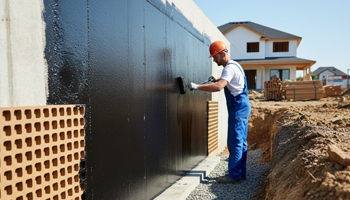
Exterior waterproofing requires excavating around the foundation perimeter to expose the foundation walls. Contractors then clean the walls, repair any cracks, and apply rubberized or polymer-based waterproof membranes. This process typically costs $10,000-$15,000 for an average home.
The excavation extends from the foundation footer to grade level. After membrane application, contractors often install drainage board or dimple membrane systems before backfilling. While expensive and disruptive, this method provides 25+ years of protection when properly executed.
Exterior French Drains and Footing Drains
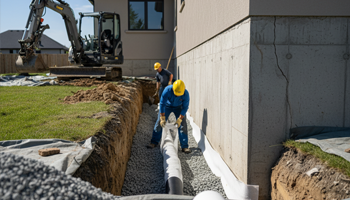
Exterior drainage systems installed at the footing level intercept groundwater before it can create hydrostatic pressure against foundation walls. These perforated pipes, surrounded by gravel, collect water and direct it to daylight or a collection point away from the house.
Installing exterior French drains costs $25-$55 per linear foot, with total project costs typically falling between $5,000-$12,000. The system works continuously, reducing groundwater pressure and keeping water away from the foundation. When combined with waterproof membranes, exterior drains provide the most robust protection available.
Foundation Coatings and Waterproof Barriers
Exterior foundation coatings range from basic tar-based products to advanced polymer membranes. Spray-applied or rolled coatings create a seamless barrier that bridges minor cracks and prevents water penetration. Premium membranes like peel-and-stick rubberized barriers offer superior durability but cost more.
The coating material typically represents 20-30% of exterior waterproofing costs, with labor and excavation comprising the remainder. Quality materials are essential—cutting corners on membrane quality to save a few hundred dollars undermines a $15,000 investment.
Drainage Board and Dimple Membrane Systems
Drainage boards and dimple membranes create an air gap between the foundation wall and the soil, allowing water to drain downward to the footing drain rather than remaining in contact with the foundation. These products also protect the waterproof membrane from backfill damage.
Dimple membrane systems cost $3-$6 per square foot installed and significantly improve drainage efficiency. The air gap they create also provides thermal benefits, reducing heat loss through foundation walls and potentially lowering heating costs.
Interior vs Exterior Waterproofing: Effectiveness Comparison
Cost-Benefit Analysis by Method
The choice between interior and exterior waterproofing often comes down to cost versus comprehensiveness. Interior systems cost $4,500-$10,000 and can be installed quickly with minimal property disruption. Exterior systems cost $10,000-$15,000 or more but provide more comprehensive protection.
Here’s the critical industry insight: only 15-20% of basements actually require full exterior excavation work. The majority of water intrusion issues stem from water entering at the cove joint—exactly where interior drainage systems are designed to intercept it. If water enters through the floor-wall junction and you don’t have bowing walls or an extremely high water table, interior drainage is almost always the answer.
Long-Term Durability (10-25+ Years)
Properly installed interior drainage systems last 20-25 years before requiring major maintenance. Sump pumps need replacement every 7-10 years, but the drainage pipes themselves remain functional for decades. Interior sealants, by contrast, need reapplication every 3-5 years and don’t address the root cause.
Exterior waterproofing systems offer 25+ years of protection, making them the longest-lasting option. However, this longevity advantage doesn’t justify the cost unless your specific situation demands exterior work. The warranty tells you everything: contractors confident in their work offer lifetime transferable warranties. If a contractor only offers 1-3 years of coverage, consider it a red flag.
When to Choose Interior vs Exterior Solutions
Choose interior waterproofing when water enters through the cove joint or floor cracks, you have a finished or partially finished basement, your water table is manageable, and your foundation walls are structurally sound. This covers approximately 80% of basement waterproofing scenarios.
Choose exterior waterproofing when foundation walls show significant bowing or cracking, you have an extremely high water table, water enters high on foundation walls, you’re already excavating for other foundation repairs, or you’re building new construction. The key differentiator is whether the foundation structure itself needs attention—if so, exterior work is necessary.
Drainage Systems Deep Dive
Weeping Tile Systems ($25-$55 per linear foot)
Weeping tile systems—perforated pipes that collect and redirect groundwater—are fundamental to both interior and exterior drainage solutions. Modern systems use corrugated plastic pipes with fabric sleeves that prevent soil from clogging the perforations.
Installation costs $25-$55 per linear foot, depending on interior versus exterior placement and local labor rates. For a typical 40-foot perimeter, expect to pay $1,000-$2,200 for the piping itself, plus labor and sump pump installation. The pipes slope toward the collection point, using gravity to move water away from the foundation continuously.
Perimeter Drainage Installation Process
Interior perimeter drainage installation begins by removing a 12-inch strip of concrete along the basement walls, extending down to the footing level. Contractors install perforated drainage pipe in a gravel bed at the footing, then cover it with additional gravel and drainage fabric before pouring new concrete.
The process typically takes 1-2 days for an average basement and creates minimal dust when contractors use proper containment. The new concrete strip blends with the existing floor, and the entire system operates invisibly beneath the basement floor surface. This explains why modern interior systems are so popular—they’re effective without being intrusive.
Connection to Sump Pump Systems
All perimeter drainage systems ultimately connect to a sump pump basin, where collected water is mechanically removed from the basement. The drainage pipes slope toward the basin location, typically placed in a corner or along a wall where discharge can easily be routed outside.
Quality installations include a basin with an airtight lid to prevent humidity and radon gas from entering the living space. The discharge line exits through the rim joist or foundation wall and extends at least 10 feet from the foundation, directing water to an area where it can drain away without returning to the basement.
Preventing Hydrostatic Pressure Buildup
Hydrostatic pressure occurs when groundwater saturates the soil around your foundation, creating pressure that forces water through any available opening. A properly designed drainage system prevents this pressure buildup by intercepting groundwater before it can accumulate against foundation walls.
Both interior and exterior drainage systems relieve hydrostatic pressure by providing an easy path for water to follow. Rather than building pressure against walls or the floor-wall junction, water flows into the drainage pipes and is removed by the sump pump. This continuous pressure relief protects your foundation from both water intrusion and structural stress.
Vapor Barriers and Moisture Control
Plastic Sheet Installation ($1,500-$3,000)
Vapor barrier installation involves covering basement walls and floors with 6-mil or thicker polyethylene sheeting, sealed at seams and penetrations. Professional installation costs $1,500-$3,000 for an average basement, while DIY materials cost $0.50-$1.50 per square foot.
Proper installation requires attention to detail. Overlapping seams by 6-12 inches and sealing with waterproof tape prevents moisture migration. The barrier attaches to walls above the anticipated moisture line and extends beneath any flooring. While simple in concept, poor installation creates gaps that allow moisture through, negating the investment.
Crawl Space vs Basement Applications
In crawl spaces, vapor barriers cover the dirt floor and extend up foundation walls, creating a moisture-proof envelope. This application is particularly effective because crawl spaces typically have exposed earth that continuously releases moisture into the air. Encapsulation with vapor barriers can reduce crawl space humidity from 80-90% down to 50-60%.
In basements with concrete floors, vapor barriers are less common but still beneficial on walls in high-humidity environments. The concrete floor itself acts as a partial vapor barrier, though moisture can still wick up from below if the concrete was poured without an underlayment barrier.
Integration with HVAC Efficiency
Moisture control directly impacts HVAC efficiency. Air conditioning systems work harder in humid environments because they must both cool the air and remove moisture. By controlling basement moisture with vapor barriers and dehumidifiers, you reduce the load on your HVAC system.
The energy savings can be substantial. A basement that maintains 70% humidity requires significantly more cooling energy than one maintained at 50% humidity. Over a cooling season, this difference can amount to 15-20% of basement-related HVAC costs. The vapor barrier pays for itself through energy savings over 3-5 years while also preventing mold growth and improving air quality.
Dehumidification Solutions
Sizing Dehumidifiers for Basements
Proper dehumidifier sizing depends on basement square footage, ceiling height, and existing moisture levels. As a general rule, you need 1 pint of capacity per 100 square feet for moderately damp spaces, 2 pints per 100 square feet for very damp spaces, and 3 pints per 100 square feet for wet spaces with visible moisture.
For a 1,000 square foot basement that’s very damp, you need a 50-70 pint dehumidifier. Undersized units run continuously without reaching target humidity levels, while oversized units cycle on and off too frequently, reducing efficiency. Basements below 70°F require special low-temperature models that operate effectively in cooler conditions.
Energy Efficiency Considerations
Modern Energy Star certified dehumidifiers use 15-30% less energy than older models, saving $20-40 annually in electricity costs. Look for units with energy factor ratings above 2.0 liters per kilowatt-hour for optimal efficiency.
Consider dehumidifiers with built-in hygrometers that automatically maintain 50-55% humidity—the ideal range for preventing mold while maintaining comfort. Auto-shutoff when the collection bucket fills prevents overflow, and continuous drain options eliminate the need for manual emptying. These features add $50-100 to the purchase price but significantly improve convenience and efficiency.
Preventing Mold and Mildew Growth
Mold requires three conditions to grow: moisture, organic material, and temperatures above 40°F. Basements naturally provide the latter two, making moisture control the only practical prevention method. Maintaining humidity below 60% effectively prevents mold growth, while levels below 50% inhibit dust mites as well.
Dehumidifiers combined with proper ventilation create an inhospitable environment for mold. The health benefits extend beyond preventing allergic reactions—reducing mold also improves overall indoor air quality since basement air ultimately circulates throughout the entire house. This is particularly important for homes with forced-air heating systems that draw return air from the basement.
Comprehensive Cost Analysis by Method
Waterproof Paint: $1-$8 per sq ft
Waterproof paint and sealants represent the entry-level waterproofing solution. DIY application costs $1-$3 per square foot for materials, while professional application runs $3-$8 per square foot. For a typical 1,000 square foot basement (walls only), expect to pay $500-$1,500 DIY or $1,500-$4,000 professionally applied.
The limitation is longevity and effectiveness. These products work for minor dampness and humidity control but fail under active water pressure. Reapplication every 3-5 years adds to lifetime costs, and the repeated expense often exceeds the cost of a permanent solution. As industry professionals note, spending $300 every few years on sealants when a $6,000 permanent system is needed represents poor long-term value.
Interior Drainage Systems: $4,500-$10,000
Interior perimeter drainage with sump pump installation costs $4,500-$10,000 for most homes. This includes jackhammering the perimeter, installing drainage pipe and gravel, sump basin and pump installation, and concrete restoration. The system addresses water at the most common entry point—the cove joint—before it enters living space.
Cost factors include basement perimeter length (most significant variable), sump pump quality and backup systems, accessibility of the basement, and local labor rates. Expect to pay toward the higher end in Northeast and West Coast markets, while Midwest and South installations tend toward the lower range. The investment provides 20-25 years of protection with minimal maintenance beyond pump replacement every 7-10 years.
Exterior Waterproofing: $10,000-$15,000
Complete exterior waterproofing including excavation, membrane application, and drainage system installation costs $10,000-$15,000 for an average home. Larger homes, difficult access, or extensive foundation repairs can push costs to $20,000-$25,000.
This breaks down approximately as follows: excavation and backfill (40-50% of cost), waterproof membrane and drainage board (20-25%), footing drain installation (15-20%), and foundation crack repair (10-15%). The high labor component reflects the equipment-intensive nature of excavation work and the specialized skills required for proper membrane application.
Regional Cost Variations (Northeast, Midwest, South, West)
Labor rates create significant regional variation in waterproofing costs. Northeast markets (Boston, New York, Philadelphia) see costs 20-30% above national averages. West Coast markets (California, Pacific Northwest) run 15-25% above average. Midwest markets typically align with national averages, while Southern markets may be 10-15% below average.
These variations primarily affect labor-intensive work like excavation and installation. Material costs remain relatively consistent nationwide. For interior drainage systems, expect $6,000-$9,000 in high-cost regions versus $4,500-$6,500 in lower-cost areas. Exterior work ranges from $12,000-$18,000 in expensive markets compared to $8,000-$12,000 in more affordable regions.
DIY vs Professional Installation
Safety Considerations and Code Requirements
DIY waterproofing is feasible for surface sealant application and vapor barrier installation, but drainage system installation requires professional expertise and equipment. Cutting concrete, properly sloping drainage pipes, and installing sump systems involves specialized knowledge and tools that most homeowners don’t possess.
Building codes regulate sump pump discharge, electrical work for pump installation, and structural modifications like cutting into foundation walls. Professional contractors navigate these requirements and obtain necessary permits, protecting you from code violations that could complicate future home sales. Additionally, working in confined spaces, operating jackhammers, and excavating around foundations all present safety risks that trained professionals are equipped to handle.
Warranty Implications
Professional installation typically includes warranties covering materials and workmanship. Quality contractors offer 10-year to lifetime warranties on interior drainage systems and 15-25 year warranties on exterior work. These warranties transfer to future homeowners, adding resale value.
DIY installations carry no warranty beyond the materials themselves. If your self-installed system fails to solve the problem, you’ve spent money on materials and your time without resolution. Then you must hire a professional anyway, often at higher cost because they must remove and replace your failed DIY attempt. The warranty alone often justifies professional installation for complex systems.
When DIY Makes Sense
DIY is appropriate for painting waterproof sealants on walls, installing vapor barriers in crawl spaces, basic gutter cleaning and downspout extension, simple crack patching with hydraulic cement, and installing standalone dehumidifiers. These tasks require basic skills and tools, present minimal risk, and offer meaningful moisture control benefits.
Save professional installation for perimeter drainage systems, sump pump installation and electrical work, exterior excavation and membrane application, major foundation crack repair, and any work requiring permits. The cost difference between DIY and professional installation narrows considerably when you factor in tool rental, your time value, and the risk of needing to redo failed work.
Maintenance Requirements by System Type
Annual Inspection Checklists
Interior drainage systems require annual sump pump testing—pour water into the basin to verify the pump activates and discharges properly. Check battery backup systems quarterly and replace batteries every 3-5 years. Inspect visible drainage pipes for clogs or damage, and test the system during heavy rain to ensure adequate capacity.
Exterior systems need gutter and downspout inspection to ensure water directs away from the foundation. Check exterior drainage discharge points for clogs or improper grading that allows water to flow back toward the house. Inspect foundation walls for new cracks or signs of water entry, and verify that soil grading slopes away from the foundation around the perimeter.
Expected Lifespan by Method
Interior sealants and paints last 3-5 years before requiring reapplication. Interior drainage systems last 20-25 years, though sump pumps require replacement every 7-10 years. Vapor barriers last 20+ years if undisturbed, and dehumidifiers typically last 8-12 years with regular maintenance.
Exterior waterproofing membranes last 25+ years when properly installed and protected. Exterior drainage pipes last 30-50 years, though inlet filters may need cleaning every 5-10 years. The longest-lasting components are the drainage pipes themselves; pumps, membranes, and coatings require eventual replacement but protect your foundation for decades.
Warning Signs of System Failure
Interior drainage system failure manifests as water pooling at the cove joint, the sump pump running continuously without lowering water levels, visible cracks in the concrete where drainage was installed, or musty odors indicating trapped moisture. Pump failure often announces itself with unusual noises, failure to activate, or visible water in the basin above the float switch.
Exterior system failure appears as water stains on interior walls (particularly near the top of the foundation), new foundation cracks or existing cracks widening, basement humidity increasing despite dehumidifier operation, or wet soil against the foundation that stays saturated. Catching these signs early allows for repair before significant damage occurs.
ROI and Home Value Impact
Resale Value Increase (up to 30% ROI)
Basement waterproofing provides one of the highest returns on investment among home improvements. A professionally waterproofed basement returns approximately 30% of its cost in increased home value. For a $10,000 interior drainage system, expect to recoup $3,000-$4,000 at resale.
The actual return depends on local market conditions and whether the basement is finished. In markets where finished basements are standard, waterproofing becomes a prerequisite for competitive pricing rather than an upgrade. Conversely, in areas with chronic water problems, waterproofing can be the difference between selling your home and watching it languish on the market.
Energy Efficiency Improvements
Proper waterproofing and moisture control reduce HVAC costs by 15-20% for basement-related cooling needs. Dry basements require less dehumidification, reducing the moisture load on air conditioning systems. Combined with vapor barriers, this creates a more energy-efficient envelope that maintains stable temperatures with less heating and cooling.
The energy savings compound over time. A 15% reduction in cooling costs saves $100-200 annually for an average home, meaning the vapor barrier and dehumidifier pay for themselves through energy savings in 5-8 years. Meanwhile, you’re also preventing mold growth and protecting stored belongings—benefits that don’t appear in utility bills but add substantial value.
Preventing Catastrophic Damage Costs
The primary ROI comes from damage prevention rather than increased resale value. Foundation repairs cost $25,000-$50,000, mold remediation runs $2,000-$6,000, and replacing a damaged furnace or water heater adds $3,000-$8,000. A single avoided foundation repair justifies the waterproofing investment several times over.
Insurance typically excludes gradual water damage, meaning you bear these costs entirely. The $8,000 spent on comprehensive interior waterproofing eliminates the risk of $50,000 in foundation repairs—a no-brainer from a risk management perspective. The question isn’t whether to waterproof, but which method best suits your specific situation.
Choosing the Right System for Your Home
Assessment Factors: Water Table, Soil Type, Climate
Water table level determines whether interior or exterior drainage is necessary. Homes with consistently high water tables may require exterior systems to prevent hydrostatic pressure buildup. Seasonal water table fluctuations can often be managed with interior drainage that handles peak water intrusion without requiring expensive excavation.
Soil type affects drainage and pressure patterns. Clay soils drain slowly and hold water against foundations longer, increasing hydrostatic pressure. Sandy soils drain quickly but may allow water to migrate toward the foundation more easily. Understanding your soil type helps contractors design appropriate solutions. Climate impacts both the frequency of water intrusion and the freeze-thaw cycles that can damage foundation walls, particularly relevant for exterior waterproofing in northern climates.
Working with Waterproofing Contractors
Quality contractors provide free, comprehensive inspections that identify water entry points and recommend appropriate solutions. Beware of contractors who push the most expensive solution without thoroughly assessing your specific situation. The old-school contractors who reflexively recommend exterior excavation do so because it generates maximum profit, not because it’s best for your basement.
Get multiple quotes from licensed, insured contractors with verifiable references. Quality contractors explain their assessment process, show you exactly where water enters, and recommend solutions proportionate to the problem. They should offer detailed written estimates with material specifications, labor costs broken out separately, and warranty terms clearly stated.
Questions to Ask Before Hiring
Ask contractors how they determined your specific solution—they should reference visible evidence of water entry, not generic recommendations. Request their warranty terms in writing, and verify they offer lifetime transferable warranties for major systems. If warranties only cover 1-3 years, the contractor lacks confidence in their work.
Inquire about their experience with your specific problem type. A contractor specializing in exterior excavation may not have extensive interior drainage experience, and vice versa. Ask for references from jobs completed 5+ years ago, then contact those homeowners to verify the system still performs well. Finally, confirm licensing, insurance, and whether they’ll obtain necessary permits—all signs of a professional operation.
FAQs
How much does basement waterproofing cost?
Costs range from $500-$1,500 for DIY sealants, $4,500-$10,000 for interior drainage systems, and $10,000-$15,000 for comprehensive exterior waterproofing. The wide range reflects solution complexity, basement size, and regional labor rates.
Can I waterproof my basement from the inside?
Yes, interior waterproofing effectively addresses most basement water problems. Interior drainage systems intercept water at the floor-wall junction before it enters living space, providing a permanent solution for 80% of cases without exterior excavation.
How long does basement waterproofing last?
Interior drainage systems last 20-25 years, exterior waterproofing lasts 25+ years, and surface sealants last 3-5 years. Sump pumps require replacement every 7-10 years regardless of system type.
Is exterior or interior waterproofing better?
Interior waterproofing is better for most situations where water enters through the cove joint. Exterior waterproofing is necessary when foundation walls show structural issues, the water table is extremely high, or water enters high on walls. Only 15-20% of basements require exterior work.
Do I need a sump pump for basement waterproofing?
Most interior drainage systems require a sump pump to remove collected water. Exterior drainage may discharge to daylight if property grading permits. Sump pumps are essential for properties without natural drainage pathways or when discharge must pump upward.
Will waterproofing my basement increase home value?
Yes, basement waterproofing provides approximately 30% ROI at resale. More importantly, it prevents catastrophic foundation damage that costs $25,000-$50,000 to repair, making it essential protection regardless of resale considerations.
What causes basement walls to leak?
Basement leaks result from hydrostatic pressure pushing groundwater through foundation walls, cracks in foundation walls or floors, poor exterior grading directing water toward the foundation, and water entry at the cove joint where floor meets walls.
Need more specifics? Tell me your basement square footage, water entry location, and local climate for a tailored recommendation.
Currently viewing
Basement Waterproofing Encyclopedia


Foundation Inspection Checklist
Foundation Inspection Checklist: What to Look for Before Buying a Home Buying a home is…
Concrete Foundation vs Pier & Beam
Concrete Foundation vs Pier & Beam: Repair Cost Differences When foundation problems arise, one of…

Foundation Settlement Warning Signs
Foundation Settlement Warning Signs: When to Call a Structural Engineer You’ve noticed a crack in…

Bowing Basement Wall Repair
Bowing Basement Wall Repair: Carbon Fiber vs Steel I-Beams If you’ve noticed your basement walls…
Slabjacking vs Mudjacking
Slabjacking vs Mudjacking vs Polyurethane Foam Leveling Your concrete driveway has sunk three inches. The…

Foundation Repair Cost
Foundation Repair Cost By Problem Type & Home Size Foundation damage is one of the…
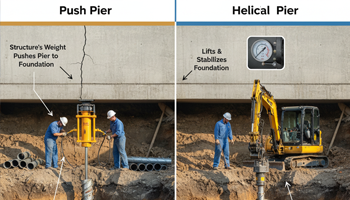
Push Piers vs Helical Piers
Push Piers vs Helical Piers: Foundation Underpinning When your home’s foundation starts settling, the choice…

Foundation Crack Repair
Foundation Crack Repair: Epoxy vs Polyurethane Injection Complete Guide Foundation problems strike fear into homeowners…