French Drain vs Interior Drainage System: Which Protects Your Basement Better?
When water threatens your basement, choosing between an exterior French drain and an interior drainage system can feel overwhelming. Both approaches promise to keep your foundation dry, but they work in fundamentally different ways—and each excels in specific scenarios. The right choice depends on your home’s construction stage, water source, soil conditions, and budget constraints.
This comparison cuts through industry marketing to reveal what actually works. We’ll examine how each system operates, what they cost to install and maintain, and most importantly, which scenarios favor one approach over the other. Some homes need exterior protection, others benefit more from interior solutions, and many require a strategic combination of both.
Understanding the «clear water zone» versus «mud zone» concept—a critical but rarely discussed distinction in the waterproofing industry—will help you make an informed decision. Let’s explore how these two drainage philosophies stack up against real-world water problems.
French Drain vs Interior Drainage: Which Protects Your Basement Better?
The debate between exterior French drains and interior drainage systems has divided waterproofing professionals for decades. Traditional contractors advocate for exterior French drains with the philosophy of «stop water at the source,» while modern specialists increasingly favor interior systems for their practicality and reliability. The truth lies somewhere in the middle, with specific circumstances favoring each approach.
Exterior French drains intercept water before it reaches your foundation walls, directing groundwater and surface runoff away from the structure. They’re installed along the perimeter of your home at footing level, creating a collection trench that captures water in the soil.
Interior drainage systems manage water that has already penetrated to the foundation level, collecting it at the floor-wall joint inside your basement and channeling it to a sump pump for removal. Rather than preventing water contact entirely, these systems control where water goes and ensure it never pools or causes damage.
The key decision framework breaks down as follows:
- New construction projects: Exterior French drains offer the best opportunity for proper installation at lower cost
- Existing homes with finished basements: Interior drainage systems minimize disruption and preserve your living space
- High water table with surface water issues: Combination approach provides comprehensive protection
- Homes on slopes with runoff problems: Exterior French drains excel at managing surface water
What is a French Drain System?
A French drain system is an exterior waterproofing solution that intercepts groundwater before it contacts your foundation. Despite the name, this drainage method has no French origin—it’s named after Henry French, a 19th-century Massachusetts judge who popularized the technique in his 1859 agricultural drainage book.
Exterior French Drain Anatomy and Components
An exterior French drain consists of several integrated components working together:
- Perforated drain pipe (typically 4-inch diameter PVC or corrugated plastic)
- Gravel bed surrounding the pipe for filtration and water flow
- Filter fabric wrapping the gravel to prevent soil infiltration
- Drainage outlet connecting to daylight, storm sewer, or dry well
The system requires proper slope—typically 1% grade or 1 inch of drop per 8 feet of horizontal run—to ensure gravity-driven water flow away from the foundation.
How Exterior French Drains Work
Water naturally flows through soil following the path of least resistance. As groundwater moves toward your foundation, it encounters the gravel-filled trench of the French drain. The porous gravel and perforated pipe create a preferential pathway that’s easier for water to enter than continuing toward your basement walls.
Once water enters the gravel bed, it flows into the perforated pipe openings and travels along the pipe’s slope to the discharge point. This process intercepts water in the «mud zone»—the wet soil surrounding your foundation—before it can create hydrostatic pressure against basement walls.
Installation Depth and Placement (Footing Level)
Proper French drain installation requires excavation to footing level—the concrete base supporting your foundation walls. For most homes, this means digging 6 to 8 feet deep around the entire perimeter. The drain pipe must sit slightly below or level with the bottom of the footing to capture water before it can migrate under the foundation.
This footing-level placement is critical. French drains installed too shallow (a common shortcut) may capture surface water but fail to manage deeper groundwater that causes the most serious basement water problems. The pipe sits on a 2-to-4-inch gravel base, gets surrounded by 8 to 12 inches of clean gravel, and is then backfilled with soil.
Interior Drainage Systems Explained
Interior drainage systems represent a fundamentally different philosophy: rather than preventing water from reaching your foundation, they accept that concrete is naturally porous and manage water after it has passed through the foundation wall. These systems collect water at the floor-wall joint and channel it to a sump pump for removal.
WaterGuard and Drain Tile Systems
WaterGuard is a proprietary interior drainage product that exemplifies modern interior system design. Unlike traditional drain tile that sits below the basement floor in gravel, WaterGuard installs in the «clear water zone»—the gap between the basement floor and the foundation wall, just above the footing level.
This clear water zone placement is revolutionary. By the time groundwater reaches this location, it has already percolated through soil and shed most suspended sediment. The result: virtually no clogging issues that plague exterior systems buried in mud.
Traditional interior drain tile systems use perforated pipe embedded in a gravel bed beneath the basement floor slab. While effective, these systems can be more prone to silt infiltration than WaterGuard-style installations that sit higher in the wall-floor junction.
Floor-Wall Joint Collection Method
The floor-wall joint—where your basement floor meets the foundation wall—is intentionally the weakest point in basement construction. This joint creates a controlled entry point for water that has penetrated the foundation wall or risen through the footing.
Interior systems remove a section of the basement floor along the perimeter (typically 12-18 inches wide) and install a drainage channel or pipe in this gap. A weep hole system in the foundation wall allows water to drain from inside the wall cavity into the collection channel. The channel slopes toward the sump pit location, using gravity to move water to the pump.
Sump Pump Integration
Every interior drainage system requires a sump pump—the mechanical heart of the system. As water flows through the interior drain to the sump pit (a hole excavated in the lowest point of the basement floor), the pump activates when water reaches a predetermined level.
Most professional installations use primary and battery backup pumps to ensure redundancy during power outages. The pump discharges water through PVC piping that runs to an exterior outlet point away from the foundation. Quality installations include check valves to prevent backflow and alarm systems to alert homeowners of pump failure.
Installation Process Comparison
The installation processes for exterior and interior drainage systems differ dramatically in scope, disruption, and complexity. Understanding these differences helps set realistic expectations for your project timeline and household impact.
Exterior French Drain Installation (Excavation Required)
Installing an exterior French drain requires heavy excavation equipment and significant site access. The process involves:
- Excavation: A backhoe or excavator digs a trench 6-8 feet deep around the home’s perimeter
- Foundation cleaning: Exposed foundation walls are power-washed and inspected
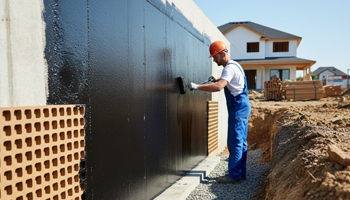
- Waterproof membrane application: Most contractors apply a membrane or spray-on waterproofing to the exterior foundation walls
- Pipe and gravel installation: Perforated pipe is laid on a gravel bed, surrounded with clean stone, and wrapped in filter fabric
- Backfilling: The trench is filled with soil and compacted in layers
The entire process typically takes 3-7 days for an average home, depending on soil conditions and access. Landscaping, driveways, decks, and patios in the excavation path will be disturbed and require restoration.
Interior Drainage Installation (Basement Floor Cutting)
Interior drainage installation requires less heavy machinery but still involves significant basement disruption:
- Floor removal: A concrete saw cuts and removes an 8-12 inch strip of floor along the basement perimeter
- Trench excavation: Workers dig a shallow trench (typically 8-12 inches deep) in the exposed area
- Sump pit creation: A 24-inch diameter hole is jackhammered into the floor at the lowest point
- Drain installation: Perforated pipe or a WaterGuard system is placed in the trench on a gravel bed
- Concrete restoration: The trench is backfilled with gravel and topped with fresh concrete
Installation typically takes 1-3 days. Dust control measures are critical—professional contractors use plastic barriers and air filtration to minimize concrete dust throughout the home.
Disruption Levels and Timelines
Exterior French drain disruption:
- Yard and landscaping completely disturbed along excavation path
- Heavy equipment noise during working hours
- Possible utility line complications requiring additional excavation
- Weather-dependent—cannot install in frozen ground
- Landscaping restoration adds 1-2 weeks to project completion
Interior drainage disruption:
- Basement must be cleared of storage and belongings along perimeter walls
- Concrete dust requires thorough cleanup despite containment efforts
- No exterior landscaping damage
- Can be installed year-round regardless of weather
- Basement is usable (with caution) during installation
For homeowners with finished basements, interior installation proves far less disruptive overall. While interior work impacts living space temporarily, it avoids the extensive yard destruction and restoration timeline of exterior excavation.
Cost Analysis: French Drain vs Interior Drainage
Budget considerations often drive the final decision between exterior and interior drainage systems. While both represent significant investments, the cost structures differ considerably.
Exterior French drain costs: $30-$90 per linear foot installed. A typical home requiring 150 linear feet of drainage runs $4,500-$13,500. Costs increase with:
- Depth of excavation (deeper footings = higher cost)
- Soil conditions (rocky or clay soil requires more labor)
- Access limitations (tight spaces requiring hand digging)
- Landscaping restoration needs
- Waterproof membrane application to foundation walls
Interior drainage costs: $25-$55 per linear foot installed. The same 150 linear feet home costs $3,750-$8,250. Additional expenses include:
- Sump pump and pit installation: $800-$2,000
- Battery backup system: $400-$1,200
- Concrete restoration and finishing
- Dehumidifier integration (optional): $1,200-$2,500
Hidden costs and considerations:
Exterior French drains carry landscaping restoration expenses that can add $2,000-$8,000 depending on existing features. Deck removal and reinstallation, paver restoration, and topsoil/sod replacement quickly escalate total project costs.
Interior systems may require basement content removal and storage during installation. Finished basements necessitate drywall removal along the perimeter, adding $1,500-$3,000 to restore walls after drainage installation.
Long-term maintenance expenses:
Exterior French drains typically require professional cleaning or replacement every 20-30 years due to silt accumulation and root infiltration. Camera inspection costs $300-$500, and cleaning or partial replacement runs $2,000-$5,000.
Interior systems need minimal maintenance beyond annual sump pump testing and occasional pump replacement ($250-$600 every 7-10 years). The clear water zone installation principle makes these systems remarkably clog-resistant—many WaterGuard systems operate flawlessly for 20+ years with zero maintenance beyond pump upkeep.
For new construction, exterior French drains cost less because excavation happens during foundation work when heavy equipment is already on-site. For existing homes, interior drainage systems typically prove more cost-effective when factoring in landscaping restoration and project complexity.
Effectiveness Against Different Water Problems
Not all basement water problems are created equal. The source and nature of water infiltration determine which drainage system performs better. Understanding these distinctions prevents costly mismatches between your problem and your solution.
Surface Water and Runoff (French Drain Advantage)
Exterior French drains excel at managing surface water—rain that flows across your yard toward the foundation. When your home sits on a slope or experiences water pooling near the foundation after storms, an exterior French drain intercepts this water before it can saturate the soil around your basement walls.
The system creates a collection point for roof runoff (when gutters discharge near the foundation), driveway water flow, and general yard drainage. By capturing surface water 6-8 feet from your foundation perimeter, French drains prevent soil saturation that would otherwise create hydrostatic pressure against basement walls.
This surface water management capability makes exterior French drains particularly valuable for homes with inadequate grading, missing gutters, or naturally sloped lots that funnel water toward the structure.
Hydrostatic Pressure Under Foundation (Interior Advantage)
Hydrostatic pressure occurs when groundwater saturates the soil beneath and around your foundation, creating pressure that forces water through any available opening in concrete. This pressure affects the foundation walls and, more critically, the area beneath the basement floor slab.
Interior drainage systems specifically address hydrostatic pressure beneath the foundation. The floor-wall joint collection method relieves pressure by providing an easy pathway for water to enter the drainage system rather than pooling under the slab or pushing through foundation cracks.
The strategic weakness at the floor-wall joint acts as a pressure relief valve. As groundwater rises, it enters the interior drainage system before pressure builds to levels that cause foundation damage or create wall seepage. This makes interior systems superior for managing deep groundwater issues that originate below the foundation depth.
High Water Table Scenarios
A high water table—where the natural groundwater level sits close to your foundation depth—presents unique challenges. During wet seasons, the water table may rise above your basement floor level, creating constant pressure against the foundation from below and from the sides.
In high water table conditions, exterior French drains alone often prove insufficient. The drain pipe sits at footing level, but water pressure may exceed the system’s capacity during peak groundwater periods. Additionally, the French drain discharge point must be lower than the collection point—difficult when the entire area maintains high groundwater.
Interior drainage systems with sump pumps handle high water tables effectively because the pump mechanically removes water regardless of the exterior groundwater level. The system actively fights hydrostatic pressure rather than relying solely on gravity drainage.
For properties with persistent high water tables, a combination approach works best: exterior French drains reduce the overall groundwater volume reaching the foundation, while the interior system manages pressure that exceeds the exterior system’s capacity.
False Water Table Management
A «false water table» forms when impermeable soil layers (like clay) trap water above the true water table, creating a perched zone of saturation. This localized water sits in the soil profile near foundation depth without being part of the regional groundwater system.
False water tables are particularly problematic because they can persist after regional groundwater recedes. Clay soil layers prevent downward percolation, keeping moisture concentrated around foundation walls even during dry periods.
Exterior French drains effectively manage false water tables by creating a drainage pathway through impermeable soil layers. The gravel trench provides a permeable zone that allows trapped water to drain laterally away from the foundation. Combined with proper grading to prevent surface water recharge of the false water table, exterior drains can eliminate these localized saturation zones.
Maintenance Requirements and Accessibility
Long-term performance depends on maintenance access and the inherent clog-resistance of each system design. This factor often tips the scale toward interior systems for existing homes.
French drain clogging risks (mud zone installation):
The fundamental vulnerability of exterior French drains stems from their installation location. Buried in the «mud zone»—wet soil around the footing—these systems constantly battle silt migration, soil infiltration, and root intrusion. Even with proper filter fabric, fine soil particles gradually work their way into the gravel bed over decades.
Field experience reveals that approximately 60% of exterior French drains show partial clogging within 10-15 years. Tree roots, attracted to the water source, penetrate joints in PVC pipe or grow through perforations in corrugated pipe. Clay soil, particularly problematic, doesn’t drain well and allows silt to settle in the system during slow-flow periods.
Once clogged, exterior French drains require full excavation to access and repair—essentially reinstalling the entire system at significant cost.
Interior system accessibility for repairs:
Interior drainage systems win decisively on maintenance accessibility. If a sump pump fails, you simply open the pit lid and replace it—a 1-hour job costing $250-$600 for the pump itself. If a section of interior drain requires inspection, removing the concrete cap over that segment is straightforward.
This accessibility extends the practical lifespan of interior systems because problems can be addressed quickly and affordably. Homeowners can perform annual maintenance checks, flush the system with a hose, and verify proper operation without professional assistance.
Root infiltration and soil issues:
Tree and shrub roots create long-term complications for exterior French drains. Roots follow water sources, and a French drain acts as a water highway beneath your yard. Over 15-20 years, root infiltration becomes nearly inevitable if mature trees grow within 20 feet of the drainage system.
Interior systems eliminate root infiltration entirely—trees can’t grow through your basement floor. Soil quality and composition, critical factors for exterior drain longevity, become irrelevant for interior installations.
Clear water zone vs mud zone concept:
This critical distinction explains why interior systems like WaterGuard demonstrate superior longevity. The «clear water zone» sits just above the footing, inside the basement, where water has already percolated through soil. This natural filtration removes most sediment before water enters the drainage system.
The «mud zone» surrounds exterior French drains—wet, sediment-rich soil that constantly deposits particles into the drain system. No amount of filter fabric completely prevents this slow infiltration over decades.
By embracing the clear water zone principle, modern interior systems achieve virtually maintenance-free operation. WaterGuard installations from 20+ years ago continue functioning perfectly with zero maintenance beyond sump pump upkeep—a performance record that exterior French drains buried in mud simply cannot match.
Longevity and Durability Comparison
Expected lifespan of each system:
Exterior French drains: 20-30 years under ideal conditions (proper installation, minimal root presence, free-draining soil). In challenging conditions (clay soil, mature trees, high sediment), functional lifespan may drop to 10-15 years before significant clogging impacts performance.
Interior drainage systems: 30-50 years for the drain components themselves. Sump pumps require replacement every 7-10 years, but this maintenance is simple and inexpensive. WaterGuard systems specifically demonstrate exceptional longevity due to clear water zone installation—many 20+ year installations operate like new.
Weather and soil impact on performance:
Exterior systems face constant environmental assault. Freeze-thaw cycles in cold climates can crack pipes and displace gravel. Heavy clay soil holds moisture that accelerates silt infiltration. Sandy soil, while better draining, may allow fine particles to migrate into the system.
Seasonal ground movement in expansive clay soils can stress and separate pipe joints, creating low spots where silt accumulates. These environmental factors degrade exterior French drains progressively, with performance declining gradually rather than failing suddenly.
Interior systems operate in the controlled environment of your basement. Temperature remains relatively constant, protecting pipes from freeze-thaw damage. No soil contact means no sediment infiltration, no root intrusion, and no weather-related degradation.
Seasonal installation considerations:
Exterior French drain installation faces significant seasonal constraints. Frozen ground makes winter installation impossible in cold climates. Spring installation may encounter high water tables and muddy conditions that complicate excavation and increase costs. Wet weather halts work and extends project timelines.
Interior drainage systems can be installed year-round regardless of outdoor conditions. This flexibility offers scheduling advantages and allows homeowners to address water problems immediately rather than waiting for favorable weather.
Pros and Cons: Side-by-Side Analysis
| Factor | Exterior French Drain | Interior Drainage System |
|---|---|---|
| Water interception | Prevents water from reaching foundation walls | Manages water after foundation contact |
| Best for | Surface water, runoff, new construction | Hydrostatic pressure, existing homes, high water table |
| Installation cost | $30-$90/linear foot + landscaping restoration | $25-$55/linear foot + sump pump ($800-$2,000) |
| Installation time | 3-7 days + landscaping restoration time | 1-3 days, immediate basement use |
| Disruption level | High—yard excavation, landscape destruction | Moderate—basement perimeter only |
| Accessibility | Requires full excavation to access/repair | Easy access for maintenance and repairs |
| Clogging risk | Moderate to high (mud zone installation) | Very low (clear water zone principle) |
| Root infiltration | Common problem over 15-20 years | None—no soil contact |
| Maintenance | Camera inspection and cleaning every 10-15 years ($2,000-$5,000) | Annual sump pump testing, pump replacement every 7-10 years ($250-$600) |
| Expected lifespan | 20-30 years (ideal conditions), 10-15 years (challenging soil) | 30-50 years (drain components), pumps 7-10 years |
| Weather dependence | Cannot install in frozen ground or very wet conditions | Year-round installation possible |
| Foundation wall protection | Excellent—keeps walls dry | Good—walls may stay damp but damage is prevented |
| Power dependency | None—gravity system | Requires electricity for sump pump (battery backup recommended) |
Best use cases for each system:
Choose exterior French drain when:
- Building new construction (install during foundation work)
- Surface water and runoff cause most water problems
- Lot slopes toward the foundation
- Gutters discharge near the foundation
- Soil is sandy or free-draining (reduces clogging risk)
- Budget allows for proper installation and future maintenance
Choose interior drainage when:
- Renovating an existing home with basement water issues
- Basement is finished or partially finished
- High water table creates persistent groundwater pressure
- Need minimizes yard disruption
- Trees grow near the foundation (root infiltration risk)
- Year-round installation is needed (no weather delays)
- Long-term maintenance accessibility is a priority
Combination approach benefits:
Many homes benefit from both systems working together. The combination approach uses exterior French drains to manage surface water and reduce overall groundwater volume near the foundation, while interior drainage handles hydrostatic pressure that exceeds the exterior system’s capacity.
This redundant protection is particularly valuable for:
- Homes with both surface water runoff and high water table issues
- Properties in high-rainfall regions
- Basements converted to living space where water damage carries high costs
- New construction where both systems can be installed efficiently
The combined investment ($8,000-$20,000 for a typical home) provides comprehensive protection and peace of mind that a single system cannot match.
Making the Right Choice for Your Home
Assessment checklist:
Before committing to a drainage system, evaluate these factors:
- Construction stage: New build favors exterior; existing home favors interior
- Primary water source: Surface runoff → exterior; groundwater pressure → interior
- Soil type: Clay soil decreases French drain longevity; sandy soil is more favorable
- Water table depth: High water table requires interior system with sump pump
- Landscaping impact tolerance: Mature landscaping makes excavation costly
- Basement finish level: Finished basements lean toward interior to minimize disruption
- Tree proximity: Trees within 20 feet increase exterior drain clogging risk
- Budget for future maintenance: Exterior systems need periodic professional service
- Power reliability: Interior systems depend on electricity (battery backup available)
- Seasonal timing: Frozen ground or wet conditions delay exterior installation
When to consult a specialist:
Seek professional evaluation if you experience:
- Water entry from multiple sources (walls and floor)
- Foundation cracks with active water seepage
- Repeated flooding despite existing drainage
- Uncertainty about water table depth or soil type
- Previous drainage system failure
- Mold or humidity issues suggesting hidden water infiltration
A qualified waterproofing contractor can perform moisture testing, evaluate foundation condition, and determine the true source of water problems. Many offer free inspections—use these to gather multiple professional opinions before committing to a system.
New construction vs existing home considerations:
New construction advantages:
- Exterior French drain costs are lowest during foundation work
- Both systems can be installed if budget allows
- No landscaping to restore—grading happens after installation
- Foundation walls are accessible for proper waterproof membrane application
- Soil conditions are known from excavation and foundation work
Existing home realities:
- Exterior excavation destroys landscaping, driveways, decks, and patios
- Basement access may be limited by finished walls and utilities
- Unknown soil conditions increase project risk
- Interior systems offer faster installation and less total disruption
- Cost comparison shifts toward interior once landscaping restoration is factored
For the majority of existing homes with basement water problems, interior drainage systems provide the most practical, cost-effective, and long-term solution. They work reliably, remain accessible for maintenance, and protect your basement without the extensive disruption of full perimeter excavation.
However, if your home sits on a sloped lot with significant surface water runoff, investing in an exterior French drain—either alone or combined with interior drainage—may prove necessary for complete water management. The key is matching your actual water problem to the system designed to solve it.
FAQs
Do interior drainage systems let water damage foundation walls?
No. While interior systems allow water to reach the foundation wall, concrete is naturally porous anyway. The goal isn’t preventing 100% moisture contact (which is impossible), but managing where water goes to prevent pooling and damage. Interior systems do this effectively by collecting water at the floor-wall joint before it can cause problems.
Can French drains be installed without excavating the entire perimeter?
Partial French drains can address specific problem areas, but incomplete perimeter installation often just redirects water to unprotected sections. For comprehensive basement waterproofing, full perimeter installation at footing level is necessary. Shallow or partial installations may capture surface water but fail to manage deeper groundwater.
How long does a sump pump last in an interior drainage system?
Quality sump pumps last 7-10 years with proper maintenance. Battery backup pumps should be tested annually and replaced every 3-5 years. The relatively short sump pump lifespan is offset by easy replacement—a simple DIY task or quick professional service call costing $250-$600.
Will tree roots clog my French drain even with filter fabric?
Yes, over time. Filter fabric slows root infiltration but doesn’t prevent it entirely. Tree and shrub roots follow water sources and will eventually penetrate joints in drainage pipe. Expect root-related issues within 15-20 years if mature trees grow within 20 feet of the French drain.
Can both systems be installed in the same home?
Absolutely. Combination systems provide redundant protection—exterior French drains manage surface water and reduce groundwater volume, while interior drainage handles hydrostatic pressure. This approach is common for homes with complex water problems or in high-rainfall regions where single-system solutions prove insufficient.
Need more specific guidance for your foundation drainage project? Share details about your basement water issues, soil conditions, and whether you’re dealing with new construction or an existing home for a tailored recommendation.
Currently viewing
French Drain vs Interior Drainage

Foundation Inspection Checklist
Foundation Inspection Checklist: What to Look for Before Buying a Home Buying a home is…
Concrete Foundation vs Pier & Beam
Concrete Foundation vs Pier & Beam: Repair Cost Differences When foundation problems arise, one of…

Foundation Settlement Warning Signs
Foundation Settlement Warning Signs: When to Call a Structural Engineer You’ve noticed a crack in…

Bowing Basement Wall Repair
Bowing Basement Wall Repair: Carbon Fiber vs Steel I-Beams If you’ve noticed your basement walls…
Slabjacking vs Mudjacking
Slabjacking vs Mudjacking vs Polyurethane Foam Leveling Your concrete driveway has sunk three inches. The…

Foundation Repair Cost
Foundation Repair Cost By Problem Type & Home Size Foundation damage is one of the…
Push Piers vs Helical Piers
Push Piers vs Helical Piers: Foundation Underpinning When your home’s foundation starts settling, the choice…

Foundation Crack Repair
Foundation Crack Repair: Epoxy vs Polyurethane Injection Complete Guide Foundation problems strike fear into homeowners…