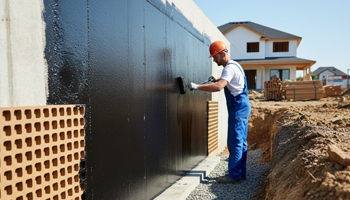
Drylok vs Xypex vs Thoroseal: Which Basement Waterproofing Paint Actually Works?
Basement waterproofing paints promise an affordable, DIY-friendly solution to moisture problems—brush on a coating, wait for it to dry, and enjoy a dry basement. The reality is far more nuanced. These products occupy a specific niche in waterproofing strategies, and understanding their genuine capabilities versus marketing claims prevents wasted money and continued moisture problems.
The three dominant products—Drylok, Xypex, and Thoroseal—represent fundamentally different approaches to moisture control. Drylok offers DIY-accessible latex or oil-based coatings available at every hardware store. Xypex employs sophisticated crystalline technology that chemically reacts with concrete to create waterproof barriers. Thoroseal uses traditional Portland cement-based formulations that have proven effective for decades. Each excels in specific scenarios while failing spectacularly in others.
Here’s the critical truth the waterproofing paint industry won’t emphasize: these products are moisture barriers, not true waterproofing solutions for severe water infiltration. Real-world independent testing reveals significant performance differences, with some products failing under hydrostatic pressure while others demonstrate legitimate resistance to substantial water pressure. Understanding these differences—and more importantly, recognizing when coating solutions simply aren’t adequate—prevents the disappointment of watching expensive coatings fail within months.
This comparison draws on independent laboratory testing, professional field experience with hundreds of basement installations, and honest assessment of when waterproofing paints make sense versus when drainage systems become necessary.
Drylok vs Xypex vs Thoroseal: Which Basement Waterproofing Paint Works Best?
Overview of basement waterproofing paints:
Waterproofing paints and coatings create barriers on basement walls that resist moisture penetration through capillary action and, in some cases, mild hydrostatic pressure. Unlike drainage systems that manage water after it reaches the foundation, coatings attempt to prevent moisture from entering basement living space by blocking it at the wall surface.
These products work through different mechanisms:
Physical barriers: Products like Drylok create dense layers that physically block water molecules from passing through, similar to how paint prevents water from soaking into wood.
Chemical reaction systems: Xypex crystalline technology reacts with compounds in concrete to grow waterproof crystal structures throughout the concrete matrix, creating an integrated waterproof zone rather than just a surface coating.
Cementitious coatings: Thoroseal and similar products form thick, cement-based layers that resist water penetration through density and chemical composition.
When coating solutions are appropriate:
Waterproofing paints serve legitimate purposes in specific scenarios:
Minor vapor transmission: Basements that feel damp or musty during humid weather but never show visible water infiltration benefit from vapor barriers that reduce moisture migration through concrete pores.
Cosmetic moisture control: Finished basements with occasional condensation or minor efflorescence (white mineral deposits) on walls can be improved with appropriate coatings without requiring expensive drainage installation.
Supplemental protection: When used alongside proper exterior drainage and interior dehumidification, coatings provide an additional moisture control layer as part of comprehensive systems.
Light hydrostatic pressure: Some premium coatings resist limited water pressure—useful for basements with intermittent minor seepage during heavy rain but no chronic flooding.
Budget constraints: When drainage systems ($4,000-$8,000) exceed available budget and moisture issues are genuinely minor, coating solutions ($500-$1,500) provide partial relief while saving for comprehensive solutions.
Limitations of paint-based waterproofing:
The harsh reality: waterproofing paints cannot solve serious water infiltration problems. Key limitations include:
Hydrostatic pressure limits: Most coatings fail under sustained water pressure. Even premium products rated for high pressure eventually allow water passage if pressure persists. Active springs, high water tables, or pooling water against foundations overwhelm coating solutions.
No drainage capability: Coatings block water but don’t remove it. Water blocked at the wall surface still exerts pressure, eventually finding entry through cracks, joints, or by degrading the coating itself.
Surface preparation critical: These products bond only to clean, bare concrete. Previous paint, sealers, or contamination prevent proper adhesion, causing coating failure. The extensive surface prep required often exceeds DIY capability.
Crack bridging limitations: Most coatings cannot span foundation cracks over hairline width. Active cracks that expand with seasonal movement will breach any coating applied over them.
Temporary solutions: Even successful coating applications require re-coating every 5-10 years as the products degrade from moisture exposure, alkalinity, and normal wear.
The fundamental problem: coatings treat symptoms (visible moisture) without addressing causes (inadequate drainage, high water tables, poor grading). For basements with serious water problems, investing in coatings delays inevitable drainage system installation while wasting money on ineffective solutions.
Drylok Basement Waterproofing Paint Analysis
Drylok represents the most accessible and widely available basement coating system, found in virtually every hardware store and home center. The brand has become nearly synonymous with DIY basement waterproofing, though its actual performance capabilities are considerably more limited than marketing suggests.
Drylok Original vs Drylok Extreme
Drylok Original: The classic latex-based formulation that established the brand. This water-based product offers:
- Basic moisture vapor control
- Easy application with brush or roller
- Fast drying (2-3 hours between coats)
- Lower cost ($25-$35 per gallon)
- Adequate for very light dampness control
Drylok Extreme: The premium formulation claiming superior performance:
- 15 PSI hydrostatic pressure resistance (versus 10 PSI for Original)
- Enhanced mildew resistance through antimicrobial additives
- Slightly thicker consistency and coverage
- Higher price point ($35-$45 per gallon)
- 15-year warranty against water infiltration (with significant conditions)
The performance difference between Original and Extreme proves minimal in real-world applications. The 5 PSI additional pressure resistance rarely matters—both versions fail when facing genuine hydrostatic pressure from groundwater or poor drainage.
Latex vs Oil-Based Formulations
Drylok Latex (Original and Extreme):
- Water cleanup simplifies application
- Lower VOCs make indoor application less objectionable
- Breathable formula allows concrete moisture vapor transmission (beneficial for preventing trapping)
- Less durable adhesion than oil-based versions
- Temperature-sensitive application (50-90°F required)
Drylok Oil-Based:
- Superior adhesion to concrete—especially important on older, weathered walls
- More resistant to alkaline conditions common in concrete
- Stronger hydrostatic resistance due to denser film formation
- Difficult cleanup requiring solvents
- Strong odor during application and curing
- Longer drying time (4-6 hours between coats)
Professional experience suggests oil-based Drylok performs marginally better in genuinely damp environments, but the application difficulty and odor make it unpopular for DIY projects. For minor vapor control—the only situation where Drylok truly works—latex versions prove adequate.
Coverage Rate: 75-100 Sq Ft Per Gallon
Drylok’s coverage varies dramatically based on concrete porosity and application method:
Smooth, poured concrete: 100-125 sq ft per gallon achievable with roller application Standard concrete block: 75-90 sq ft per gallon typical Very porous cinder block: 60-75 sq ft per gallon—sometimes requiring more
These coverage rates assume two coats—the minimum recommended for any moisture control benefit. Single-coat applications rarely provide adequate protection.
Cost calculation example for 500 sq ft of basement wall:
- Gallons required (at 80 sq ft/gallon coverage): 6.25 gallons
- Cost at $35/gallon: $219 for materials
- Brushes, rollers, and prep supplies: $40-$60
- Total project cost: $260-$280 (DIY labor only)
This modest cost represents Drylok’s primary appeal—affordable enough to attempt before investing in comprehensive drainage solutions.
Hydrostatic Pressure Resistance: 15 PSI
The 15 PSI hydrostatic pressure rating for Drylok Extreme sounds impressive until you understand what it actually means:
PSI calculation: 15 PSI equals approximately 34 feet of water head. In theory, Drylok could withstand water pressure equivalent to being submerged 34 feet deep.
The problem: Laboratory testing under ideal conditions differs dramatically from real-world basement applications. Independent testing by GreenBuildingAdvisor revealed Drylok failures under water heads as low as 2-3 feet—roughly 1-1.3 PSI actual pressure.
Why the discrepancy? Laboratory tests apply pressure to perfectly prepared surfaces with optimal curing conditions. Real basements have:
- Micro-cracks in concrete that concentrate pressure at weak points
- Imperfect coating application with thin spots
- Alkaline conditions that degrade coating adhesion over time
- Seasonal temperature and humidity cycling that stresses the coating
The 15 PSI rating, while technically accurate under laboratory conditions, proves largely meaningless for predicting real-world performance. Any basement with actual hydrostatic pressure from groundwater or poor drainage will overwhelm Drylok within months.
15-Year Warranty Claims
Drylok’s warranty appears impressive but contains critical limitations:
Warranty coverage:
- Protects against water infiltration through properly applied coating
- Requires following exact application instructions
- Must be applied to appropriate substrates (bare concrete only)
Critical exclusions:
- Water entering through cracks, joints, or floor-wall junctions (the most common entry points)
- Damage from hydrostatic pressure exceeding product specifications
- Failure due to surface preparation inadequacy
- Improper application (too few coats, insufficient coverage, etc.)
Claim process challenges:
- Requires proving coating failure versus water entry through other routes
- Burden of proof falls on homeowner to demonstrate proper application
- Warranty typically covers product replacement only, not application labor or damage
Professional experience suggests successful warranty claims are rare. Water nearly always enters through routes technically excluded from coverage, making the 15-year guarantee more marketing tool than meaningful protection.
Xypex Crystalline Waterproofing System
Xypex represents the most technologically sophisticated approach to concrete waterproofing, using crystalline technology that fundamentally differs from surface coating strategies employed by Drylok and Thoroseal.
How Crystalline Technology Works
Xypex operates through chemical reaction rather than physical barrier formation:
Application process:
- Xypex powder (containing Portland cement, silica sand, and proprietary reactive chemicals) is mixed with water to form a slurry
- The slurry is brush-applied to damp concrete surfaces
- Reactive chemicals penetrate concrete pores via capillary action
- Inside the concrete, chemicals react with byproducts of cement hydration
Crystal formation: As water and reactive chemicals migrate through concrete pores, they encounter calcium hydroxide—a natural byproduct of the cement curing process. This encounter triggers crystallization:
- Insoluble needle-like crystals form within concrete pores
- Crystals grow and branch, eventually filling pore spaces
- The crystal network becomes an integral part of the concrete matrix
- Water can no longer pass through crystallized zones
This mechanism creates waterproofing throughout the concrete thickness rather than just on the surface—a fundamental advantage over coating approaches.
Chemical Reaction with Concrete (Calcium Hydroxide)
The crystalline reaction depends on specific conditions within the concrete:
Required components:
- Calcium hydroxide: Generated during cement curing and present in all concrete
- Moisture: Water must be available to dissolve reactive chemicals and transport them through concrete
- Reactive silica: Provided by Xypex formulation
Chemical equation (simplified): Calcium hydroxide + Reactive silica compounds → Calcium silicate hydrate crystals
Critical requirements:
- Concrete must be relatively new or contain adequate residual calcium hydroxide (older concrete may lack sufficient reactant)
- Concrete must remain damp during the reaction period (7-28 days)
- Temperature must stay within proper range (40-85°F)
These stringent requirements explain why Xypex sometimes delivers phenomenal results while failing completely in other applications—minor variations in concrete age, composition, or conditions dramatically affect performance.
Self-Healing Capabilities
Xypex’s most impressive claim involves self-healing functionality:
Mechanism: Dormant reactive chemicals remain within the concrete matrix after initial crystal formation. If a crack develops and water enters:
- Water dissolves dormant reactive chemicals around the crack
- Chemicals migrate to the crack location via water flow
- New crystal formation begins, gradually filling the crack
- Given adequate time and water availability, the crack seals itself
Real-world performance: This self-healing capability works—but with significant limitations:
Effective for:
- Hairline cracks (under 0.5mm width)
- Static cracks that aren’t actively expanding
- Cracks in concrete with adequate dormant reactive chemicals
- Situations where water availability supports crystal growth
Ineffective for:
- Wide cracks (over 1mm)
- Active cracks that continue expanding due to foundation movement
- Cracks in very old or contaminated concrete lacking reactive materials
- Rapid water infiltration that doesn’t allow time for crystal formation
Professional experience suggests self-healing works in approximately 60-70% of hairline crack scenarios but should not be relied upon for structural cracks requiring proper repair.
Hydrostatic Pressure Performance (200+ PSI)
Xypex’s 200+ PSI hydrostatic pressure resistance dramatically exceeds Drylok’s 15 PSI rating. This represents genuine capability, not just marketing:
Laboratory testing: Xypex has been tested to withstand over 200 PSI (approximately 460 feet of water head) when properly applied to appropriate concrete. This level of pressure resistance is legitimate and repeatable under controlled conditions.
Real-world performance: Independent testing by GreenBuildingAdvisor confirmed Xypex successfully resisted hydrostatic pressure from 2+ feet of water head—the test that caused Drylok to fail. The crystalline matrix genuinely prevents water passage under pressure that overwhelms coating-based products.
The catch: While hydrostatic performance is excellent, the same testing revealed a surprising weakness: Xypex performed poorly in wicking/capillary action tests. Moisture vapor transmission actually increased in some test scenarios, suggesting Xypex blocks liquid water effectively but may not prevent moisture vapor migration as effectively as dense coatings.
This limitation matters for basements where vapor dampness—not liquid water—causes problems. Xypex may not be the optimal solution for humidity control despite excellent liquid water blocking capability.
Application Difficulty and Cure Time
Xypex demands significantly more expertise and patience than Drylok:
Surface preparation:
- Concrete must be clean, bare, and slightly damp (not saturated)
- Previous sealers, coatings, or contamination must be completely removed via grinding or sandblasting
- Active leaks must be stopped before application (using Xypex Patch for crack sealing)
Mixing requirements:
- Powder mixed with water to achieve thick yogurt consistency
- Precise water-to-powder ratios critical (too thin reduces effectiveness, too thick prevents penetration)
- Mix only enough for immediate use—material begins setting within 20-30 minutes
Application technique:
- Stiff brush application using firm pressure to work material into concrete pores
- Multiple passes sometimes required to achieve proper penetration
- Damp curing essential—spraying applied areas with water 2-3 times daily for 3 days
Cure time:
- Initial set: 2-4 hours
- Full crystal formation: 7-28 days
- Water exposure acceptable after 24 hours but full performance requires complete curing
The complexity explains why Xypex typically costs $4-$8 per square foot professionally installed versus $1-$2 for DIY Drylok. This is not a weekend DIY project—professional application ensures proper penetration and curing essential for performance.
Thoroseal Waterproofing Coating
Thoroseal represents the middle ground between Drylok’s accessibility and Xypex’s sophistication—a proven Portland cement-based coating that has delivered reliable performance for over 50 years in commercial and residential applications.
Portland Cement-Based Composition
Thoroseal’s formulation differs fundamentally from Drylok’s latex or oil base:
Primary components:
- Portland cement (provides alkaline-resistant bonding to concrete)
- Graded silica sand (creates dense, pore-filling matrix)
- Proprietary waterproofing compounds (enhance moisture resistance)
- Plasticizers (improve workability and adhesion)
Performance characteristics from cement base:
- Excellent adhesion to concrete—chemically similar materials bond strongly
- Alkaline-resistant—won’t degrade in the high-pH environment of concrete
- Breathable—allows water vapor transmission while blocking liquid water
- Non-organic composition prevents mold/mildew growth on the coating itself
- Temperature-stable performance—doesn’t soften in heat or become brittle in cold
The cement-based composition creates coatings that essentially become part of the wall rather than a surface film that can delaminate like latex coatings.
Coverage Rate: 105 Sq Ft Per Gallon
Thoroseal provides better coverage than Drylok despite similar gallon pricing:
Typical coverage rates:
- Smooth poured concrete: 120-140 sq ft per gallon
- Standard concrete block: 105-125 sq ft per gallon
- Porous cinder block: 90-105 sq ft per gallon
These rates assume two-coat application—Thoroseal’s manufacturer specifications require minimum two coats for waterproofing performance.
Cost comparison for 500 sq ft basement:
Thoroseal (at 105 sq ft/gallon):
- Gallons required: 4.8 gallons
- Cost at $40/gallon: $192 for materials
- Total with supplies: $230-$250
Drylok (at 75 sq ft/gallon):
- Gallons required: 6.7 gallons
- Cost at $35/gallon: $235 for materials
- Total with supplies: $275-$295
The superior coverage saves approximately $40-$50 on a typical basement project—not dramatic, but meaningful when Thoroseal also outperforms in actual waterproofing capability.
Hydrostatic Pressure Resistance: 200 PSI
Thoroseal’s 200 PSI rating matches Xypex and vastly exceeds Drylok’s 15 PSI specification. This rating reflects genuine performance:
Testing methodology: 200 PSI equals approximately 460 feet of water head. Laboratory testing applies this pressure to properly cured Thoroseal-coated concrete samples for 24-48 hours, measuring water penetration.
Real-world validation: GreenBuildingAdvisor’s independent testing demonstrated Thoroseal successfully resisting 2+ feet of water head (approximately 1 PSI) with no water penetration—the same test conditions that caused Drylok failure.
Performance consistency: Thoroseal’s cement-based composition creates more uniform, consistent coatings than latex products. The dense cementitious matrix resists water penetration through multiple mechanisms:
- Physical density blocking water passage
- Chemical water resistance from waterproofing compounds
- Capillary action reduction through pore filling
Important caveat: While 200 PSI laboratory rating is accurate, real-world conditions still limit performance. Sustained hydrostatic pressure from poor drainage or high water tables will eventually overwhelm any coating—Thoroseal included. The product resists intermittent pressure effectively but shouldn’t be relied upon for chronic high-pressure situations requiring drainage systems.
Pancake Batter Consistency Application
Thoroseal’s texture and application process differ significantly from liquid coatings:
Consistency description: Mixed Thoroseal resembles thick pancake batter or joint compound—substantially thicker than paint. This viscosity requires different application techniques and creates a distinctly different finished appearance.
Application process:
- Powder is mixed with water following manufacturer ratios (approximately 4.5 quarts water per 50-pound pail)
- Mix to lump-free, uniform consistency using heavy-duty drill with paddle attachment
- Apply with stiff masonry brush, using firm pressure to work material into concrete pores
- Brush application creates a textured, rough finish (intentional—texture enhances water resistance)
- First coat partially fills pores; second coat builds thickness and completes coverage
Physical demands: Brushing thick cementitious material into porous concrete blocks requires significant physical effort. A 500 sq ft basement wall takes 6-10 hours of active brushing labor—this is genuine workout-level exertion, not casual painting.
Finish appearance: Thoroseal creates a rough, textured surface that doesn’t resemble smooth painted walls. The finish is functional rather than cosmetic—adequate for unfinished basements but typically requiring drywall covering for finished spaces.
24-48 Hour Cure Time
Thoroseal’s cement-based composition requires significantly longer curing than latex products:
Between-coat timing:
- Minimum 24 hours between coats in typical conditions (70°F, moderate humidity)
- 48+ hours in cool or humid conditions
- Surface must be damp but not wet for second coat application
Full cure timeline:
- 7 days for sufficient strength to handle light moisture exposure
- 28 days for complete cure and full waterproofing capability
- Damp curing (misting with water) for first 3 days enhances final strength
Project timeline implications: A two-coat Thoroseal application requires minimum 3-4 days from start to finish:
- Day 1: Surface preparation and first coat
- Day 2-3: Curing period
- Day 3-4: Second coat application
- Day 4+: Final curing before water exposure
This extended timeline makes Thoroseal less convenient than Drylok’s fast-drying formula but reflects the more durable cement chemistry that delivers superior long-term performance.
Performance Comparison: Lab Testing Results
Independent testing provides the most reliable performance assessment, cutting through marketing claims to reveal actual capability. GreenBuildingAdvisor’s comprehensive testing offers particularly valuable real-world data rarely available elsewhere.
GreenBuildingAdvisor Real-World Tests
This independent testing evaluated multiple waterproofing products under realistic basement conditions rather than idealized laboratory scenarios. Test methodology included:
Test panel construction:
- Standard concrete blocks typical of basement foundations
- Multiple test panels prepared identically for fair comparison
- Products applied following manufacturer instructions exactly
- Adequate curing time allowed before testing commenced
Dual test protocol:
- Hydrostatic pressure test: Water applied under pressure to coated surfaces, measuring water penetration over time
- Capillary wicking test: Moisture absorption measured when coating contacts water without pressure, simulating vapor dampness
This dual approach reveals both liquid water resistance (hydrostatic) and moisture vapor control (wicking)—both critical for basement waterproofing but often conflated in marketing materials.
Hydrostatic Pressure Test Results (2+ Feet Head)
Testing applied water pressure equivalent to 2+ feet of water head (approximately 1 PSI)—representing moderate basement water pressure during heavy rain:
Drylok Extreme performance: Failed within 8-12 hours. Water penetration visible on back side of test panels despite manufacturer’s 15 PSI rating. The coating remained intact (no visible damage) but water passed through microscopic pathways, rendering the coating ineffective for liquid water blocking.
Xypex Concentrate performance: Passed with no water penetration after 48 hours of continuous pressure. The crystalline matrix successfully blocked liquid water passage, validating the 200+ PSI pressure rating under realistic conditions.
Thoroseal performance: Passed with minimal water penetration after 48 hours. Some minor dampness detected on back side but no liquid water passage—significantly better than Drylok and comparable to Xypex for practical purposes.
Key insight: Manufacturer pressure ratings proved accurate for Xypex and Thoroseal but misleading for Drylok. The 15 PSI laboratory rating doesn’t translate to real-world resistance of even 1 PSI under less-than-perfect conditions.
Wicking/Capillary Action Performance
The wicking test measured moisture transmission when coated concrete contacted water without applied pressure—simulating vapor dampness:
Drylok Extreme performance: Passed effectively. Moisture transmission significantly reduced compared to uncoated concrete. The dense latex film proved effective at blocking vapor migration—Drylok’s actual strength.
Xypex Concentrate performance: Failed surprisingly. Moisture transmission remained high, sometimes exceeding uncoated concrete. The crystalline structure blocks liquid water effectively but doesn’t prevent vapor-phase moisture migration through air spaces in the concrete.
Thoroseal performance: Passed excellently. The dense cementitious coating blocked both liquid water and moisture vapor effectively, demonstrating balanced performance across both test conditions.
Performance Summary Table
| Product | Hydrostatic Pressure (1 PSI) | Wicking/Vapor Control | Overall Assessment |
|---|---|---|---|
| Drylok Extreme | Failed (8-12 hours) | Passed (effective vapor barrier) | Good for minor vapor dampness only |
| Xypex Concentrate | Passed (48+ hours, no penetration) | Failed (high vapor transmission) | Excellent for liquid water, poor for vapor control |
| Thoroseal | Passed (48+ hours, minimal dampness) | Passed (effective vapor and liquid barrier) | Superior balanced performance |
Critical conclusion: No single product excels in all scenarios. Product selection should match your specific problem:
- Vapor dampness without liquid water: Drylok adequate (and easiest DIY application)
- Intermittent liquid water seepage: Xypex or Thoroseal required
- Both vapor and occasional liquid water: Thoroseal provides best overall solution
- Chronic liquid water or significant pressure: No coating solution adequate—drainage systems required
Application Difficulty and Prep Requirements
Successful waterproofing coating application depends more on preparation and technique than product selection. Poor application of superior products delivers worse results than proper application of basic products.
Surface preparation (bare concrete required):
All three products absolutely require clean, bare concrete for proper adhesion and performance. This non-negotiable requirement causes the majority of coating failures:
Unacceptable surfaces:
- Previously painted walls—coating cannot bond through paint
- Sealed concrete—sealers prevent coating penetration
- Efflorescence (white mineral deposits)—indicates active moisture and prevents adhesion
- Oil or grease contamination—prevents bonding
- Loose or deteriorating concrete—coating will delaminate with substrate
Required preparation steps:
- Remove existing coatings: Strip all paint, previous waterproofing, or sealers via:
- Mechanical grinding (most effective but labor-intensive and dusty)
- Sandblasting (professional service, $2-$4 per sq ft)
- Chemical strippers (limited effectiveness, messy)
- Clean surfaces thoroughly:
- Pressure wash to remove dirt, efflorescence, and loose material
- Wire brush stubborn areas
- Allow complete drying before coating (or damp surface for Xypex)
- Repair cracks and major defects:
- Hydraulic cement for cracks over 1/8 inch
- Epoxy injection for structural cracks
- Never coat over significant cracks hoping coating will span them
The hidden cost: Surface preparation often requires 50-75% as much labor as coating application itself. A basement previously painted may need 20-40 hours of grinding to remove paint before coating can begin—labor that DIYers frequently underestimate or skip, leading to coating failure.
Mixing requirements (powder vs pre-mixed):
Drylok (pre-mixed):
- Ready to use directly from can after stirring
- Occasional thinning with water acceptable (maximum 10% by volume)
- Easy mixing with paint stick or electric stirrer
- Consistent batch-to-batch performance
Xypex (powder):
- Requires precise mixing with clean water
- Water-to-powder ratio critical for performance
- Mix only amount usable within 20 minutes (material begins setting)
- Requires heavy-duty drill with paddle mixer
- Inconsistent mixing by DIYers causes most application failures
Thoroseal (powder):
- Mixed with water per manufacturer ratios
- Less time-sensitive than Xypex (30-45 minute working time)
- Heavy-duty mixing equipment required
- Batch consistency easier to achieve than Xypex
Number of coats needed:
Minimum requirements:
- Drylok: 2 coats minimum for any moisture resistance (manufacturer requirement)
- Xypex: 1-2 coats depending on concrete porosity and desired penetration depth
- Thoroseal: 2 coats required for waterproofing performance
Common mistake: Single-coat applications to save money or time. Thin spots and missed areas in first coat get covered by second coat—skipping second coat leaves these vulnerabilities exposed.
Drying time between coats:
Drylok:
- 2-3 hours between coats in typical conditions (faster than competitors)
- Temperature and humidity dependent
- Can complete two-coat application in single day
Xypex:
- 24 hours minimum between coats
- Second coat may not be needed if adequate first-coat penetration achieved
- Damp curing (spraying with water) required between coats
Thoroseal:
- 24-48 hours between coats (cement curing requirement)
- Cannot rush—premature second coat application prevents proper first-coat curing
- Two-coat application requires minimum 3-4 day project timeline
The extended drying times for Xypex and Thoroseal represent investment in superior chemical bonding and curing—patience pays off in longevity and performance.
Cost Comparison Analysis
Understanding total cost requires looking beyond per-gallon pricing to actual square footage coverage, required coats, surface preparation, and long-term value.
Price per gallon breakdown:
Drylok pricing:
- Drylok Original: $25-$35 per gallon
- Drylok Extreme: $35-$45 per gallon
- Widely available at retail outlets
Xypex pricing:
- Xypex Concentrate: $120-$180 per 10-pound pail (covers 100-150 sq ft)
- Equivalent to $80-$120 per «gallon coverage equivalent»
- Specialized ordering through waterproofing suppliers
Thoroseal pricing:
- $35-$50 per gallon
- $40-$60 for 50-pound pail (covers 210-250 sq ft, two coats)
- Available through masonry supply and some home centers
Actual cost per square foot with coverage rates:
Calculating realistic costs for 500 sq ft of basement wall (including two coats):
Drylok Extreme:
- Coverage: 75 sq ft per gallon, two coats
- Gallons needed: 6.7 gallons
- Material cost: $235-$300
- Surface prep supplies: $40-$60
- Application tools (brushes/rollers): $30-$40
- Total: $305-$400 ($0.61-$0.80 per sq ft)
Xypex Concentrate:
- Coverage: 100 sq ft per 10-lb pail, one coat (penetrating application)
- Pails needed: 5 pails
- Material cost: $600-$900
- Surface prep (professional grinding often required): $1,000-$2,000
- Professional application typically necessary: $1,000-$1,500
- Total: $2,600-$4,400 ($5.20-$8.80 per sq ft)
Thoroseal:
- Coverage: 105 sq ft per gallon, two coats
- Material needed: 1 pail (50 lbs) covers ~210 sq ft with two coats; need 2.5 pails
- Material cost: $100-$150
- Surface prep supplies: $40-$60
- Application tools (stiff brushes, mixing paddle): $40-$60
- Total: $180-$270 ($0.36-$0.54 per sq ft)
Cost conclusion: Thoroseal provides best material cost-to-performance ratio for DIY application. Xypex’s cost justifies itself only when severe liquid water problems require its superior hydrostatic performance. Drylok sits in middle ground—more expensive than Thoroseal with inferior performance.
Long-term value assessment:
10-year cost projections (assumes re-application schedules):
Drylok:
- Initial application: $350
- Re-application needed years 5 and 10: $350 × 2 = $700
- 10-year total: $1,050
- Likely moisture control becomes inadequate before year 10, requiring system replacement
Xypex:
- Initial application: $3,500 (professional install)
- No re-application typically needed if properly installed
- 10-year total: $3,500
- Excellent long-term value if severe water problems justify initial investment
Thoroseal:
- Initial application: $225
- Re-application year 8: $225
- 10-year total: $450
- Best long-term value for moderate moisture control needs
Hidden costs (additional materials, tools):
Budget for expenses beyond basic coating materials:
Surface preparation:
- Paint stripper or grinding equipment rental: $100-$500
- Safety equipment (respirator, goggles, protective clothing): $50-$100
- Concrete etching supplies if needed: $30-$60
Application:
- Quality brushes or rollers: $30-$60
- Drop cloths and masking supplies: $20-$40
- Mixing equipment (drill, paddle mixer): $40-$80
- Cleaning supplies: $20-$30
Professional services (if DIY prep inadequate):
- Pressure washing: $150-$300
- Paint/coating removal: $1,000-$2,000
- Crack repair: $300-$1,000
Total project costs often run 50-100% above material-only estimates when all necessary components are included.
Durability and Longevity
Expected lifespan by product:
Drylok longevity:
- 3-7 years typical before re-coating needed
- Shorter lifespan in genuinely damp basements
- Latex formulations degrade from alkaline concrete environment over time
- Physical wear in high-traffic areas accelerates deterioration
Xypex longevity:
- 20-30+ years when properly installed
- Crystalline matrix becomes permanent part of concrete structure
- Degradation minimal since waterproofing exists within concrete, not just on surface
- Self-healing capability extends functional life when minor cracks develop
Thoroseal longevity:
- 10-15 years typical before re-coating needed
- Cement-based composition resists alkaline degradation
- Professional observation: 30+ year-old Thoroseal installations still functioning
- Longevity depends heavily on water pressure severity—light conditions extend life substantially
Re-application frequency:
Drylok: Plan for re-coating every 4-6 years in damp basements, 6-8 years in relatively dry conditions. Performance degrades gradually—vapor control diminishes before complete failure occurs.
Xypex: Re-application rarely needed if initial installation was proper. If re-application becomes necessary, it suggests either improper initial application or concrete conditions changed (significant cracking, deterioration).
Thoroseal: Re-coating every 8-12 years provides optimal protection. Unlike Drylok, Thoroseal often remains functional beyond this timeframe but fresh coating improves performance.
Resistance to basement conditions:
Basements create challenging environments for coatings:
Alkalinity: Concrete pH typically ranges 12-13. This extreme alkalinity degrades latex-based products over time. Cement-based products (Thoroseal) and crystalline systems (Xypex) naturally resist alkaline conditions.
Temperature fluctuations: Seasonal temperature swings stress coatings through expansion/contraction cycles. Flexible coatings (Drylok) accommodate movement better initially but degrade faster. Rigid cementitious coatings (Thoroseal) resist degradation but may crack if foundation movement occurs.
Moisture exposure: Continuous moisture contact accelerates all coating degradation. Products that block liquid water effectively (Xypex, Thoroseal) but allow vapor transmission (breathability) perform better long-term than impermeable coatings that trap moisture behind them.
Mold/mildew: Organic coatings (Drylok) can support mold growth on the coating surface in persistently damp conditions despite antimicrobial additives. Inorganic coatings (Thoroseal, Xypex) don’t support mold growth themselves, though mold can grow on dirt accumulation atop any coating.
Warranty comparison:
Drylok warranty: 15 years against water seepage (Drylok Extreme). Significant limitations include proper surface preparation proof, application technique verification, and exclusion of water entry through non-coating-covered areas. Practical warranty enforcement proves difficult.
Xypex warranty: Varies by installer and product line. Professional installations often include 5-10 year waterproofing warranties. The product’s long proven track record provides confidence beyond written warranty terms.
Thoroseal warranty: Limited manufacturer warranty covers product defects but not performance. Longevity depends on proper application rather than warranty protection. The 50+ year market presence and consistent performance provide reassurance.
Warranty reality: For all three products, proper installation matters more than warranty coverage. Failed coatings typically result from application errors or inappropriate use for the water problem severity—conditions excluded from warranty coverage.
Best Use Cases for Each Product
Matching product to problem prevents wasted money and disappointment. Each coating excels in specific scenarios while failing in others.
When to Use Drylok (Minor Dampness, DIY-Friendly)
Ideal applications:
Vapor dampness control: Basements that feel damp or musty during humid summer months but never show visible water infiltration. Drylok effectively reduces moisture vapor transmission through concrete, improving comfort without requiring drainage systems.
Cosmetic moisture control: Minor efflorescence (white mineral deposits) or occasional condensation on walls in finished basements. Drylok creates an attractive paintable surface while providing basic moisture resistance.
Budget-constrained situations: When comprehensive waterproofing solutions exceed available funds and moisture issues are genuinely minor, Drylok provides partial relief at minimal cost.
DIY-accessible projects: Homeowners with basic painting skills can successfully apply Drylok. The pre-mixed, fast-drying formulation forgives minor application errors that would compromise more sophisticated products.
Situations to avoid Drylok:
- Any visible water seepage or standing water
- Hydrostatic pressure situations (high water table, poor drainage)
- Structural cracks or foundation damage
- Basements with previous flooding history
- Very damp conditions requiring genuine waterproofing
The honest assessment: Drylok is not waterproofing—it’s a vapor barrier that reduces minor moisture transmission. Using it for actual water infiltration problems guarantees failure and wasted money.
When to Use Xypex (Severe Pressure, Professional Install)
Ideal applications:
High hydrostatic pressure: When drainage systems are impractical or supplemental protection is needed, Xypex’s 200+ PSI resistance provides legitimate liquid water blocking capability. Excellent for below-grade walls facing persistent water pressure.
Structural integration needs: New concrete or concrete requiring waterproofing that becomes part of the structure rather than a surface coating. The crystalline matrix integrates into concrete, providing permanent modification.
Self-healing requirements: Concrete prone to minor cracking (foundation settling areas, seismic zones) benefits from Xypex’s ability to self-seal hairline cracks as they develop.
Elevator pits, tunnels, and specialized applications: Commercial and industrial applications where extreme waterproofing performance justifies premium cost. Xypex proves its worth in demanding applications where failure carries high costs.
Professional restoration projects: When hiring contractors for comprehensive basement renovation, Xypex application adds relatively modest cost increment while delivering superior long-term protection.
Situations to avoid Xypex:
- DIY applications (too complex for reliable amateur installation)
- Vapor dampness without liquid water (wicking test weakness)
- Budget constraints (other products deliver adequate protection at lower cost)
- Old concrete potentially lacking adequate calcium hydroxide for reaction
- Situations requiring rapid completion (extended cure time)
The honest assessment: Xypex is the premium solution for serious liquid water problems but overkill for minor moisture issues. Its cost and complexity justify themselves only when facing genuine hydrostatic pressure.
When to Use Thoroseal (Balanced Performance, Larger Projects)
Ideal applications:
Moderate water infiltration: Intermittent seepage during heavy rain or seasonal high water table periods. Thoroseal’s 200 PSI resistance handles genuine water pressure while remaining accessible for capable DIYers.
Larger basements: The superior coverage rate (105 sq ft/gallon vs 75 for Drylok) saves money on projects over 300-400 sq ft. Material cost advantage increases with project size.
Unfinished basements: Thoroseal’s rough textured finish suits utilitarian spaces. The coating provides excellent protection without aesthetic concerns.
Both liquid and vapor control: When facing combination of occasional water seepage plus general dampness, Thoroseal’s balanced performance handles both effectively—unlike Xypex (poor vapor control) or Drylok (poor liquid water resistance).
Long-term investment: Homeowners planning to stay in the home 10+ years benefit from Thoroseal’s superior longevity compared to Drylok. The initial labor investment pays off through extended service life.
Professional contractor applications: Contractors appreciate Thoroseal’s reliability and consistent performance. The product has proven track record in commercial applications, providing confidence for residential projects.
Situations to avoid Thoroseal:
- Cosmetic applications requiring smooth painted appearance (texture remains visible)
- Small projects where mixing and application mess exceeds benefits
- Quick weekend projects (extended cure time)
- Homeowners unwilling to invest physical labor (application is workout-intensive)
The honest assessment: Thoroseal represents the Goldilocks option—not too simple (like Drylok), not too complex (like Xypex), but just right for serious moisture control at reasonable cost for capable DIYers or professional application.
Application Instructions and Best Practices
Proper application technique determines whether expensive coating materials deliver advertised performance or fail within months.
Step-by-step application guide:
Phase 1: Surface Preparation (critical for all products)
- Remove existing coatings: Strip all paint, previous waterproofing, or sealers. No shortcuts—coating over paint guarantees failure.
- Clean thoroughly: Pressure wash at 2,000-3,000 PSI to remove dirt, efflorescence, loose concrete, and contaminants.
- Repair cracks: Fill cracks over 1/8 inch with hydraulic cement. Structural cracks require epoxy injection before coating.
- Etch if necessary: Smooth, dense concrete may require acid etching to open pores for coating penetration (especially important for Xypex).
- Final inspection: Surface should be clean, bare concrete with no loose material, oil, or previous coatings visible.
Phase 2: Product-Specific Application
Drylok application:
- Stir thoroughly before use
- Apply first coat with brush or 3/4-inch nap roller, ensuring complete coverage
- Wait 2-3 hours for drying
- Apply second coat perpendicular to first coat direction (helps catch missed spots)
- Allow 24 hours before water exposure
Xypex application:
- Dampen concrete surface (not dripping wet, just moist)
- Mix powder with water to thick yogurt consistency
- Apply with stiff brush using firm pressure to work into concrete pores
- Spray applied area with water 2-3 times daily for 3 days (damp curing)
- Wait 28 days for complete cure and maximum performance
Thoroseal application:
- Mix powder with clean water per manufacturer specifications
- Apply first coat with stiff masonry brush, using firm pressure
- Work coating into all pores and voids
- Allow 24-48 hours for initial cure
- Dampen first coat before applying second coat
- Apply second coat, building thickness and filling remaining voids
- Allow 7 days before water exposure, 28 days for complete cure
Common mistakes to avoid:
Surface prep shortcuts: Attempting to coat over painted or sealed concrete causes 75%+ of coating failures. No coating bonds through paint—removal is non-negotiable.
Single coat application: Skipping second coat to save time/money leaves thin spots and voids that allow water passage. Two coats required for all products.
Inadequate mixing: Xypex and Thoroseal require thorough mixing to proper consistency. Too-thin mixtures don’t provide adequate coverage; too-thick applications don’t penetrate properly.
Rushing cure times: Applying second coat before first coat adequately cures (especially Thoroseal) compromises bonding and final performance. Patience essential.
Ignoring temperature limits: Coating in temperatures below 50°F or above 90°F affects curing chemistry and final performance. Follow manufacturer temperature specifications.
Expecting too much: Using coatings for severe water problems requiring drainage systems. Coatings reduce minor moisture, they don’t solve serious water infiltration.
Safety considerations:
Respiratory protection: Portland cement-based products (Thoroseal, Xypex) create alkaline dust during mixing. Use N95 or better respirator rated for particulates.
Eye protection: Splashing during mixing or application can cause serious eye injury. Safety glasses or goggles essential.
Skin protection: Wet cement is highly alkaline and causes chemical burns with prolonged contact. Wear gloves and long sleeves.
Ventilation: Even water-based products like Drylok require adequate ventilation. Open windows and use fans to circulate air during application and drying.
Dust control: Grinding or surface prep creates concrete dust—a known carcinogen. Use HEPA vacuum, wet grinding methods, and proper respiratory protection.
Professional vs DIY installation:
DIY-appropriate:
- Drylok application in small-to-medium basements (under 600 sq ft)
- Thoroseal application if comfortable with physical labor and following detailed instructions
- Projects where budget constraints require DIY approach
Professional recommended:
- Xypex application (complexity and precision requirements)
- Basements over 1,000 sq ft (labor intensity)
- Extensive surface preparation needs (grinding, sandblasting)
- Projects where warranty protection matters
- Situations where application errors would be costly (finished basement renovation)
Professional application typically adds $1.50-$4.00 per square foot to material costs but includes surface prep, proper application technique, and often warranty coverage—value that justifies cost for large or critical projects.
Alternatives to Consider
Beyond the «big three» waterproofing coatings, several specialized products serve specific niches or offer alternative approaches to basement moisture control.
Sani-Tred rubber membrane systems:
Description: Two-part rubber coating system that cures to form flexible waterproof membrane. Combines base coat (PermaFlex) with top coat (LRB) for complete waterproofing system.
Advantages:
- Excellent flexibility—accommodates foundation movement without cracking
- Superior adhesion to concrete, block, wood, and other substrates
- Can be applied to slightly damp surfaces
- Spans hairline cracks effectively
Disadvantages:
- Expensive—$4-$8 per square foot for materials
- Complex two-part system requires careful mixing
- Strong odor during application
- Smooth rubber surface becomes slippery when wet
Best for: Basements requiring flexible waterproofing that accommodates foundation movement, or applications to mixed substrates (concrete and wood).
Koster NB1 Grey:
Description: German-engineered crystalline waterproofing similar to Xypex but using different chemical formulation. Creates crystalline barrier within concrete matrix.
Advantages:
- Self-healing capabilities similar to Xypex
- Excellent hydrostatic pressure resistance
- Can be applied to negative side (inside) or positive side (outside) of concrete
- No VOCs or toxic chemicals
Disadvantages:
- Limited availability in North America
- Premium pricing comparable to Xypex
- Requires professional application for reliable results
- Limited track record in residential markets (primarily commercial/industrial)
Best for: Homeowners seeking Xypex-alternative with proven European track record, or situations requiring negative-side waterproofing application.
RadonSeal Plus penetrating sealers:
Description: Penetrating sealer using reactive silicate technology to densify concrete and reduce permeability. Does not create surface coating but modifies concrete itself.
Advantages:
- No visible finish—preserves natural concrete appearance
- Reduces radon gas transmission in addition to moisture
- Permanent modification—doesn’t wear off or require re-application
- Simple roller or sprayer application
- Excellent for preventing concrete dusting and strengthening surface
Disadvantages:
- Not true waterproofing—reduces permeability but won’t stop active water infiltration
- Limited hydrostatic pressure resistance
- Only works on unpainted, unsealed concrete
- Cannot bridge cracks
Best for: Vapor dampness control in newer basements, radon gas reduction, concrete densification, or pre-treatment before applying other coatings for enhanced performance.
When to use alternatives:
Choose Sani-Tred when:
- Foundation movement is concern (settling houses, seismic areas)
- Mixed substrate waterproofing needed
- Crack-spanning capability is priority
- Budget allows for premium solution
Choose Koster NB1 when:
- Seeking Xypex alternative with different chemistry
- Negative-side application required (waterproofing from inside when exterior access impossible)
- Professional installation planned
Choose RadonSeal when:
- Primary concern is vapor transmission, not liquid water
- Radon gas reduction is goal
- Preserving natural concrete appearance matters
- Supplemental treatment before coating application
None of these alternatives solves problems that mainstream products cannot—they simply offer different chemical approaches or specialized capabilities for specific situations.
When Paint Solutions Aren’t Enough
The most important decision in basement waterproofing isn’t which coating to choose—it’s recognizing when coating solutions are fundamentally inadequate for the water problem you face.
Signs you need drainage systems:
Visible water infiltration: If you see water actively seeping through walls, pooling on floors, or running across basement surfaces during rain, no coating will solve the problem. These symptoms indicate:
- Inadequate exterior drainage allowing groundwater accumulation
- High water table creating persistent hydrostatic pressure
- Poor surface grading directing water toward foundation
- Failed or absent perimeter drains
Repeated coating failure: If you’ve previously applied waterproofing coatings that failed within 1-2 years, continuing to re-coat is wasting money. Chronic coating failure signals:
- Water pressure exceeding coating resistance capability
- Active foundation cracks that coatings cannot bridge
- Moisture source originating below coating application area (floor penetration)
Foundation damage progression: Horizontal cracks, bowing walls, or heaving floors indicate structural issues from water pressure. Coatings cannot address structural problems—only drainage systems reducing pressure can prevent progressive damage.
Persistent high humidity: If dehumidifiers run continuously and humidity remains above 60% despite coating applications, water enters through routes coatings don’t address—typically floor-wall joints or beneath floor slab.
Seasonal flooding: Basements that flood during spring thaw or heavy storm seasons face water volumes and pressure no coating can resist. Drainage systems with sump pumps provide the only reliable solution.
Efflorescence recurrence: White mineral deposits reappearing within weeks or months of coating application indicate active water movement through concrete—coating cannot prevent this ongoing infiltration.
Limitations of coating-only approach:
Coatings create barriers but provide no water removal mechanism. Water blocked at wall surfaces still exerts pressure—pressure that eventually overwhelms coating adhesion or finds alternative entry routes. This fundamental limitation means:
Pressure builds over time: Blocked water doesn’t disappear—it accumulates behind coatings until pressure exceeds coating strength or forces water through untreated areas (floor joints, pipe penetrations, cracks).
No system redundancy: Coating failure means immediate water entry. Drainage systems with sump pumps include backup pumps and battery systems—redundancy that prevents flooding even during primary system failure.
Doesn’t address root cause: Poor grading, inadequate gutters, failed exterior drains, or high water tables continue causing problems regardless of interior coating application. Treating symptoms while ignoring causes guarantees eventual failure.
Limited to negative-side application: Coatings applied to basement interior (negative side) fight water already through the foundation. Positive-side waterproofing (exterior) stops water before foundation penetration but requires excavation.
Integration with other waterproofing methods:
Coatings work best as components of comprehensive waterproofing systems, not standalone solutions:
Coating + drainage system combination:
- Interior drainage captures water that penetrates walls
- Sump pump removes collected water
- Wall coatings reduce moisture vapor and minor seepage
- System handles both chronic water infiltration and humidity control
Coating + dehumidification:
- Coatings reduce moisture transmission through walls
- Dehumidifier removes airborne moisture
- Combination maintains comfortable humidity (40-50%)
- Suitable for minor dampness without active water problems
Exterior + interior coating approach:
- Exterior waterproofing (during construction or major renovation) prevents most water contact
- Interior coating provides supplemental vapor barrier
- Comprehensive protection from multiple angles
The honest recommendation: If your basement experiences any of the serious water infiltration signs listed above, save your $500-$1,500 coating budget toward a $4,000-$8,000 interior drainage system that actually solves the problem. Coatings are supplemental moisture control for minor issues—they’re not solutions for genuine water infiltration requiring drainage management.
Professional waterproofing contractors can assess whether coating solutions are appropriate for your specific situation or if drainage systems are necessary. Honest contractors will steer you toward proper solutions even when it means smaller coating sales—dishonest contractors will sell coatings for problems requiring drainage, then return later to install drainage after coating failure.
FAQs
Does Drylok really work for basement waterproofing?
Drylok works effectively for minor vapor dampness control—reducing moisture transmission through concrete that causes musty odors and humidity. However, Drylok does not work for actual water infiltration or hydrostatic pressure. Independent testing shows Drylok fails under water pressure as low as 1 PSI despite its 15 PSI laboratory rating. Use Drylok only for vapor control in basements that never show visible water seepage.
What is the difference between Xypex and regular waterproof paint?
Xypex uses crystalline technology that chemically reacts with concrete to grow waterproof crystals throughout the concrete matrix, creating waterproofing within the material itself. Regular paints like Drylok create surface coatings that physically block water. Xypex resists extreme hydrostatic pressure (200+ PSI) and offers self-healing capabilities for hairline cracks, while regular paints fail quickly under pressure. However, Xypex costs 5-10x more and requires professional application.
How long does Thoroseal waterproofing last?
Properly applied Thoroseal typically lasts 10-15 years before re-coating is needed, though installations 30+ years old still function in favorable conditions. Longevity depends on water pressure severity—light moisture exposure extends life substantially while severe chronic pressure shortens it. Thoroseal’s cement-based composition resists degradation better than latex paints, providing superior long-term value.
Can I apply waterproof coating over painted basement walls?
No. Drylok, Xypex, and Thoroseal all require bare concrete for proper adhesion and performance. Coating over paint causes delamination and failure within months. You must remove existing paint via grinding, sandblasting, or chemical stripping before application. This surface preparation often requires more labor than the coating application itself—a hidden cost that surprises many DIYers.
Which is better for stopping water: Xypex or Thoroseal?
For liquid water under pressure, both perform similarly—each resists 200+ PSI and passed independent hydrostatic testing. Xypex offers self-healing capability for hairline cracks and may perform better in extreme pressure situations. However, Thoroseal provides superior moisture vapor control and costs significantly less ($0.36-$0.54 per sq ft versus $5-$9 per sq ft for Xypex). For most residential applications, Thoroseal delivers comparable protection at fraction of the cost.
Basement waterproofing coatings serve legitimate purposes when matched appropriately to moisture problems. Drylok handles minor vapor dampness, Xypex delivers premium performance for severe liquid water situations, and Thoroseal provides balanced capability at reasonable cost for moderate infiltration. However, all three products have clear limits—chronic water infiltration, significant hydrostatic pressure, or structural foundation issues require drainage systems that actually remove water rather than attempting to block it with coatings. Honest assessment of your specific water problem prevents wasted investment in coating solutions inadequate for the challenge you face.
Currently viewing
Drylok vs Xypex vs Thoroseal
Foundation Inspection Checklist
Foundation Inspection Checklist: What to Look for Before Buying a Home Buying a home is…
Concrete Foundation vs Pier & Beam
Concrete Foundation vs Pier & Beam: Repair Cost Differences When foundation problems arise, one of…

Foundation Settlement Warning Signs
Foundation Settlement Warning Signs: When to Call a Structural Engineer You’ve noticed a crack in…

Bowing Basement Wall Repair
Bowing Basement Wall Repair: Carbon Fiber vs Steel I-Beams If you’ve noticed your basement walls…
Slabjacking vs Mudjacking
Slabjacking vs Mudjacking vs Polyurethane Foam Leveling Your concrete driveway has sunk three inches. The…

Foundation Repair Cost
Foundation Repair Cost By Problem Type & Home Size Foundation damage is one of the…
Push Piers vs Helical Piers
Push Piers vs Helical Piers: Foundation Underpinning When your home’s foundation starts settling, the choice…

Foundation Crack Repair
Foundation Crack Repair: Epoxy vs Polyurethane Injection Complete Guide Foundation problems strike fear into homeowners…