
Egress Window Requirements: Code Compliance & Installation Cost
Egress windows represent one of the most regulated and misunderstood aspects of basement finishing and renovation. These specialized windows provide emergency escape routes from below-grade spaces, satisfying building code life safety requirements that govern when basement rooms can legally serve as bedrooms or occupied living areas. Understanding egress window requirements determines not only code compliance but also affects home value, rental potential, and the functional possibilities for finished basement spaces.
The legal requirement for egress windows stems from fire safety concerns—occupants trapped in basement spaces during fires need secondary escape routes when primary exits become blocked. Building codes establish specific dimensional requirements for these emergency exits, including minimum opening sizes, maximum sill heights, and window well specifications that ensure reliable emergency egress even under stressful conditions.
After working on dozens of egress window installations across residential projects, I’ve observed that approximately 90% of homeowners dramatically underestimate both the complexity and cost of these installations. The brutal reality: cutting concrete foundations isn’t the major expense—it’s the structural coordination, waterproofing requirements, and comprehensive code compliance that drive costs. A complete professional egress window installation typically ranges from $4,500 to $8,000, though the investment transforms basement spaces into legal bedrooms that can increase home values by $15,000 to $25,000.
This comprehensive guide examines International Residential Code (IRC) egress window requirements, explores installation processes and costs, compares window and well options, and evaluates DIY feasibility versus professional installation. Whether planning basement finishing, adding legal bedrooms, or ensuring code compliance in existing spaces, understanding egress window requirements proves essential for successful basement projects.
Why Egress Windows Are Legally Required
Building codes mandate egress windows in basement bedrooms and certain other occupied spaces for compelling life safety reasons rooted in tragic fire-related deaths that occurred before these requirements became universal.
Life Safety Overview
Egress windows provide secondary escape routes from below-grade spaces where occupants might become trapped during fires, floods, or other emergencies. The primary exit—typically basement stairs—may become blocked by fire, smoke, or structural collapse, leaving occupants with no escape path unless alternative exits exist.
The window must be operable from inside without requiring keys, tools, or specialized knowledge that might be unavailable during panicked emergency situations. The opening must be large enough for adult occupants to pass through, even when carrying small children or wearing bulky clothing. The window location must allow emergency responders (firefighters) to access the space for rescue operations if occupants cannot self-evacuate.
These requirements emerged from decades of building code evolution driven by fire safety research and tragedy analysis. Modern codes reflect hard-won lessons about what dimensions, configurations, and features actually enable successful emergency egress under real-world crisis conditions.
Building Code Evolution
Early building codes lacked comprehensive egress requirements for basement spaces, allowing bedrooms and occupied areas below grade without adequate emergency exits. As fire safety data accumulated and tragic incidents highlighted deficiencies, codes evolved to require specific egress provisions.
The International Residential Code (IRC), adopted in various forms by most U.S. jurisdictions since 2000, established clear egress window requirements that most states and municipalities have adopted with minor local modifications. These requirements represent consensus engineering and safety expertise about minimum acceptable emergency egress provisions.
Understanding that egress windows satisfy legal mandates rather than optional upgrades helps frame their importance. Without compliant egress windows, basement bedrooms violate building codes regardless of how well-finished or attractive they appear. This violation creates liability for homeowners, prevents legal rental of basement spaces, and causes problems during home sales when inspections reveal non-compliant bedrooms.
IRC Egress Window Code Requirements
The International Residential Code Section R310 establishes specific dimensional and functional requirements for egress windows. Understanding these precise specifications ensures compliant installations that pass building inspections.
Minimum Opening Dimensions (24″ height x 20″ width)
IRC requires minimum opening dimensions of 24 inches in height and 20 inches in width for the actual clear opening that remains after the window is fully opened. These dimensions represent the smallest rectangular opening that must be available for emergency escape.
The measurement applies to the actual opening through which a person passes—not the window frame dimensions or rough opening in the foundation. For example, a window measuring 36 inches wide overall might provide only 32 inches of actual clear opening width after accounting for frame thickness and operational limitations.
Different window styles achieve these minimums differently. Casement windows that swing fully open typically meet requirements more easily than double-hung windows where only half the window opens. Slider windows require larger overall dimensions since only one panel opens, providing half the total window width as clear opening.
Minimum Net Clear Opening (5.7 sq ft)
Beyond the individual dimension requirements, IRC mandates minimum net clear opening area of 5.7 square feet. This area requirement ensures the opening provides adequate space for adult escape even if the shape isn’t ideally rectangular.
The area calculation uses the actual clear opening dimensions—if a window provides 30 inches height by 36 inches width of clear opening, the area equals (30 × 36) ÷ 144 = 7.5 square feet, comfortably exceeding the 5.7 square foot minimum.
Critically, both the dimensional requirements (24″ × 20″) AND the area requirement (5.7 sq ft) must be satisfied simultaneously. A window providing 28 inches by 40 inches would satisfy area requirements (7.8 sq ft) but would fail if either dimension fell below the 24″ × 20″ minimums.
From extensive project experience, I consistently recommend designing for 6+ square feet of clear opening rather than targeting exactly 5.7 square feet. Inspectors measure rigorously—I’ve witnessed projects rejected for deficiencies as small as 1 inch in sill height or 0.3 square feet in opening area. The modest margin eliminates risk of failing inspection due to measurement variations or installation tolerances.
Maximum Sill Height (44″ from floor)
IRC limits window sill height to maximum 44 inches above the finished floor. This requirement ensures occupants can reach and climb through the window without requiring ladders, chairs, or assistance that might not be available during emergencies.
The measurement uses finished floor height—if installing egress windows before finishing basement floors, account for eventual floor finish thickness. A window installed with sill at 42 inches above bare concrete will measure 43.5 inches after adding 1.5-inch floor covering, still meeting code. However, a sill at 44 inches above concrete would fail after floor finishing brings it to 45.5 inches.
Children, elderly occupants, and people with mobility limitations must be able to access egress windows, making this maximum sill height critical for universal accessibility during emergencies. Windows positioned too high may be impossible to reach for shorter occupants or those weakened by smoke inhalation.
Which Basement Rooms Require Egress
Not all basement spaces require egress windows—IRC specifies which rooms need emergency exits based on how the space will be used. Bedrooms and sleeping rooms must have egress windows regardless of basement location. This represents the most common trigger for egress window requirements in residential applications.
Habitable basements with finished living spaces don’t require egress windows in every room—family rooms, offices, and recreational spaces can use standard windows that don’t meet egress specifications. However, if these spaces will serve as bedrooms (even occasionally for guests), egress requirements apply.
Utility rooms, mechanical spaces, storage areas, and similar non-habitable uses don’t trigger egress requirements. These spaces can use small windows for ventilation and light or even remain without windows entirely.
The determination of «bedroom» proves critical and somewhat subjective. Generally, rooms with closets and sufficient size for bed placement constitute bedrooms requiring egress, even if not labeled as bedrooms on plans. Real estate agents, appraisers, and home inspectors apply bedroom definitions that include egress window presence—rooms marketed as bedrooms without compliant egress windows create liability and valuation issues.
Egress Window Types & Styles
Various window configurations can satisfy egress requirements when properly sized, though some styles prove more practical than others for basement applications.
Slider Windows
Horizontal slider windows consist of two panels, with one or both sliding horizontally. For egress applications, one panel must slide fully to the side, providing clear opening equal to approximately half the total window width.
Slider windows work well in basement applications due to their relatively compact profiles and simple operation. They require minimal interior clearance since the sliding action occurs horizontally rather than projecting into the room. Installation in basement foundation walls proves straightforward since the horizontal orientation aligns naturally with typical wall orientations.
However, sliders require larger overall window dimensions to achieve required clear openings. If the clear opening must measure 36 inches wide for adequate area, the total window width must exceed 72 inches to allow one panel to slide past the other. This requirement can increase foundation cutting costs and structural considerations.
Casement Windows
Casement windows hinge on one side and swing outward like doors, operated by crank mechanisms. These windows provide excellent egress characteristics since they open fully, with the entire window dimension (minus frame thickness) becoming clear opening.
For egress applications, casement windows prove highly efficient—a window measuring 28 inches wide by 42 inches tall might provide 26 inches by 40 inches of clear opening (7.2 sq ft), easily exceeding requirements. The full-opening characteristic means smaller overall window sizes can satisfy egress needs compared to sliders or double-hung windows.
The outward swing poses considerations for window well design. The window must open fully within the well without hitting well walls, requiring wells slightly larger than minimum dimensions. However, this proves manageable with proper well sizing and window placement.
Hopper Windows
Hopper windows hinge at the bottom and tilt inward at the top, creating an opening at the upper portion. While these can theoretically satisfy egress requirements if sized adequately, they present practical challenges for basement applications.
The inward tilt means the open window projects into the room, potentially blocking emergency egress if furniture or other obstacles sit near the window. The tilted position also creates an awkward escape path compared to windows that swing outward or slide completely aside.
For these reasons, hopper windows rarely serve as egress windows despite technical code compliance when properly sized. Other window styles provide more practical emergency egress while avoiding the complications hopper configurations create.
Double-Hung vs Single-Hung
Double-hung windows have two sashes that slide vertically, with both upper and lower sections movable. Single-hung windows feature only the lower sash moving, with the upper sash fixed. For egress purposes, either style can work if the operable section provides adequate clear opening.
The challenge: vertical sliding windows provide clear opening equal to only the movable sash height. A double-hung window measuring 30 inches tall overall provides only 15 inches of clear opening height if each sash occupies half the window height—far short of the 24-inch minimum height requirement.
To satisfy egress requirements, double-hung windows must be substantially taller than minimum dimensions—typically 48 inches or more in overall height to provide 24+ inches of clear opening when one sash moves fully. This height requirement often proves impractical in basement installations where foundation wall height is limited.
Single-hung windows face identical limitations. While less expensive than double-hung configurations, they struggle to provide adequate egress opening height without excessive overall window dimensions.
Egress Window Wells: Design & Requirements
Below-grade egress windows require window wells—the excavated areas outside the foundation that allow window operation and provide space for emergency egress. These wells face specific code requirements ensuring they function effectively during emergencies.
Minimum Well Dimensions
IRC requires minimum horizontal dimensions of 36 inches measured perpendicular to the foundation wall for window wells serving egress windows. This measurement ensures adequate space for occupants to climb out through the window and stand in the well before climbing out or ascending ladders.
The well must extend at least 36 inches from the foundation wall at all points where egress occurs. For windows centered in wells, this typically means wells must measure 36+ inches deep from front to back. However, if windows mount closer to one side of the well, the 36-inch requirement applies specifically to the side used for emergency egress.
Wells should be sized generously beyond minimums when practical. A well measuring exactly 36 inches deep provides minimal working space that may prove inadequate for larger adults, multiple occupants evacuating simultaneously, or emergency responders accessing the space. Adding 6 to 12 inches beyond minimums improves functionality substantially for modest additional excavation and material costs.
Ladder or Step Requirements
Window wells exceeding 44 inches in depth require permanent ladders or steps enabling occupants to climb from the bottom of the well to grade level. This requirement ensures occupants who successfully exit through the window can also escape from the well without assistance.
Ladder specifications require rungs or steps at reasonable spacing—typically 12 to 18 inches vertical spacing. The ladder must be permanently affixed to the well, eliminating reliance on portable ladders that might be unavailable during emergencies or difficult to deploy in crisis situations.
Alternatively, built-in steps can be integrated into window well design, creating more user-friendly egress than ladders. These stepped wells cost more and require more extensive excavation but provide easier access for occupants of all ages and physical abilities.
Well Cover Options (Plastic, Polycarbonate, Metal)
Egress well covers protect wells from debris accumulation, prevent water infiltration, allow light transmission, and deter unauthorized access. However, covers must not obstruct emergency egress—they must be openable from inside without tools or keys.
Plastic bubble covers represent the most economical option, typically costing $200 to $400 installed. These transparent dome-shaped covers shed water effectively and allow light penetration but can crack in cold climates and may yellow or become brittle with age and UV exposure.
Polycarbonate covers offer superior durability and impact resistance compared to basic plastic, typically costing $300 to $600. The material resists yellowing, handles cold climates better, and provides longer service life. Many designs feature hinged sections that lift for egress while remaining attached to prevent complete removal or loss.
Metal grate covers provide maximum durability and security, costing $400 to $800 or more for quality products. Steel or aluminum grates don’t obstruct views, shed water through open grate structure, and withstand severe weather and physical abuse. However, they don’t provide weather protection and may allow snow, leaves, and debris to enter wells.
All covers must satisfy the critical requirement: openable from inside without tools. Spring-loaded hinges, simple latches that operate from inside, or covers that lift easily allow emergency egress while maintaining security and weather protection when not needed.
Drainage Considerations
Window wells below grade inevitably collect water from rain, snowmelt, and runoff. Without proper drainage, wells flood, creating standing water that damages window frames, creates moisture issues in basement spaces, and potentially prevents effective emergency egress through water-filled wells.
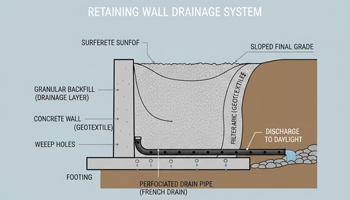
Proper well drainage requires gravel or crushed stone base at the well bottom—typically 6 to 12 inches depth of free-draining material that allows water to percolate downward. Beneath the gravel, perforated drainage pipe (4-inch diameter typical) collects water and directs it away from the foundation to daylight discharge points or connection to foundation drainage systems.
The drainage pipe should slope at minimum 1% to 2% grade ensuring water flows away from the well rather than ponding. The pipe outlet must discharge water away from the foundation—bringing well drainage back toward the house defeats the purpose and creates new moisture problems.
Inadequate well drainage represents one of the most common installation errors I observe. DIY installations frequently skip the gravel bed and drainage pipe, resulting in wells that flood during heavy rain or snowmelt. Professional waterproofing addressing this critical detail typically costs $400 to $800 but proves essential for long-term well functionality.
Installation Process Overview
Installing egress windows involves multiple distinct phases, each requiring specific skills, tools, and attention to detail for successful outcomes.
Foundation Cutting & Excavation
The installation begins with exterior excavation exposing the foundation wall where the window will be installed. Excavation must extend several feet beyond the final well size to provide working room for cutting, framing, and waterproofing.
Foundation cutting uses diamond-blade concrete saws designed for precise cuts through reinforced concrete. The process generates substantial dust requiring proper containment and cleanup. For concrete block foundations, cutting proceeds more quickly than poured concrete but requires attention to block coursing and reinforcing steel.
The foundation opening must be cut larger than the window rough opening to accommodate framing materials, insulation, and flashing. Typical openings exceed window dimensions by 2 to 4 inches on all sides. The cost for professional foundation cutting typically ranges from $800 to $1,500 depending on wall thickness, reinforcement, and cutting difficulty.
Structural considerations become critical when removing sections of load-bearing foundation walls. The opening interrupts the continuous load path, requiring temporary support during cutting and permanent load-bearing lintels above the window to transfer loads around the opening. This structural coordination represents significant cost and complexity that DIY installers often underestimate.
Steel Lintel Installation
Openings in foundation walls require structural lintels—horizontal beams spanning the opening and supporting loads above. For most residential applications, fabricated steel lintels provide appropriate strength at reasonable cost.
Lintel sizing depends on opening width and loads being supported. An engineer should calculate required lintel dimensions, though typical residential egress windows use steel angles (L-shaped sections) 3 to 6 inches in size or steel plates 1/4 to 1/2 inch thick and 6 to 12 inches wide.
The lintel installation requires bearing on solid concrete at each end of the opening—typically 6 to 12 inches of bearing surface ensures adequate load distribution. The lintel must be positioned, leveled, and secured before foundation cutting proceeds below it, ensuring loads remain supported throughout the process.
Fabricated steel lintels with professional installation typically cost $600 to $1,200 depending on opening size and structural requirements. Skipping structural engineering for this critical component—a common DIY mistake—potentially compromises foundation integrity, creating far more expensive problems than the engineering consultation would have cost.
Window Framing & Flashing
The rough opening created by foundation cutting requires framing before window installation. This framing typically uses pressure-treated lumber that resists moisture exposure, with dimensions creating appropriately sized opening for the window unit.
The framing must be level, plumb, and square—errors in framing alignment cause window installation problems and operational issues. Proper shimming ensures accurate positioning, with fasteners anchoring the frame securely to the foundation.
Flashing represents one of the most critical installation details, preventing water infiltration around the window perimeter. Proper flashing integrates with exterior waterproofing systems, directing water away from the opening rather than allowing it to seep through gaps between window and foundation.
The flashing installation sequence proceeds from bottom to top—sill pan flashing first, side flashing lapping over the sill pan, then head flashing at the top lapping over side pieces. This shingling effect ensures water flows downward and outward rather than infiltrating behind flashing layers.
Well Installation & Backfill
Egress wells typically consist of corrugated steel, plastic, or composite panels that attach to the foundation wall and resist soil pressure from surrounding earth. The well installation must extend below frost depth to prevent movement from freeze-thaw cycles.
The well anchors to the foundation using appropriate fasteners that penetrate into sound concrete, providing resistance to soil pressure that attempts to push the well away from the building. The number and spacing of anchors depends on well size and soil conditions.
Backfilling around the well requires careful attention to prevent damage and ensure proper drainage. The backfill should be free-draining granular material compacted in thin lifts, not dumped in bulk which creates voids and settlement issues. The top surface should slope away from the well, directing surface water away from the excavation.
Quality fabricated egress wells typically cost $400 to $800 depending on size and material quality. Professional installation ensuring proper anchoring, drainage, and backfilling proves essential for long-term performance.
Egress Window Installation Cost Breakdown
Understanding comprehensive cost structures helps homeowners budget appropriately and evaluate professional versus DIY approaches realistically.
Materials Cost (Window, Well, Hardware)
Material costs for egress window installations vary based on product quality and project specifics. Quality egress-compliant window units typically cost $600 to $1,500 depending on size, style, and brand. Casement windows tend toward the higher end due to hardware complexity, while sliders may cost less for equivalent sizes.
Egress well materials run $400 to $800 for fabricated steel, plastic, or composite units in typical residential sizes. Custom wells or larger dimensions increase costs. Well covers add $200 to $800 depending on material and design.
Additional materials including steel lintel ($200 to $500 for material), framing lumber ($50 to $150), flashing and waterproofing materials ($100 to $300), drainage components including pipe and gravel ($100 to $200), and concrete patching materials ($50 to $100) contribute to total material costs.
Total materials for a complete egress window installation typically range from $1,500 to $3,500 depending on product selection and project specifics.
Labor Costs by Installation Complexity
Professional labor represents the largest cost component for egress window installations. Labor costs vary with project complexity, regional rates, and contractor experience.
Foundation cutting by specialists typically costs $800 to $1,500, though complex situations with thick walls, heavy reinforcement, or difficult access can exceed these ranges. General contractor labor for framing, window installation, well installation, and coordination typically costs $1,500 to $2,500 for complete installations.
Waterproofing specialists may be required for comprehensive moisture protection around the window and well, adding $400 to $800 to project costs. This specialized work proves essential but often gets skipped in budget installations, leading to chronic water infiltration problems.
Structural engineering consultation and lintel design typically adds $500 to $1,000 but proves essential for ensuring safe load distribution around the opening.
Total Project Cost Range ($3K-$8K typical)
Combining all cost components, professional egress window installations typically total $4,500 to $8,000 for complete, code-compliant work in standard residential applications. This realistic range includes foundation cutting with diamond saw ($800 to $1,500), fabricated steel lintel installation ($600 to $1,200), quality egress window unit ($600 to $1,500), fabricated egress well ($400 to $800), exterior excavation ($500 to $1,000), professional waterproofing ($400 to $800), and installation labor ($1,500 to $2,500).
Projects at the lower end of this range involve straightforward installations in readily accessible locations with standard window sizes. Higher costs reflect complex situations like thick concrete walls, challenging site access, premium window and well selections, or extensive waterproofing requirements.
The commonly quoted range of $3,000 to $8,000 that appears in online sources reflects this reality, though the realistic midpoint for quality professional work trends toward $5,000 to $6,500 rather than the lower end of the range.
Regional Price Variations
Labor costs vary significantly by geographic region and local market conditions. High-cost metropolitan areas may see total project costs of $6,000 to $10,000+ for installations that would cost $4,000 to $6,000 in moderate-cost regions.
Rural areas with limited contractor availability may experience higher costs due to travel time and limited competition, or potentially lower costs if local contractors offer more economical rates. Regional building code variations also affect costs—jurisdictions with particularly stringent inspection requirements or additional structural provisions increase total expenses.
Permit Requirements & Inspection Process
Egress window installations virtually always require building permits and face specific inspection requirements ensuring code compliance and life safety.
What Permits Are Needed
Building permits are required for egress window installations in nearly all jurisdictions since the work involves structural modifications to foundations, electrical and plumbing considerations potentially, and life safety components subject to building code requirements.
Permit applications typically require detailed plans showing window dimensions and clear opening calculations, window well design and dimensions, structural details including lintel sizing, and waterproofing and drainage provisions. Engineered drawings stamped by licensed professionals may be required depending on jurisdiction and project complexity.
Permit costs vary by location but typically range from $200 to $600 for residential egress window installations. Processing times vary from several days to several weeks depending on building department workload and plan review complexity.
Working without permits creates substantial problems—code violations discovered during home sales, insurance claim denials for unpermitted work, requirement to remove completed work and redo with permits, and potential fines from building departments. The modest permit cost proves insignificant compared to these risks.
Inspection Checkpoints
Building departments require inspections at specific project phases. Foundation opening inspections occur after cutting but before window installation, verifying opening dimensions, lintel installation, and structural adequacy. Rough-in inspections examine framing, flashing, and drainage provisions before covering work with finishes.
Final inspections verify completed installations meet all code requirements—window dimensions and clear opening area, maximum sill height, window operation and hardware, well dimensions and ladder/step provisions if required, proper drainage installation, and cover operability from inside.
Each inspection must pass before proceeding to subsequent work. Failed inspections require corrections before re-inspection and project continuation. This phased inspection process ensures compliance but extends project timelines.
Common Code Violations
Certain code violations appear repeatedly in egress window installations. Undersized clear opening area—often by surprisingly small margins like 0.3 square feet—represents the most common violation I observe. Windows that appear adequately sized fail inspection when actual measurements fall short.
Excessive sill height—installations where floor finish raises sill above 44-inch maximum—creates another frequent violation. Inadequate well drainage lacking gravel beds and drainage pipes leads to flooding issues and potential code violations. Missing or improperly sized structural lintels represent serious violations compromising foundation integrity.
Well dimensions below 36-inch minimum, covers not operable from inside, and inadequate ladder or step provisions in deep wells also generate inspection failures.
DIY Installation: Is It Feasible?
Many homeowners consider DIY egress window installation to save the substantial labor costs professional installation entails. Understanding the skills required, potential savings, and significant risks helps make informed decisions.
Skills & Tools Required
DIY egress window installation demands multiple skills and specialized tools. Concrete cutting requires diamond blade saws—typically rented for several hundred dollars—and experience operating these powerful, dangerous tools safely. The cutting generates enormous dust requiring proper containment and respiratory protection.
Structural skills for lintel installation, proper load support during cutting, and framing require carpentry knowledge and attention to engineering specifications. Waterproofing expertise proves critical—the most common failure mode in DIY egress windows involves inadequate waterproofing leading to chronic water infiltration.
Excavation capabilities including operating equipment, proper backfilling techniques, and drainage installation require additional skills. Window installation expertise ensuring proper flashing, shimming, and securing completes the skill set needed.
Few homeowners possess all these capabilities, and those who do still face substantial physical demands and time requirements. The project typically consumes multiple weekends of hard physical labor.
Potential Cost Savings
DIY installation can save $2,000 to $3,000 compared to professional costs, representing substantial savings that motivate many homeowners to attempt the work themselves. Material costs remain similar—the savings come entirely from eliminated labor expenses.
However, this calculation assumes successful installation meeting code requirements without expensive mistakes. DIY attempts that fail inspection, create water infiltration problems requiring professional remediation, or compromise structural integrity can cost far more than professional installation would have.
For context, I observe approximately 5 to 6 unsuccessful DIY egress window attempts for every successful installation. The successful projects involve homeowners with relevant skills, appropriate tools, careful attention to code requirements, and often some professional consultation on critical elements. The failures typically result from inadequate waterproofing, undersized openings failing inspection requirements, or structural issues from improper cutting and lintel installation.
Risks & Challenges
DIY egress window installation carries significant risks. Water infiltration from inadequate waterproofing represents the most common problem—I’ve witnessed numerous DIY installations that require complete professional remediation costing $2,000 to $4,000 to fix chronic leaking.
Structural compromise from improper cutting, inadequate lintels, or insufficient bearing support creates dangerous conditions potentially affecting entire foundation integrity. Failed inspections require expensive corrections, often necessitating professional involvement anyway while consuming time and materials from initial DIY attempts.
Physical injury from concrete cutting equipment, heavy material handling, or excavation accidents poses real dangers. Code violations that only appear years later during home sales create liability and negotiation problems affecting sale prices and timeline.
When Professional Help Is Essential
Professional installation becomes essential rather than optional for several situations. Complex structural considerations where foundation loads are substantial, walls are thick or heavily reinforced, or existing foundation shows cracks or concerns require professional structural expertise.
Challenging site conditions including poor drainage, difficult access, or proximity to utilities favor professional installation with appropriate insurance and expertise. Homeowners lacking relevant skills, appropriate tools, or available time should not attempt these complex projects.
The investment in professional installation—while substantial—transforms basement spaces into legal bedrooms, adds measurable home value, and provides warranty protection and code compliance assurance that DIY approaches cannot match.
Retrofitting Existing Basements
Adding egress windows to existing finished basements presents unique challenges compared to installations during initial construction or in unfinished spaces.
Challenges with Finished Basements
Finished basements complicate egress window installation substantially. Interior finishes must be removed around the window location—typically 4 to 6 feet of finished wall needs demolition to provide access to the foundation wall. Flooring in the installation area may require removal if the window sill height will be close to the 44-inch maximum when measured from finished floor.
Dust and debris containment becomes critical to protect adjacent finished spaces. Professional contractors use plastic barriers, negative air pressure systems, and careful work practices minimizing contamination of areas away from the work zone.
The work disruption affects homeowners significantly—noise, dust, contractor access, and project timelines spanning weeks make finished basement retrofits more invasive than new construction installations.
Structural Considerations
Existing basements may have structural elements that complicate egress window installation. Beams, columns, utilities, or existing openings may conflict with desired window locations, requiring design adjustments or more complex structural solutions.
Older homes may have foundations lacking modern reinforcement or using construction methods that complicate cutting and modification. Structural assessment before beginning work identifies these issues and allows proper engineering solutions.
The age and condition of existing foundations affects installation costs and complexity. Deteriorated concrete, previous repairs, or foundation movement issues require attention before or during egress window installation.
Minimizing Interior Damage
Careful planning and proper techniques minimize damage to finished spaces during egress window retrofits. Precise layout marks the exact work zone, limiting demolition to necessary areas. Temporary barriers protect adjacent finishes from dust and debris.
Careful demolition saves materials that can be reinstalled after window completion—trim, drywall sections, and flooring pieces may be salvageable if removed carefully rather than destroyed during demolition.
Professional contractors experienced in retrofit installations employ techniques that minimize collateral damage, though some disruption remains inevitable. Budget includes finishing costs to restore demolished areas to match existing spaces.
Egress Window Brands & Product Comparison
Several major window manufacturers produce egress-compliant windows with varying features, quality levels, and price points.
Andersen, Pella, JELD-WEN Options
Andersen offers egress-compliant casement and slider windows in their 400 Series and A-Series product lines, known for quality construction and comprehensive warranty coverage. Pricing typically falls in the upper range at $800 to $1,500+ for egress-sized units.
Pella produces egress windows in multiple product tiers from entry-level to premium options. Their 250 Series provides economical egress solutions while Architect Series delivers premium features and customization. Pricing spans $600 to $1,400 depending on series and size.
JELD-WEN egress windows offer value-oriented options meeting code requirements at moderate price points, typically $500 to $1,000 for standard sizes. The products provide adequate performance for budget-conscious installations where premium features aren’t priorities.
Performance Ratings
Window performance characteristics including U-factor (thermal performance), Solar Heat Gain Coefficient (SHGC), and air leakage ratings affect energy efficiency and comfort. Better-performing windows cost more initially but may provide energy savings over time.
For basement applications, thermal performance matters less than above-grade windows since underground locations moderate temperature swings. However, quality construction affecting durability and water resistance remains important regardless of location.
Warranty Considerations
Manufacturer warranties vary substantially between brands and product lines. Premium products may include 20 to 30-year limited warranties covering materials and workmanship, while economy options offer 10 to 15-year coverage.
Warranty terms deserve careful review—coverage typically requires proper installation per manufacturer specifications, limits on transferability to new homeowners, and exclusions for certain failure modes. Professional installation often proves necessary to maintain warranty validity.
Waterproofing & Drainage Best Practices
Proper waterproofing and drainage around egress windows and wells prevents the water infiltration problems that plague many installations.
Preventing Well Flooding
Wells must be designed and constructed to handle water from rain, snowmelt, and runoff without flooding. The gravel base at well bottom provides initial water storage while drainage pipes carry water away from the well.
The drainage system capacity must exceed peak water inflow during heavy storms. Undersized drainage pipes or inadequate gravel depth creates flooding during intense rainfall that the system cannot handle.
Well covers that shed water rather than allowing it to pour into wells reduce drainage demands. However, drainage systems must function even without covers or with covers left open.
Drainage Pipe Installation
Proper drainage pipe installation requires perforated pipe positioned in gravel beds at well bottom, sloped minimum 1% to 2% away from the well, discharging to daylight or connecting to foundation drainage systems well away from the building, and protected with filter fabric preventing soil infiltration that would clog perforations.
The pipe diameter—typically 4 inches—must provide adequate flow capacity for expected water volumes. The outlet must be protected from freezing in cold climates and positioned where discharged water flows away from structures.
Maintenance Requirements
Egress window wells require periodic maintenance to ensure continued functionality. Removing debris, leaves, and snow from wells prevents drainage blocking and maintains clear emergency egress paths. Inspecting drainage system function during heavy rain identifies clogs or capacity problems before serious flooding occurs.
Well covers should be inspected for damage, ensuring they remain securely attached but operable from inside. Window operation should be tested periodically, confirming easy opening without sticking or binding that could prevent emergency egress.
Adding Value: Bedrooms & Finished Spaces
Beyond code compliance and safety, egress windows enable functional transformations that significantly affect home value and utility.
Legal Bedroom Definitions
Real estate and building code definitions of «bedroom» typically require rooms to have specific characteristics including minimum floor area (often 70 to 80 square feet), closet space for clothing storage, adequate heating and cooling, and emergency egress meeting code requirements.
Without compliant egress windows, basement rooms cannot be legally marketed, counted, or valued as bedrooms regardless of size, finishes, or other characteristics. This limitation substantially affects home value and marketability.
An advantage many homeowners overlook: egress windows transform basements into legal bedrooms, increasing home values dramatically while expanding the pool of potential buyers. In my market, adding a legal bedroom can increase home value by $15,000 to $25,000, making egress window installation provide positive return on investment despite the $4,500 to $8,000 initial cost.
Impact on Home Value
Homes with finished basement bedrooms—complete with compliant egress windows—command premiums compared to similar homes with finished basements lacking bedrooms. The additional bedroom increases the home’s bedroom count in listings and appraisals, attracting larger families and increasing marketability.
Appraisers recognize legal bedrooms based on egress compliance. Rooms marketed as bedrooms without proper egress may not receive bedroom valuation, reducing appraisal values below asking prices and creating sale complications.
The investment calculation should weigh egress window costs ($4,500 to $8,000) against increased home values ($15,000 to $25,000 typical) and improved marketability. For homes where additional bedroom would significantly enhance appeal or value, egress windows provide compelling return on investment.
Rental Property Considerations
Rental properties with basement bedrooms must meet code requirements including egress windows. Landlords renting non-compliant basement bedrooms face liability for tenant injuries during emergencies, code violations that building departments can enforce, and insurance issues if policies exclude coverage for non-compliant spaces.
For multi-family properties or homeowners renting basement apartments, egress windows prove essential for legal operation. The investment in compliant egress protects against liability while enabling rental income that generates ongoing returns.
Need help determining egress window requirements for your basement bedroom conversion? Share details about your basement configuration, planned uses, and budget parameters for customized guidance on code-compliant solutions that maximize value while meeting safety requirements.
References
Currently viewing
Egress Window Requirements

Structural Engineer vs Foundation Contractor
Structural Engineer vs Foundation Contractor: When You Need Each Understanding the distinction between structural engineers…
Basement Moisture Testing
Basement Moisture Testing: Before Starting Renovation Projects Moisture testing represents the single most overlooked yet…
Retaining Wall Drainage
Retaining Wall Drainage: Weep Holes, Backfill & Filter Fabric Drainage represents the single most critical…

Basement Insulation
Basement Insulation: Rigid Foam vs Spray Foam for Concrete Walls Basement insulation strategy fundamentally affects…
Concrete Slab Repair
Concrete Slab Repair: Crack Injection vs Surface Patching Methods Concrete slabs develop cracks for numerous…
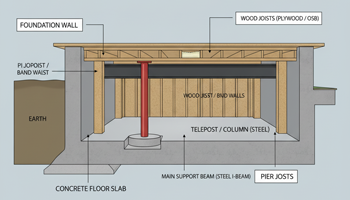
Basement Structural Framing
Basement Structural Framing: Load-Bearing Walls & Beam Sizing Understanding basement structural framing represents one of…

Basement Finishing Cost
Basement Finishing Cost: Framed Drywall vs Modular Panels Finishing a basement transforms unused square footage…
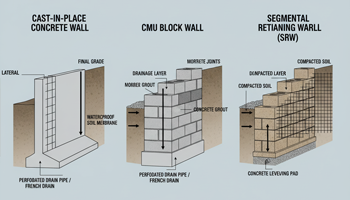
Retaining Wall Design
Retaining Wall Design: Concrete vs Block vs Segmental Systems Selecting the right retaining wall system…
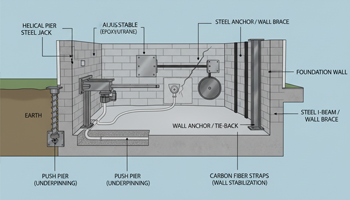
Basement & Foundation Structural
Structural Solutions for Basements & Foundations: Complete Engineering Guide Foundation and basement structural engineering represents…